The machine is the cheap half. What decides this purchase is the tape - how much is on the cartridge, how much each label wastes, and whether the print survives five years in a drawer.
SMBy Scooter M.Published November 12, 2026Prices verified November 22, 2026
The short answer
If the labels have to last, buy a Brother. TZe tape is published as laminated, water resistant and made to resist fading, and on a file tab handled weekly for years that is the only specification that matters. The PT-D220 is the one to take: more formatting than the PT-H110 for twenty dollars less. If you are labeling a whole cabinet in one sitting, buy the SUPVAN E12 - it pairs to a phone app so you type sixty tabs on a phone keyboard rather than a device one, it charges instead of eating AAAs, and it is the only machine here that publishes its printed margin. Do not buy the LetraTag for filing. Its cassette is paper and the print is direct thermal, which is a label designed to come off again.
You are buying tape, not a machine
Every machine on this page costs between twenty-five and sixty-five dollars once. The tape costs something every time, forever, and a filing system is the use case that eats the most of it - sixty folder tabs is sixty labels before you have touched a shelf, a box or a drawer front.
So the questions that decide this purchase are about the cartridge: how long is the tape, how much of it does each label waste, and does the print survive? Three of those five listings answer one of those questions. None answers all three.
What each listing publishes about the consumable
Machine
Tape
Published length
Printed margin
Laminated?
SUPVAN E12
Own thermal tape
Not published
0.2 in
Not claimed
Brother PT-D220
Brother TZe, 12 mm
Not published here
Not published
Yes
Brother PT-H110
Brother TZe, 12 mm
Not published here
Not published
Yes, water resistant
DYMO LabelManager 160
DYMO D1, 12 mm
23 ft per cassette
Not published
Not stated
DYMO LetraTag 100H
DYMO LT, 12 mm
Not published
Not published
No - paper
Each entry is that listing's own published specification. Brother's standard TZe cartridge is widely sold as 1/2 in x 26.2 ft, but neither machine listing states a length, so we have marked it unpublished rather than import a figure from a tape listing.
What labeling a filing cabinet actually consumes
Worth doing before you buy, because the answer changes which machine makes sense. A hanging-folder tab takes a label of about two inches of printed text. Run that against the one published cartridge length on this page.
Labels from one 23 ft DYMO D1 cassette, at a 2 in label
23 ft of tape = 276 in
With a zero margin: 276 / 2.0 = 138 labels (the theoretical ceiling)
At SUPVAN's published 0.2 in: 276 / 2.2 = about 125 labels
At a 1.0 in margin: 276 / 3.0 = about 92 labels
A 60-folder filing system therefore uses between a half and two thirds of one cartridge
Our arithmetic. The 23 ft is DYMO's published cassette length and the 0.2 in is SUPVAN's published margin. The 1.0 in row is NOT a published figure - it is SUPVAN's claim that others use five times its margin, shown so you can see what that claim would cost. Neither Brother nor DYMO publishes a margin, so we cannot confirm it.
The useful conclusion is not the exact number. It is that one cartridge does a household filing system and most of a second room, which means the consumable is not the ongoing expense people fear - and that the margin, if SUPVAN's claim is right, is worth about a third of a cartridge per sixty labels. Buy the machine on the label, not on the tape price.
Laminated or paper: the decision that outlasts the machine
This is the one specification on this page that should actually change your mind, and it is published plainly by the makers who have good news.
Brother publishes TZe as laminated, and on the PT-H110 listing as water resistant and made to withstand fading and peeling. A laminated label is a printed layer sandwiched inside the tape rather than sitting on its surface, which is why it survives being pulled past a drawer rail a few hundred times.
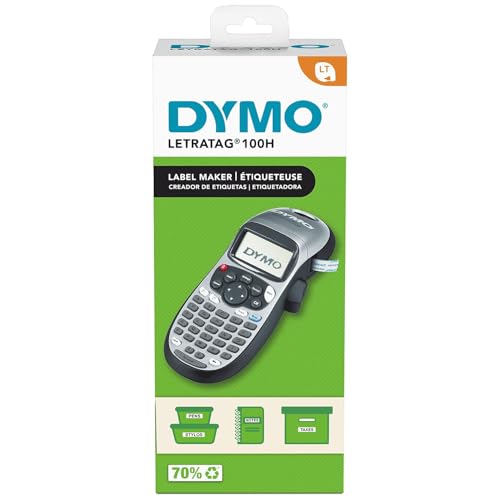
DYMO's LetraTag cassette is paper, and the listing says so. The printing is direct thermal, the same process as a receipt - which is a technology that darkens with heat and fades with light and time. That is entirely fine for a box you will unpack next month and wrong for a cabinet you expect to read in a decade. The LetraTag is on this page because it ranks and because the paper spec is the thing a buyer most needs to see, not because we would file with it.
DYMO's D1 and SUPVAN's own tape sit in between - neither listing claims lamination, and neither claims paper. An absence is not a defect, but on this specification two makers are explicit and two are not, and that asymmetry is worth something.
The running cost nobody prices: batteries
Both Brothers take 6 AAA batteries or an AC adapter, each sold separately. That is published, and it is a real cost: six AAAs to start, and an adapter if you would rather not keep buying them. The SUPVAN has a 1200 mAh rechargeable battery with a stated month per charge and nothing to buy. The two DYMOs publish auto-off and extended battery life without saying what they take.
On a machine used in bursts - which is how a filing system gets labeled - batteries that go flat between sessions are the most common reason one of these ends up in a drawer unused. It is worth about ten dollars of thought.
How we ranked these
Tape cost, durability, usability, power and documentation. Tape cost reads the published consumable figures rather than the machine price, because the machine is the cheap half. Durability is scored only on what each maker publishes about the label surviving - laminated, water resistant, paper - and we have not aged any of them. Documentation rewards publishing a tape length or a margin, which three of these five do not. Full rubric on how we pick.
#
Product
Best for
Score
Price
01
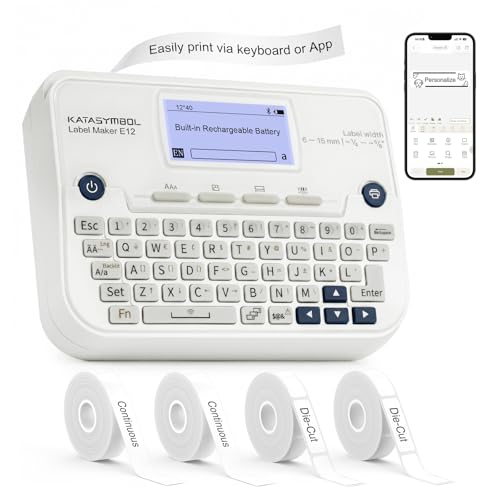
SUPVAN E12 Keyboard and Bluetooth Label MakerThe only machine here that publishes its printed margin - 0.2 in - and the only one that charges instead of eating AAAs. Both are running costs the others leave you to discover.
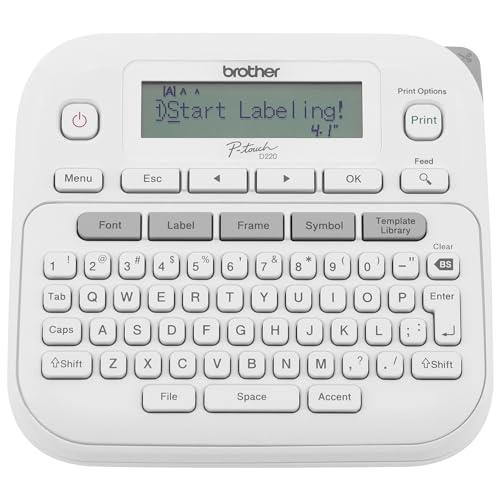
Brother P-Touch PT-D220 Label MakerPrints on Brother TZe tape, which publishes what almost nothing else here does: laminated, water resistant, and made to resist fading and peeling. That is the whole argument for it.
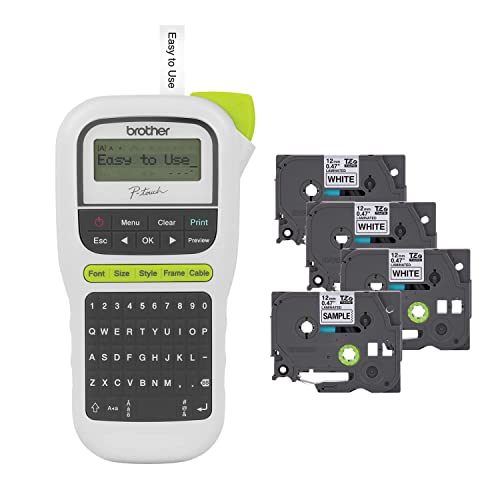
Brother P-Touch PT-H110 Label Maker Bundle, 4 TapesThe same laminated TZe tape as the PT-D220 with four cartridges included, in the lightest Brother here. Fewer formatting options and the same battery problem.
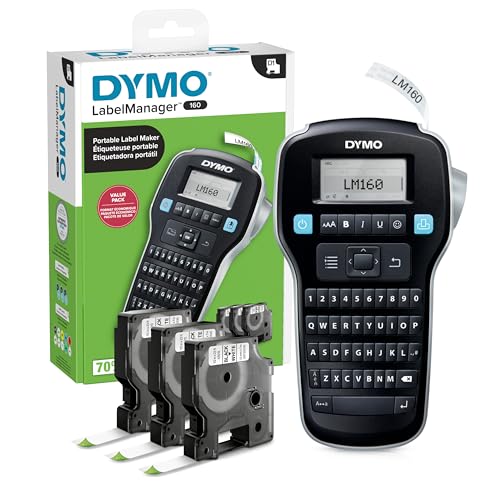
DYMO LabelManager 160 Bundle, 3 D1 CassettesThree D1 cassettes at a published 23 ft each, which is the only bundle here that tells you how much tape you are actually buying.
DYMO LetraTag 100H Handheld Label MakerTwenty-five dollars, and the cassette it ships with is PAPER. For a filing system that is the one specification on this page that should stop you.
Scores are ours, from the published rubric on our methodology page. They are editorial judgments about published specifications, not test results — we have not handled these units.
01/SUPVAN
E12 Keyboard and Bluetooth Label Maker
Cheapest to run
8.4/ 10
The only machine here that publishes its printed margin - 0.2 in - and the only one that charges instead of eating AAAs. Both are running costs the others leave you to discover.
The only machine here that publishes its printed margin - 0.2 in - and the only one that charges instead of eating AAAs. Both are running costs the others leave you to discover.
Published specification
Model
E12
SUPVAN published specification
Printed margin
0.2 in per label, stated as one fifth of others
SUPVAN published specification
Power
Built-in 1200 mAh rechargeable battery, stated up to 1 month per charge
SUPVAN published specification
Input
On-device keyboard, plus Bluetooth to a phone app with 30+ fonts, 50+ frames and 660+ icons
SUPVAN published specification
Display
LCD, backlit
SUPVAN published specification
Printing
Inkless thermal
SUPVAN published specification
Dimensions
6.22 x 4.65 x 1.85 in
Listing published specification
Weight
0.94 lb
Listing published specification
In the box
4 tapes
SUPVAN published specification
Tape length
Not published
Absence confirmed against the published specification
Lamination
Not claimed. The listing says inkless thermal and never says laminated
Absence confirmed against the published specification
What the specs are good for
Publishes a 0.2 in printed margin. No other maker on this page publishes a margin at all, and on a cartridge of fixed length the margin is what decides how many labels you get
Rechargeable, with a stated month per charge. The two Brothers take 6 AAA batteries and both sell the AC adapter separately
Keyboard for quick single labels AND a phone app for a batch, which is the right pairing when you are labeling sixty folders in one sitting
Backlit display, which matters more than it sounds in a cupboard or under a desk
What they are not
Never claims lamination. For a filing system meant to outlast the paper in it, that is the specification the Brother tapes publish and this one does not
Does not publish a tape length, so the margin figure cannot be turned into a labels-per-cartridge number without buying one
The "one fifth of others" comparison is SUPVAN's claim about competitors, not a figure any competitor publishes. We have not verified it
A less established tape supply than TZe or D1, which matters on a consumable you will buy for years
Skip this if
Skip this if the labels have to survive. Nothing in the listing says laminated, water resistant or fade resistant, and a tab that goes illegible in three years defeats the point of labeling a filing system at all.
Who it is for. Someone labeling a lot at once who would rather charge a device than keep AAAs in a drawer, on files that live indoors.
Prints on Brother TZe tape, which publishes what almost nothing else here does: laminated, water resistant, and made to resist fading and peeling. That is the whole argument for it.
Prints on Brother TZe tape, which publishes what almost nothing else here does: laminated, water resistant, and made to resist fading and peeling. That is the whole argument for it.
Published specification
Model
PTD220
Brother published specification
Tape
Brother Genuine TZe, approximately 1/2 in (12 mm) wide
Brother published specification
Tape construction
Laminated, easy to peel, durable
Brother published specification
Power
6 AAA batteries OR an optional AC adapter, each sold separately
Absence confirmed against the published specification
What the specs are good for
TZe tape is laminated and published as such. On a file tab that is handled weekly for years, lamination is the difference between a label and a smudge
The most formatting on this page - 14 fonts, 99 frames, 600+ symbols and 25 templates - and a 30-label memory for the ones you reprint
Two lines per label, which is what lets a folder tab carry a category AND a year
A genuine model number from a maker whose tape you will still be able to buy in five years
What they are not
6 AAA batteries or an AC adapter, and BOTH are sold separately. The running cost starts before you print anything
Publishes no printed margin, so there is no way to work out labels per cartridge before you own it
No app and no Bluetooth: every label is typed on the device, which is slow across sixty folders
1.08 lb and the largest footprint here, which is a desk object rather than a drawer one
Skip this if
Skip this if you are labeling a filing system in one long session. Typing sixty tabs on a device keyboard is the job this machine is worst at, and the app-connected machines here exist for exactly that.
Who it is for. Labels that have to last - archive boxes, file tabs, anything handled often - typed a few at a time.
The same laminated TZe tape as the PT-D220 with four cartridges included, in the lightest Brother here. Fewer formatting options and the same battery problem.
The same laminated TZe tape as the PT-D220 with four cartridges included, in the lightest Brother here. Fewer formatting options and the same battery problem.
Published specification
Model
PTH110BP
Brother published specification
Tape
Brother TZe, 12 mm
Brother published specification
Tape construction
Laminated and water resistant; published to withstand fading and peeling, indoors and outdoors
Brother published specification
In the box
4 tapes: one sample black-on-white plus three full-length black-on-white
Brother published specification
Power
6 AAA batteries or an AC adapter, sold separately
Brother published specification
Input
QWERTY keyboard with preview display and one-touch keys; 3 fonts, 14 frames, 250+ symbols
Brother published specification
Memory
Stores up to 15 labels
Brother published specification
Dimensions
8 x 4.3 x 2.2 in
Listing published specification
Weight
0.9 lb
Listing published specification
Tape length
Not published for the included cartridges
Absence confirmed against the published specification
What the specs are good for
Four cartridges in the box, the most of any machine here, so the consumable cost starts later than it looks
The only tape on this page published as water resistant and fade resistant as well as laminated
0.9 lb, the lightest machine here, with a preview display so you see the label before it prints
One-touch keys for the formatting people actually use, rather than a menu
What they are not
The most expensive machine on this page, and three of its four tapes are what you are paying the difference for
3 fonts and 14 frames against the PT-D220's 14 and 99, for twenty dollars more
6 AAA batteries or an AC adapter sold separately, same as the PT-D220
15-label memory, half the PT-D220's
Skip this if
Skip this if you already own TZe tape. Strip out the cartridges and this is a less capable PT-D220 at a higher price; the bundle is the entire case for it.
Who it is for. Starting from nothing and wanting to label the whole house and the filing cabinet without a second purchase.
Three D1 cassettes at a published 23 ft each, which is the only bundle here that tells you how much tape you are actually buying.
Three D1 cassettes at a published 23 ft each, which is the only bundle here that tells you how much tape you are actually buying.
Published specification
Model
2175084
DYMO published specification
Tape
D1 cassettes, 1/2 in (12 mm) x 23 ft (7 m), black on white
DYMO published specification
In the box
3 D1 cassettes, 69 ft of tape in total
DYMO published specification for the cassettes; the total is our arithmetic
Input
QWERTY keyboard with one-touch smart keys and a large display; 20+ text formats, 200+ symbols
DYMO published specification
Power
Stated extended battery life with automatic power-off; battery type not published
DYMO published specification
Tape widths supported
1/4, 3/8 and 1/2 in DYMO tapes
DYMO published specification
Dimensions
10.43 x 6.31 x 2.62 in
Listing published specification
Weight
1.3 lb
Listing published specification
Lamination
Not stated on this listing
Absence confirmed against the published specification
Printed margin
Not published
Absence confirmed against the published specification
What the specs are good for
Publishes its tape length - 23 ft a cassette, 69 ft in the box - which is the one number that makes the consumable cost calculable, and no other listing here provides it
Takes three tape widths, so the same machine does a 1/4 in label for a key and a 1/2 in for a file tab
A large display and one-touch smart keys, with 20+ text formats
1.3 lb with automatic power-off
What they are not
23 ft a cassette is the shortest published tape on this page; Brother's standard TZe cartridge is 26.2 ft
Does not state that D1 tape is laminated, where Brother states it plainly for TZe
Does not publish what batteries it takes, only that the life is extended
The heaviest and longest machine here at 10.43 in
Skip this if
Skip this if the labels need to survive handling. DYMO does not claim lamination on this listing and Brother does on both of theirs, and on a file tab that is the difference that shows up in year three.
Who it is for. Someone who wants to know what the consumable costs before buying, and who labels more than file tabs.
Auto-off when not in use; battery type not published
DYMO published specification
Dimensions
10.25 x 4.75 x 3.15 in
Listing published specification
Weight
0.88 lb
Listing published specification
Tape length
Not published
Absence confirmed against the published specification
Lamination
None. The listing names the cassette as paper
DYMO published specification
What the specs are good for
The cheapest way onto this page by ten dollars, from a brand whose tape is on every stationery shelf
0.88 lb, the lightest machine here
A graphical preview so you see the effects before printing, which the price does not suggest
Names its tape as paper rather than leaving you to find out, which is more honest than the listing had to be
What they are not
Paper tape with thermal printing. Direct thermal paper darkens and fades with heat, light and time, and a file tab is a label you need to read in five years
Publishes no tape length, so the running cost is unknowable before purchase
The fewest formatting options here - 5 font sizes against the PT-D220's 14 fonts and 11 styles
10.25 in long, which is longer than the DYMO that costs twice as much
Skip this if
Skip this for anything you are filing rather than sorting. It is a fine machine for labeling a shelf edge or a box you will unpack next month, and the wrong one for a cabinet of documents you expect to still be reading in a decade.
Who it is for. Temporary labeling - a move, a sort, a project - where the label is meant to come off again.
A label maker makes a filing system legible, and it also makes it easy to over-label. Two rules worth having.
Label the tab, not the folder. The hanging folder's tab is what you read when the drawer opens, and every box of folders on best hanging file folders includes clear tabs with paper inserts. A printed insert beats handwriting; a printed label stuck on the folder body does nothing you can see with the drawer closed.
Label by category, not by date. Dates change and categories do not, which is why a tab that reads House rather than House 2026 survives a reorganization. How to set up a paper filing system covers which categories actually survive contact with real paperwork, and a document filing system for a home sorts by consequence of loss first - which usually cuts the number of tabs you need by more than half.
For planners, notebooks and the stationery side of a desk rather than the filing side, inkandindent.com covers that ground.
FAQ
Questions people ask about this
What size label tape do file folder tabs need?+
Half an inch, 12 mm, which is what every machine on this page prints. A standard hanging-folder tab insert is cut for about that width, and a wider tape will overhang the clear tab. One machine here also takes 1/4 and 3/8 in tapes if you want to label keys or cable as well.
How much tape does labeling a filing cabinet use?+
Less than people expect. At a two-inch label, the one published cassette length on this page - 23 ft - yields somewhere between about 92 and 125 labels depending on the printed margin, so a sixty-folder system uses between half and two thirds of a single cartridge. The consumable is not the ongoing cost; the machine's power source usually is.
Are laminated labels worth it for filing?+
For file tabs, yes. A laminated label puts the print inside the tape rather than on its surface, which is what lets it survive being dragged past a drawer rail for years. Brother publishes lamination for TZe on both machines here; one DYMO cassette is published as paper with thermal printing, which fades. If the label is meant to be temporary, none of this matters.
Do label makers need their own batteries?+
Usually, and two listings here say so plainly: 6 AAA batteries or an AC adapter, each sold separately. One machine has a built-in rechargeable battery with a stated month per charge. Two publish nothing beyond auto-off. For a machine used in bursts, a flat battery between sessions is the most common reason it stops getting used.
Is a phone-app label maker better than a keyboard one?+
For a filing system, usually. Typing sixty tabs on a device keyboard is the slowest part of the job, and an app lets you type on a phone keyboard and send a batch. The trade is that an app-connected machine depends on an app staying supported, where a keyboard machine works the same way in ten years.
Sources
Where these numbers came from
We have not handled any of these products. Every figure on this page is either the manufacturer's own published specification, named as such, or our arithmetic from those figures, shown so you can check it. Prices come from Amazon through our price layer and carry the date they were verified.
Amazon product listings, retrieved 2026-10-03
Published specifications, dimensions, materials and manufacturer claims were read from each product's own listing data. Prices and availability refresh daily and carry their verification date on the page.