Fourteen fixes, ordered by what each achieves per dollar, ending in what we would actually buy. The first one costs seven dollars.
SMBy Scooter M.Published October 3, 2026Prices verified October 3, 2026
The short answer
Seal the door for about 17 dollars, then treat the room for 250 to 600, then - only then - consider an enclosure. That ordering is the whole guide. A typical interior door has around 20 square inches of straight-through gap at the bottom, which no amount of acoustic panel addresses. Absorption and blocking are different physical problems, and the single most expensive mistake available here is buying one to solve the other.
First: work out which problem you have
Soundproofing and acoustic treatment are not the same thing, and the listings in this category go out of their way to blur that. Two minutes of diagnosis saves most of the money.
01Clap once, hard, in the middle of the room. A sharp ring or flutter that hangs for a fraction of a second means reflective surfaces: an ABSORPTION problem.
02Sit in silence for two minutes with the door shut and write down everything you can hear. Traffic, a boiler, a neighbor, someone on the stairs. Every item is a TRANSMISSION problem.
03Record 30 seconds of yourself talking on your phone, from where you sit, and play it back on headphones. Sounding hollow or distant is reflections reaching the microphone: absorption again.
04Have someone stand outside the closed door while you talk normally. If they can follow it, the door is your weakest element.
Most people have some of both, which is why the list below interleaves them. The order matters because sealing is cheap and absorbing is not, and doing it the other way round is how people spend 600 dollars on panels and still hear the hallway. The full distinction is on acoustic panels vs soundproofing.
Why mass and sealing are the whole of blocking
To stop sound passing through a barrier the barrier has to be heavy and continuous. Heavy, because the wave physically has to move it. Continuous, because a barrier's performance is dominated by its worst path rather than averaged across its area.
Why the door gap matters more than the door
A standard interior door: 32 x 80 in = 2,560 square inches
Typical gap underneath: 0.5 to 1 in, cut for carpet clearance
32 x 0.625 = about 20 square inches of open air
That gap is under 1 per cent of the door's area
And it carries a wildly disproportionate share of what you hear
Our arithmetic. This is why a door sweep is the best value purchase in this entire category: 17 dollars closes an opening that no amount of panel addresses, because panels absorb reflections within a room while this is a transmission path into it.
A lightweight porous panel is specifically designed NOT to have mass, because mass is what stops it absorbing. That is why the same product cannot do both jobs, and why a product described as both is a product being described loosely.
Every fix, ordered by effect per dollar
The full list
#
Fix
Cost
Addresses
Honest expectation
1
Move the desk away from the shared wall
Free
Transmission
Real. Distance from the source is the cheapest reduction available
2
Break up two parallel hard walls with a bookcase
Free
Absorption
Removes flutter echo entirely, for the cost of moving furniture
3
Rug on a hard floor
0 to 200 dollars
Absorption
60 to 100 sq ft of absorber in one object you probably own
4
Door sweep
7 to 17 dollars
Transmission
The best value purchase on this site. Closes about 20 sq in of open gap
5
Weatherstrip the door jamb
About 15 dollars
Transmission
Seals the other three edges. Finishes the job the sweep starts
6
Heavy curtains over the window
60 to 200 dollars
Both
Mass and absorption over the most reflective, thinnest surface in the room
7
Desk privacy panel
30 to 160 dollars
Absorption, locally
Small material in the best position. Improves how you sound on calls
8
Sound masking machine
25 to 40 dollars
Neither, properly
Covers intermittent noise. Helps focus, makes microphones work harder
9
Acoustic panels, 48 to 84 sq ft
250 to 600 dollars
Absorption
The main treatment. Obvious change to the room and to calls
10
Acoustic partition
320 to 450 dollars
Absorption, movably
For a shared room. Interrupts the direct path between two desks
11
Ceiling treatment
85 to 200 dollars
Absorption
Both faces work when suspended. Hard install, impossible in a rental
12
Solid-core door
150 to 400 dollars plus hanging
Transmission
Genuine. 60 to 100 lb against a hollow door's 25 to 30
13
Office pod
3,200 to 5,400 dollars
Transmission
The only consumer product that genuinely blocks. Not silence
14
Construction: second drywall layer, resilient channel
Several thousand
Transmission
Effective, expensive, permanent, and not available to renters
Prices from our live price layer where we cover the product, and from general market ranges where we do not. The ordering is our judgment of effect per dollar, not a measured result.
Step 1: the door, in detail
If you do one thing from this page, do this. It takes half an hour and costs under 35 dollars.
01Find the leaks with a light. Close the door, turn the light on beyond it and off in your room, and look along every edge. Anywhere light passes, sound passes.
02Measure the gap at the threshold. Most interior doors have 0.5 to 1 in.
03Fit a sweep sized to it. A sliding foam sweep if the door opens over carpet, because it rides over the pile; an adhesive silicone strip if the floor is hard, because it is tidier and cheaper.
04Weatherstrip the jamb, applied to the stop face so the door compresses it when closed rather than scraping along it.
05Repeat the light test. Any remaining light is a remaining leak.
Three things that cost nothing and are skipped by almost every guide that goes straight to products.
Move the desk. Sound reduces with distance. If a neighbor's television is behind one particular wall, that is the wall not to sit against.
Break the parallel walls. A bookcase with books on one of two bare parallel surfaces removes flutter echo entirely. Books are irregular, absorbent and scattering all at once.
Put down a rug. A floor is 15 to 20 per cent of a room's surface and is almost always hard in an office. A large rug is 60 to 100 sq ft of absorber - more area than eleven acoustic panels.
Do these before buying absorption, because every one of them reduces how much absorption you then need. How to reduce echo in an office goes through them properly.
Step 3: treat the room
If the clap test said you have reflective surfaces, this is the main intervention and the one that changes how you sound on every call you take.
How much panel a 12 x 10 ft room needs
Hard surface after subtracting a door, a window, a rug and soft furnishing: about 420 sq ft
Target coverage for an office: 15 to 20 per cent
420 x 0.15 to 0.20 = 63 to 84 sq ft
At 8 sq ft per 24 x 48 in panel = 8 to 11 panels
Our arithmetic, with the full derivation and the caveats on how many acoustic panels do you need. Note that the rug is already subtracted, which is why doing the free fixes first reduces what you need to buy.
Placement is free and does disproportionate work. The first reflection points - where sound from your mouth bounces once before reaching your microphone - are found in two minutes with a hand mirror: where to place acoustic panels.
For which panels, the best acoustic panels for a home office ranks eleven products on the absorption figures their makers actually publish, which turns out to be three of the eleven.
Step 4: if the room is shared
Two people working in one room is a different problem, and the product is a floor-standing partition with a published core material rather than more wall panel.
Be clear about what it does: it interrupts the direct path between two desks and absorbs the first reflections, which takes a shared room from chaotic to workable. It does not stop you hearing each other, because it has no mass and does not reach the ceiling. Best acoustic room dividers ranks the ones with a real core, and do room dividers block sound is the honest answer to the obvious question.
Step 5: the enclosure, and when it is the right answer
If after sealing the door and treating the room the household can still hear your calls and you can still hear them, you have reached the limit of what a room can be made to do without construction.
An office pod is the only consumer product that genuinely blocks rather than absorbing, because it is a closed box with a sealed door. Published RW figures of 33 to 35 dB describe a large reduction - speech inside is typically audible as sound and not followable as words from outside.
Two caveats we will not leave out. The ratings measure the wrong thing: RW is an ISO 717-1 building-element rating, and the standard written for furniture-sized enclosures is ISO 23351-1, which no listing in the category publishes. And the footprint is the real constraint: 11 to 30 sq ft permanently, plus door swing and chair clearance. Both are covered on are soundproof pods actually soundproof and office pod dimensions.
#
Product
Best for
Score
Price
01
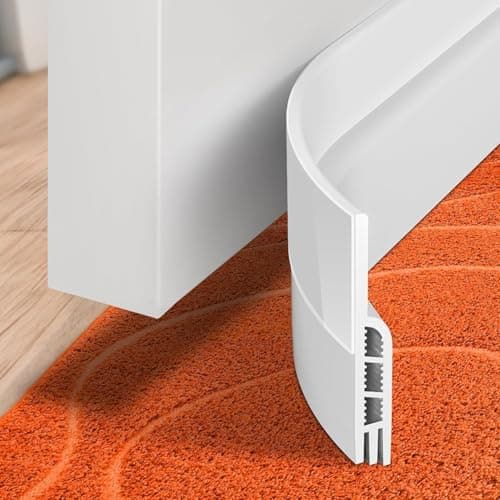
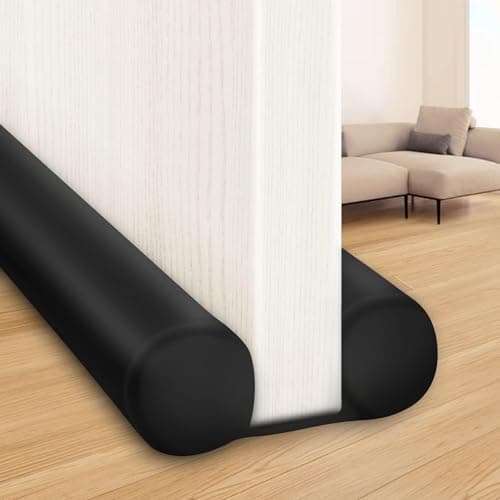
MAXTID Door Draft Stopper, 36 in, 2 in Diameter FoamA 2 in diameter foam sweep that covers a 0.5 to 1.7 in door gap and moves with the door. Seventeen dollars, and the highest-value item on the site.
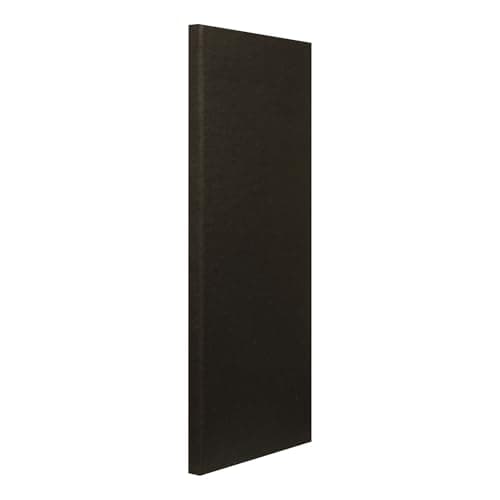
ATS Acoustics Beveled Edge Panel, 24 x 48 x 2 inThe same NRC 1.0 mineral-wool build as the Sona panel in jute burlap with a beveled edge, for about 16 dollars less.
Holikme Door Draft Stopper, 41 in Silicone SealA 41 by 2 in adhesive silicone strip that fills a gap up to 1 in, rated for interior and exterior doors, for seven dollars.
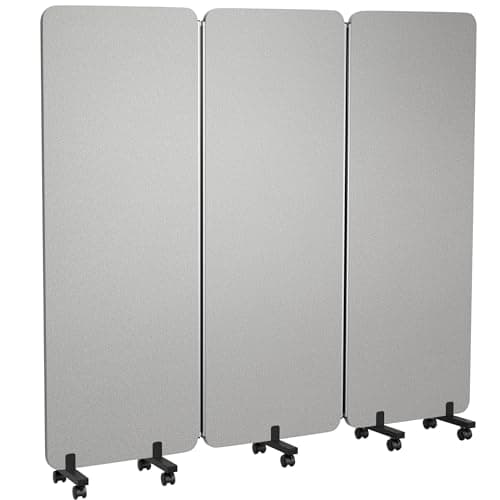
KERRAM 3-Panel Foldable Office Partition with WheelsNames its core material as 100% high-density polyester fiber, states a 1.13 in panel thickness, folds flat, and runs on 10 self-locking casters.
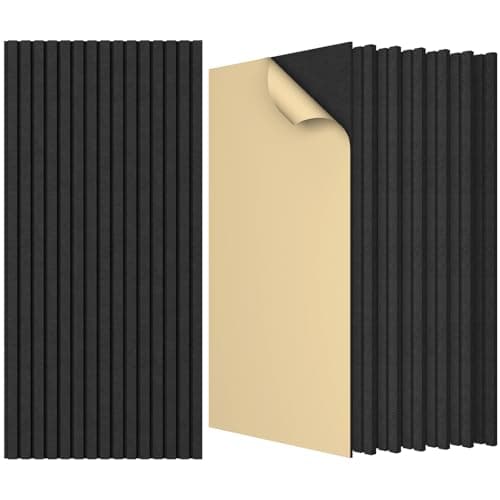
TONOR Self-Adhesive Acoustic Panels, 8-Pack 47.2 x 23.6 inPublishes both an NRC of 0.9 and a material density, which almost nothing else at this price does, and sticks on without a single screw.
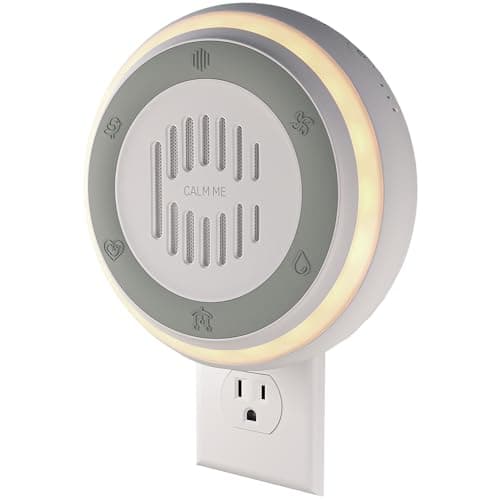
Calm Me Wall Plug-In Sound Masking MachineTwenty non-looping sounds including white, brown and pink noise, from a plug-in unit with a timer and memory. Forty dollars.
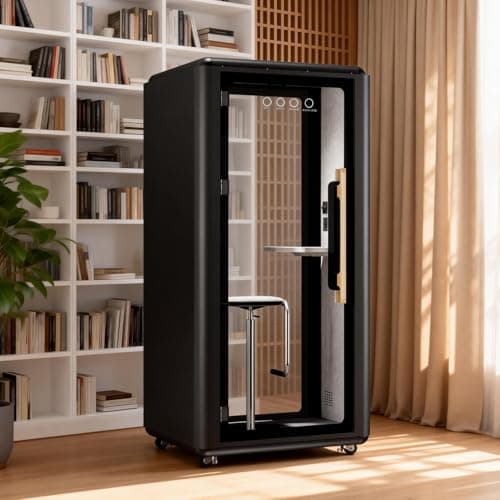
VESTAEL VST-01 Soundproof Office Pod BoothThe only pod here that publishes BOTH its external and its internal dimensions, which is the single most useful fact in this category.
Scores are ours, from the published rubric on our methodology page. They are editorial judgments about published specifications, not test results — we have not handled these units.
01/MAXTID
Door Draft Stopper, 36 in, 2 in Diameter Foam
Best door gap seal
8.6/ 10
A 2 in diameter foam sweep that covers a 0.5 to 1.7 in door gap and moves with the door. Seventeen dollars, and the highest-value item on the site.
A 2 in diameter foam sweep that covers a 0.5 to 1.7 in door gap and moves with the door. Seventeen dollars, and the highest-value item on the site.
Published specification
Length
36 in; trimmable to 30, 32 or 34 in
MAXTID published specification
Foam diameter
2 in
MAXTID published specification
Gap coverage
0.5 to 1.7 in
MAXTID published specification
Weight
0.65 lb
Listing published specification
Fitting
Slides under the door and moves with it; no adhesive, no damage
MAXTID published specification
Not for
Exterior doors with a threshold, per the manufacturer
MAXTID published specification
What the specs are good for
Publishes the gap range it covers at 0.5 to 1.7 in, which is the only spec that matters and which most door sweeps omit entirely
A 2 in foam diameter, which MAXTID correctly points out is larger than most, and diameter is what closes a big gap
No adhesive: it slides on and comes off, which makes it the one soundproofing product a renter can fit without thought
Trimmable to four common door widths
Tells you plainly it is not for exterior doors with a threshold, rather than overclaiming
What they are not
A door gap is a leak, not the whole wall. Sealing it reduces what comes under the door and does nothing about what comes through it
Foam compresses over time and will need replacing
0.65 lb of foam on a door that opens 40 times a day will shift and need nudging back
Skip this if
Skip this if your door has no visible gap at the bottom. Look along the floor line with a light on the other side first; if there is no light, there is no leak to seal.
Who it is for. Everyone with a home office behind a normal interior door. At 17 dollars it is the first thing we would buy for noise, before any panel.
The same NRC 1.0 mineral-wool build as the Sona panel in jute burlap with a beveled edge, for about 16 dollars less.
The same NRC 1.0 mineral-wool build as the Sona panel in jute burlap with a beveled edge, for about 16 dollars less.
Published specification
Panel size
24 x 48 x 2 in
ATS Acoustics published specification
Coverage per panel
8 sq ft
Our arithmetic from the published panel size
NRC
1.0 (publisher states out of 1)
ATS Acoustics published specification
Core
Mineral wool, solid wood internal frame, full wood back
ATS Acoustics published specification
Fabric
100% jute burlap
ATS Acoustics published specification
Weight
8.25 lb
Listing published specification
What the specs are good for
Same published NRC 1.0 and same mineral wool core as the Sona panel, for less money
Beveled edge reads as a deliberate architectural element rather than a studio accessory
Full wood back means it sits flat against drywall without bowing
What they are not
Burlap is a coarser, more rustic texture than the Sona fabric and shows dust
The listing does not restate the ASTM E84 fire rating that the Sona panel carries
Still a single panel per purchase
Skip this if
Skip this if the room is a living space where the panel has to look soft and finished. Burlap looks like what it is, and in a shared room that reads as equipment.
Who it is for. Anyone who wants the measured build and does not care that the fabric is agricultural.
Names its core material as 100% high-density polyester fiber, states a 1.13 in panel thickness, folds flat, and runs on 10 self-locking casters.
Names its core material as 100% high-density polyester fiber, states a 1.13 in panel thickness, folds flat, and runs on 10 self-locking casters.
Published specification
Overall size
71 in wide x 66 in high
KERRAM published specification
Panel thickness
1.13 in
KERRAM published specification
Core
100% high-density polyester fiber, fabric outer
KERRAM published specification
Frame
Aluminum
KERRAM published specification
Casters
10 self-locking swivel casters
KERRAM published specification
Assembly
3 to 5 minutes; casters only, no panel assembly
KERRAM published specification
Absorption
Not published as a figure. The core material and thickness are published, the NRC is not
Absence confirmed against the published specification
What the specs are good for
States a panel thickness AND a core material, which together are the two facts that decide whether a partition does anything acoustically
1.13 in of high-density polyester is a genuine absorber, unlike fabric on a steel frame
Folds completely flat for storage, which no other acoustic partition here does
Aluminum frame keeps the weight down without the flex of a thin steel tube
Ten self-locking casters and a 3 to 5 minute setup
What they are not
No NRC or absorption coefficient published, so the thickness and material are the only evidence
380 dollars for 32 sq ft of partition
Only 20 units showed in stock at the time of writing, so availability is thin
Skip this if
Skip this if you need the partition to block sound rather than absorb it. 1.13 in of polyester fiber reduces reflections and speech spill; it is not a wall and it will not stop a conversation being audible on the other side.
Who it is for. Someone in a shared room who needs the calls to stop bouncing and the partition to disappear into a cupboard at weekends.
Self-Adhesive Acoustic Panels, 8-Pack 47.2 x 23.6 in
Best for walls you cannot drill
8.0/ 10
Publishes both an NRC of 0.9 and a material density, which almost nothing else at this price does, and sticks on without a single screw.
Publishes both an NRC of 0.9 and a material density, which almost nothing else at this price does, and sticks on without a single screw.
Published specification
Panel size
47.2 x 23.6 x 0.35 in, 8 panels
TONOR published specification
Coverage
About 61.9 sq ft total
Our arithmetic from the published panel size
NRC
0.9 (manufacturer's published figure; no test standard named)
TONOR published specification
Density
212.2 kg/m3
TONOR published specification
Material
100% polyester fiber
TONOR published specification
Mounting
Self-adhesive backing
TONOR published specification
What the specs are good for
An NRC figure AND a density figure, which together are the most spec data anyone publishes in the peel-and-stick tier
212.2 kg/m3 is a genuinely high density for polyester felt and it is why the NRC claim is plausible
No fixings at all, which makes this the rental answer
About 62 sq ft, enough for two walls of a small room
What they are not
Names no test standard for the NRC, so the figure is unaudited
0.35 in thick: same low-frequency limitation as every felt panel
Adhesive needs a smooth, clean, dry wall and can lift paint on removal
Skip this if
Skip this if your walls are textured, freshly painted, or anything other than smooth and sound. Adhesive panels on a rough or chalky surface fall off, usually about three weeks later.
Who it is for. A renter with smooth walls and a landlord, who still wants a density figure behind the purchase.
Twenty non-looping sounds including white, brown and pink noise, from a plug-in unit with a timer and memory. Forty dollars.
Twenty non-looping sounds including white, brown and pink noise, from a plug-in unit with a timer and memory. Forty dollars.
Published specification
Dimensions
4.2 x 1.5 x 4 in
Listing published specification
Weight
0.39 lb
Listing published specification
Sounds
20 non-looping, including two white noise types, brown noise, pink noise and 6 fan sounds
Calm Me published specification
Power
Plugs directly into the wall; optional cable extension included
Calm Me published specification
Controls
Volume, timer, memory function
Calm Me published specification
Extra
Dual-color night light
Calm Me published specification
Output level
Not published
Absence confirmed against the published specification
What the specs are good for
Names brown AND pink noise separately from white, which matters: brown noise is weighted low and masks traffic and voices better than white does
Non-looping, which is the difference between masking you forget about and a 30-second loop you start to hear
Plugs straight into the wall, so it takes no desk space at all
A memory function, so it resumes where it was rather than needing setting up daily
What they are not
No published output level, so you cannot tell whether it will cover the noise you have
Masking is not reduction. It replaces an intermittent annoyance with a constant sound you have chosen, which helps concentration and does nothing for a microphone
Plug-in form factor means it sits at outlet height, usually near the floor, which is the wrong place for masking a desk
Skip this if
Skip this if the problem is how you sound on calls. Masking adds sound to the room, so a microphone picks up more, not less. It is a concentration tool, and we are explicit about that because the category is routinely sold as if it were soundproofing.
Who it is for. Someone whose problem is intermittent distraction — a neighbour's dog, a road, a household — rather than call quality.
The only pod here that publishes BOTH its external and its internal dimensions, which is the single most useful fact in this category.
The only pod here that publishes BOTH its external and its internal dimensions, which is the single most useful fact in this category.
Published specification
External size
42.32 x 38.97 x 90.55 in
VESTAEL published specification
Interior size
37.28 x 37.71 x 78.74 in
VESTAEL published specification
Wall thickness implied
About 2.5 in per side, from the external minus internal figures
Our arithmetic from the two published dimension sets
Footprint
About 11.5 sq ft
Our arithmetic from the published external size
Weight
573 lb
VESTAEL published specification
Rating
RW 35 dB (plus/minus 5). ISO 717-1 building-element rating; no ISO 23351-1 figure published
VESTAEL published specification, with our note on the standard
Lighting
Adjustable 4500K LED
VESTAEL published specification
Ventilation
Dual silent fan system plus natural air vent
VESTAEL published specification
Fit-out
Two AC sockets with USB and USB-C, cable passthrough, built-in desk, skylight
VESTAEL published specification
Assembly
1 to 2 hours for two people; each panel about 70 lb
VESTAEL published specification
What the specs are good for
Publishes interior dimensions. 37.28 x 37.71 x 78.74 in is a number you can measure a chair and a monitor against before you spend 4,300 dollars
Publishing both dimension sets also lets you derive the wall thickness, which is the only cross-check available on an acoustic claim in this category
Also publishes the per-panel weight at about 70 lb, so you know whether two people can carry it upstairs
Dual fans plus a passive vent, and a skylight for daylight
USB-C, cable passthrough and a built-in desk included
What they are not
The "blocks up to 95% of noise" line in the listing is a marketing sentence sitting next to a real RW figure, and the two are not the same kind of statement
RW 35 plus/minus 5 is a 10 dB spread, which is a wide tolerance on the headline number
573 lb in panels of about 70 lb each: this is a two-person job and a careful route plan
Truck delivery with a required recipient
Skip this if
Skip this if you cannot get 70 lb panels to where the pod will live. The assembly is manageable; the carry is what catches people, and VESTAEL deserves credit for publishing the number that tells you.
Who it is for. Anyone who wants to check the thing will actually fit, and fit around them, before buying. This is the pod we would start a shortlist with.
Under 50 dollars. Door sweep, weatherstrip, move the desk, move a bookcase. This is where the best value in the whole category is, it takes one afternoon, and most people stop here happier than they expected.
Under 450 dollars. Add a rug, heavy curtains and six good acoustic panels at the first reflection points. The room now sounds genuinely different and your calls sound genuinely better.
Under 900 dollars. Add an acoustic partition if you share the room, or ceiling treatment if you have run out of wall. This is about as far as a room can be taken without construction.
Over 3,500 dollars. An enclosure, after everything above, having read office pod vs treating the room first. A surprising number of pod-shaped problems turn out to be 400-dollar problems.
What we would not spend money on
Thin foam in small quantities. A 12-pack of tiles is about 3 per cent coverage in a normal room, which is a sample rather than a treatment.
Fabric room dividers bought for noise. No core, no mass, no effect. Bought for sightlines they are excellent and cost 30 to 70 dollars.
Mass-loaded vinyl on a finished wall. The installations that work involve taking the wall apart.
Anything described as noise canceling that is not a pair of headphones. Noise cancellation is an active electronic process and a felt panel is not performing it.
The other half of a workable room
Quiet is one of two things that make a home office usable, and the other is having somewhere for everything to go. If the room is both noisy and cluttered, how to organize a home office is the companion to this page, and it starts the same way: with a free step most people skip.
FAQ
Questions people ask about this
How do I soundproof a home office cheaply?+
Fit a door sweep for 7 to 17 dollars and weatherstrip the jamb for about 15. A typical interior door has around 20 square inches of straight-through gap at the bottom, which is the single biggest leak in most home offices. Then move the desk away from the noisy wall, which is free.
Can you soundproof a room without construction?+
You can substantially reduce transmission by sealing gaps, adding mass at the window with heavy curtains, and upgrading to a solid-core door. You cannot make a room genuinely private without either construction or an enclosure, and an office pod at 3,200 dollars is the only consumer product that achieves it.
Do acoustic panels soundproof a room?+
No. Panels absorb reflections inside a room and have almost no mass, which is precisely why they absorb well. Blocking sound needs mass and airtightness. If your complaint is a neighbor rather than an echo, panels will not touch it however many you hang.
What is the most effective soundproofing for a home office?+
Per dollar, sealing the door. In absolute terms, an enclosure. Everything in between - curtains, a solid-core door, partitions - is a partial measure, and the curve gets steep quickly after the sealing is done.
How much does it cost to soundproof a home office?+
Under 50 dollars gets you the sealing, which is where the best value is. Under 450 adds a rug, curtains and six acoustic panels, at which point the room sounds genuinely different. Beyond about 900 you are into enclosures, which start at 3,200.
Will soundproofing stop my family hearing my calls?+
Sealing the door helps substantially and does not make a room private. An office pod with a published RW of 33 to 35 dB typically renders speech audible but not followable from outside, which for most privacy purposes is the threshold that matters. Nothing cheaper achieves it.
Is it worth soundproofing a rented home office?+
The best-value fixes are all reversible and rental-friendly: a sliding door sweep leaves no trace, adhesive acoustic panels come off smooth walls, a rug and curtains move with you, and a freestanding partition needs no fixings at all. Only the solid-core door and construction are out of reach.
Sources
Where these numbers came from
We have not handled any of these products. Every figure on this page is either the manufacturer's own published specification, named as such, or our arithmetic from those figures, shown so you can check it. Prices come from Amazon through our price layer and carry the date they were verified.
Amazon product listings, retrieved 2026-10-03
Published specifications, dimensions, materials and manufacturer claims were read from each product's own listing data. Prices and availability refresh daily and carry their verification date on the page.
The full published method, and an explicit statement of what a specs-only approach cannot tell you.
ASTM C423 — Standard Test Method for Sound Absorption and Sound Absorption Coefficients by the Reverberation Room Method
The governing test method behind any NRC figure. We name it where a manufacturer publishes an NRC so you know what the number is a result of. We have not performed this test and we do not restate anyone's NRC as our own measurement.
ISO 717-1 — Rating of sound insulation in buildings and of building elements, airborne sound insulation
The standard behind the RW figures most office pods publish. RW is a laboratory single-number rating for a BUILDING ELEMENT measured between two reverberant rooms, which a freestanding furniture enclosure is not. We name the mismatch wherever an RW figure appears.
ISO 23351-1 — Acoustics, measurement of speech level reduction of furniture ensembles and enclosures
The standard written specifically for pods and booths; it reports speech level reduction (DS,A). Not one listing in this category publishes a DS,A figure, which is why every pod rating on this site is presented as the manufacturer's RW claim rather than as a comparable isolation figure.