Which panel, in one paragraph
Buy the ATS Acoustics panels if the room has to work for calls and you can spend around 500 dollars. Buy the Olanglab 10-pack if you want the whole room covered this month for under 200. ATS publishes an NRC of 1.0 measured to a named standard and costs about 12 dollars a square foot. Olanglab publishes no absorption figure at all and costs about 1.94. That is the real trade in this category: a measured product, or a lot of unmeasured area.
If you cannot drill, the TONOR 8-pack is the only self-adhesive option that publishes both an NRC and a material density. If the wall is visible on camera and you care how it looks, the Art3d wood slat panels are the best-looking thing here and publish nothing acoustic at all, which is an honest trade to make knowingly.
The one fact that sorts this entire category
Nine of the eleven acoustic panels we examined publish no absorption figure of any kind. Not an NRC, not a coefficient, not a frequency range. They publish a sentence instead, usually a percentage.
NRC is the Noise Reduction Coefficient: a number from 0 to 1 produced by ASTM C423, a laboratory test in which a sample sits in a reverberation chamber and the decay of sound is measured across four frequency bands. It is a result. When ATS Acoustics publishes NRC 1.0, that figure came out of a chamber.
"Absorbs up to 85% of sound" is not a result. Eighty-five per cent of what sound, at which frequency, measured how? There is no answer, because there was no measurement. That is why `documentation` is a scored metric on every page in this hub and why it carries real weight: in this category the gap between a figure and a sentence is most of the decision.
What panels do, and the thing they cannot
Panels absorb sound inside your room. They do not stop sound entering it. This is the most expensive misunderstanding in the category and the reason people hang 52 foam tiles, still hear the neighbor, and conclude the whole thing is a fraud.
Absorbing needs porous, lightweight material with air in it. Blocking needs mass and airtightness. A 0.3 in felt panel weighs almost nothing, which is exactly why it absorbs well and blocks nothing. The two are different physical problems and a product good at one is usually bad at the other by construction.
Clap once in the middle of the room. A ring that hangs for a fraction of a second means reflective surfaces, and panels will fix it. Then sit in silence for two minutes and list what you hear. Everything on that list is arriving through a wall or a door, and no panel will touch any of it - that is acoustic panels vs soundproofing, and if it turns out to be your problem, start at how to soundproof a home office instead.
Thickness decides which frequencies
A porous absorber works best at frequencies whose quarter-wavelength fits within its depth. That is why a 2 in mineral wool panel and a 0.3 in felt panel behave completely differently even when both are doing the same thing.
Human speech runs roughly 100 Hz to 4,000 Hz, with the energy that makes a voice sound boomy concentrated between about 125 and 500. A thin felt panel does good work above 1,000 Hz and very little below 500. A 2 in panel reaches meaningfully lower. That is the whole difference between the two price tiers in this hub.
So: if your room sounds bright, hissy and sibilant, buy the cheap coverage. If it sounds boomy, boxy or hollow, buy thickness. Clap once and listen to what kind of ring you get.
How much you need, and where it goes
A 12 by 10 ft room with a hard floor and bare walls has roughly 420 sq ft of reflective surface after you subtract a door, a window and some soft furnishing. Treating 15 to 20 per cent of that is where the change becomes obvious, which is 63 to 84 sq ft - eight to eleven 24 by 48 in panels.
A 12-pack of hexagon tiles is about 10 sq ft. That is under 3 per cent coverage, which is why one pack changes nothing and why people conclude the product does not work. The full arithmetic, with your own room dimensions as the input, is on how many acoustic panels do you need.
Placement is free and does disproportionate work: the first reflection points, where sound from your mouth bounces once before reaching your microphone, are found in two minutes with a hand mirror. Where to place acoustic panels has the method.
| # | Product | Best for | Score | Price |
|---|
| 01 | 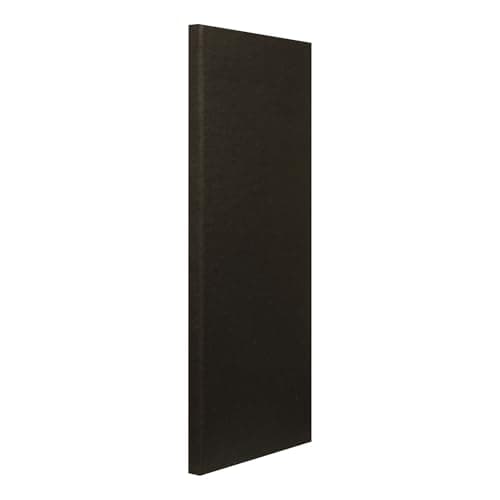 ATS Acoustics Beveled Edge Panel, 24 x 48 x 2 inThe same NRC 1.0 mineral-wool build as the Sona panel in jute burlap with a beveled edge, for about 16 dollars less. ATS Acoustics Beveled Edge Panel, 24 x 48 x 2 inThe same NRC 1.0 mineral-wool build as the Sona panel in jute burlap with a beveled edge, for about 16 dollars less. | Best measured panel under 80 dollars | 8.4out of 10 | |
| 02 | 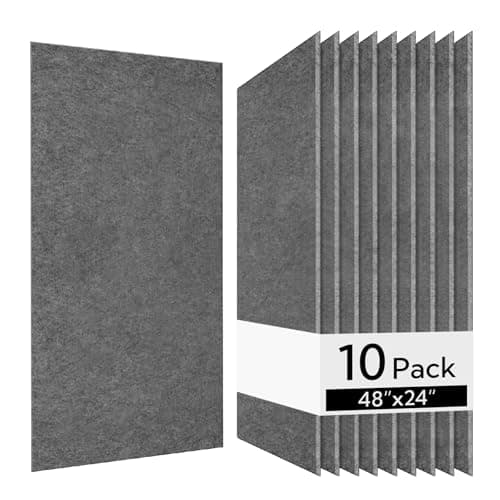 Olanglab PET Felt Wall Panels, 10-Pack 48 x 24 in77 sq ft of recycled PET felt for about 150 dollars, which is the cheapest real coverage on this page. Thin, so it works on voices and not on rumble. Olanglab PET Felt Wall Panels, 10-Pack 48 x 24 in77 sq ft of recycled PET felt for about 150 dollars, which is the cheapest real coverage on this page. Thin, so it works on voices and not on rumble. | Best coverage per dollar | 7.4out of 10 | |
| 03 | 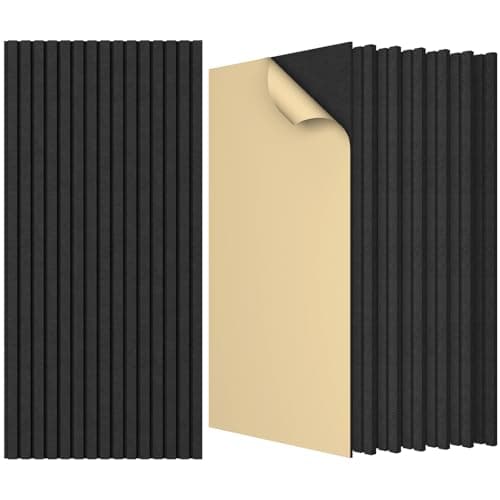 TONOR Self-Adhesive Acoustic Panels, 8-Pack 47.2 x 23.6 inPublishes both an NRC of 0.9 and a material density, which almost nothing else at this price does, and sticks on without a single screw. TONOR Self-Adhesive Acoustic Panels, 8-Pack 47.2 x 23.6 inPublishes both an NRC of 0.9 and a material density, which almost nothing else at this price does, and sticks on without a single screw. | Best for walls you cannot drill | 8.0out of 10 | |
| 04 | 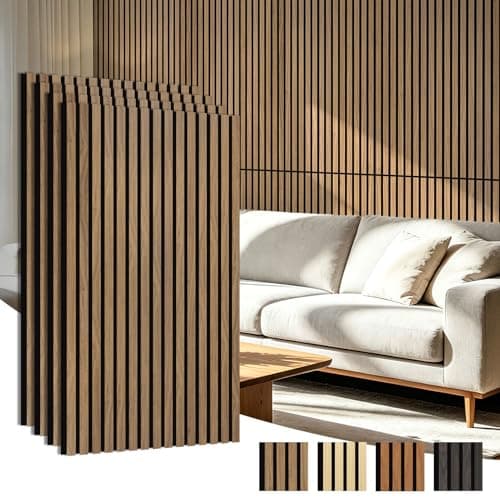 Art3d Acoustic Wood Slat Panel, 4-Pack 47 x 23.6 in30.8 sq ft of slatted wood over felt for 85 dollars, and the only option here that a video call will read as architecture rather than treatment. Art3d Acoustic Wood Slat Panel, 4-Pack 47 x 23.6 in30.8 sq ft of slatted wood over felt for 85 dollars, and the only option here that a video call will read as architecture rather than treatment. | Best-looking panel | 6.6out of 10 | |
| 05 | 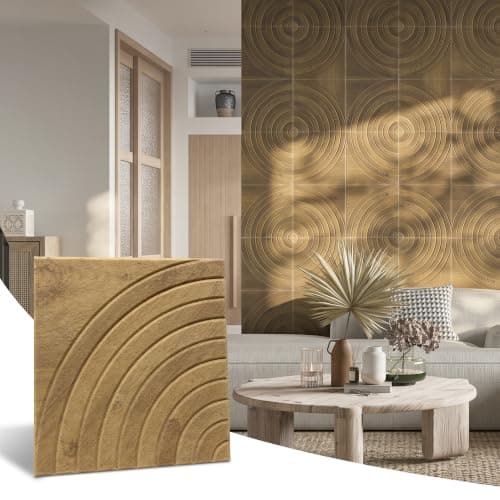 INNO STICKERS PET Felt Tiles, 16-Pack 11.8 x 11.8 inPublishes an NRC range of 0.6 to 0.85 rather than a single flattering number, which is the most honest absorption statement on this page. INNO STICKERS PET Felt Tiles, 16-Pack 11.8 x 11.8 inPublishes an NRC range of 0.6 to 0.85 rather than a single flattering number, which is the most honest absorption statement on this page. | Best for treating one spot | 7.0out of 10 | |
Scores are ours, from the published rubric on our methodology page. They are editorial judgments about published specifications, not test results — we have not handled these units.
01/ATS Acoustics
Beveled Edge Panel, 24 x 48 x 2 in
Best measured panel under 80 dollars
8.4/ 10
The same NRC 1.0 mineral-wool build as the Sona panel in jute burlap with a beveled edge, for about 16 dollars less.
The same NRC 1.0 mineral-wool build as the Sona panel in jute burlap with a beveled edge, for about 16 dollars less.
Published specification| Panel size | 24 x 48 x 2 in | ATS Acoustics published specification |
|---|
| Coverage per panel | 8 sq ft | Our arithmetic from the published panel size |
|---|
| NRC | 1.0 (publisher states out of 1) | ATS Acoustics published specification |
|---|
| Core | Mineral wool, solid wood internal frame, full wood back | ATS Acoustics published specification |
|---|
| Fabric | 100% jute burlap | ATS Acoustics published specification |
|---|
| Weight | 8.25 lb | Listing published specification |
|---|
What the specs are good for
- Same published NRC 1.0 and same mineral wool core as the Sona panel, for less money
- Beveled edge reads as a deliberate architectural element rather than a studio accessory
- Full wood back means it sits flat against drywall without bowing
What they are not
- Burlap is a coarser, more rustic texture than the Sona fabric and shows dust
- The listing does not restate the ASTM E84 fire rating that the Sona panel carries
- Still a single panel per purchase
Skip this if
Skip this if the room is a living space where the panel has to look soft and finished. Burlap looks like what it is, and in a shared room that reads as equipment.
Who it is for. Anyone who wants the measured build and does not care that the fabric is agricultural.
Our score, by metric
- absorption
- 10
- coverage
- 6
- mounting
- 8
- finish
- 6
- documentation
- 9
02/Olanglab
PET Felt Wall Panels, 10-Pack 48 x 24 in
Best coverage per dollar
7.4/ 10
77 sq ft of recycled PET felt for about 150 dollars, which is the cheapest real coverage on this page. Thin, so it works on voices and not on rumble.
77 sq ft of recycled PET felt for about 150 dollars, which is the cheapest real coverage on this page. Thin, so it works on voices and not on rumble.
Published specification| Panel size | 47 x 23 x 0.31 in, 10 panels | Olanglab published specification |
|---|
| Coverage | 77.35 sq ft total | Olanglab published specification |
|---|
| Cost per sq ft | About 1.94 dollars at the list price shown | Our arithmetic from the live price and the published coverage |
|---|
| Material | Recycled PET felt | Olanglab published specification |
|---|
| Absorption | Manufacturer states "absorbing up to 85% of sound"; no NRC and no test standard published | Olanglab published specification |
|---|
| Thickness | 0.31 in | Olanglab published specification |
|---|
What the specs are good for
- 77 sq ft in one box, enough to treat a whole small office rather than one wall
- Under 2 dollars per square foot, roughly a sixth of the measured 2 in panels
- Cuts with a knife, so awkward walls and sockets are not a problem
- Slot pattern reads as deliberate wall decor in a shared room
What they are not
- The "85% of sound" claim is a marketing sentence, not a measurement: no NRC, no frequency range, no standard
- At 0.31 in thick it works on speech reflections and does essentially nothing below about 500 Hz
- Ten thin panels is a long install compared with two thick ones
Skip this if
Skip this if your problem is a neighbor, traffic, or a washing machine. Thin felt does not touch low frequency and no quantity of it will. That is a blocking problem and panels are an absorbing product.
Who it is for. The person whose calls sound echoey in a hard room and who wants the whole room treated this month.
Our score, by metric
- absorption
- 6
- coverage
- 10
- mounting
- 8
- finish
- 8
- documentation
- 4
03/TONOR
Self-Adhesive Acoustic Panels, 8-Pack 47.2 x 23.6 in
Best for walls you cannot drill
8.0/ 10
Publishes both an NRC of 0.9 and a material density, which almost nothing else at this price does, and sticks on without a single screw.
Publishes both an NRC of 0.9 and a material density, which almost nothing else at this price does, and sticks on without a single screw.
Published specification| Panel size | 47.2 x 23.6 x 0.35 in, 8 panels | TONOR published specification |
|---|
| Coverage | About 61.9 sq ft total | Our arithmetic from the published panel size |
|---|
| NRC | 0.9 (manufacturer's published figure; no test standard named) | TONOR published specification |
|---|
| Density | 212.2 kg/m3 | TONOR published specification |
|---|
| Material | 100% polyester fiber | TONOR published specification |
|---|
| Mounting | Self-adhesive backing | TONOR published specification |
|---|
What the specs are good for
- An NRC figure AND a density figure, which together are the most spec data anyone publishes in the peel-and-stick tier
- 212.2 kg/m3 is a genuinely high density for polyester felt and it is why the NRC claim is plausible
- No fixings at all, which makes this the rental answer
- About 62 sq ft, enough for two walls of a small room
What they are not
- Names no test standard for the NRC, so the figure is unaudited
- 0.35 in thick: same low-frequency limitation as every felt panel
- Adhesive needs a smooth, clean, dry wall and can lift paint on removal
Skip this if
Skip this if your walls are textured, freshly painted, or anything other than smooth and sound. Adhesive panels on a rough or chalky surface fall off, usually about three weeks later.
Who it is for. A renter with smooth walls and a landlord, who still wants a density figure behind the purchase.
Our score, by metric
- absorption
- 8
- coverage
- 8
- mounting
- 9
- finish
- 8
- documentation
- 7
04/Art3d
Acoustic Wood Slat Panel, 4-Pack 47 x 23.6 in
Best-looking panel
6.6/ 10
30.8 sq ft of slatted wood over felt for 85 dollars, and the only option here that a video call will read as architecture rather than treatment.
30.8 sq ft of slatted wood over felt for 85 dollars, and the only option here that a video call will read as architecture rather than treatment.
Published specification| Panel size | 47.24 x 23.62 x 0.39 in, 4 panels | Listing published specification |
|---|
| Coverage | 30.8 sq ft total | Art3d published specification |
|---|
| Weight | 5.7 lb per panel | Listing published specification |
|---|
| Absorption | Not published. Art3d states no NRC and names no test | Absence confirmed against the published specification |
|---|
| Mounting | Adhesive or basic hardware | Art3d published specification |
|---|
What the specs are good for
- The best finish on this page by a distance: on camera it reads as a feature wall
- 30.8 sq ft for 85 dollars is reasonable value even ignoring acoustics
- Wipes clean, and solid slats resist the warping that cheap veneer slat panels do
What they are not
- No published NRC, no absorption coefficient, no test standard. There is felt behind the slats and we do not know what it does
- Slats cover part of the felt, which necessarily reduces the absorbing area versus a flat panel of the same size
- Heavier than felt tiles, so adhesive alone is a risk on a warm wall
Skip this if
Skip this if the room is genuinely echoey and you are buying one product to fix it. Buy these because you want the wall to look like this, and treat any acoustic benefit as a bonus you cannot size in advance.
Who it is for. Someone whose office is also a visible room, who is on camera, and who would rather the fix not look like a fix.
Our score, by metric
- absorption
- 5
- coverage
- 8
- mounting
- 6
- finish
- 10
- documentation
- 3
05/INNO STICKERS
PET Felt Tiles, 16-Pack 11.8 x 11.8 in
Best for treating one spot
7.0/ 10
Publishes an NRC range of 0.6 to 0.85 rather than a single flattering number, which is the most honest absorption statement on this page.
Publishes an NRC range of 0.6 to 0.85 rather than a single flattering number, which is the most honest absorption statement on this page.
Published specification| Tile size | 11.8 x 11.8 x 0.4 in, 16 tiles | INNO STICKERS published specification |
|---|
| Coverage | 15.5 sq ft total | INNO STICKERS published specification |
|---|
| NRC | 0.6 to 0.85, stated as a range (no test standard named) | INNO STICKERS published specification |
|---|
| Material | Recycled PET felt | INNO STICKERS published specification |
|---|
| Mounting | 96 adhesive tabs supplied; permanent install needs extra adhesive | INNO STICKERS published specification |
|---|
What the specs are good for
- A published RANGE instead of a single best-case number, which is how absorption actually behaves across frequency
- Small tiles let you put absorption exactly where the reflection is, instead of covering a whole wall
- Adhesive tabs are removable, so this is the least committal option here
- Moisture-resistant and vacuumable
What they are not
- 15.5 sq ft is a spot treatment, not a room treatment
- Adhesive tabs are explicitly described as temporary; a permanent install needs adhesive you buy separately
- 16 small tiles means 16 alignment decisions and a grid that is obvious when it is slightly off
Skip this if
Skip this if you need more than about 16 sq ft. Buying three boxes to cover a wall costs more per square foot than the 10-pack of large panels above and takes four times as long to hang.
Who it is for. Someone with one bad reflection, a rented wall, and no appetite for a project.
Our score, by metric
- absorption
- 7
- coverage
- 5
- mounting
- 9
- finish
- 7
- documentation
- 7
Where to go from here
For the full eleven-product ranking, the best acoustic panels for a home office. For the same products ranked strictly on what each maker will commit to in writing, best sound absorbing panels. And if you are weighing the 37-dollar foam against proper panels, acoustic panels vs foam is the honest comparison, including the three situations where the foam genuinely wins.
If absorption turns out not to be your problem, the other side of this pillar is room dividers and partitions for a shared room, and office pods for genuine isolation.


