A typical interior door has about 20 square inches of straight-through opening at the bottom. That is the single biggest leak in most home offices and it costs 17 dollars to close.
SMBy Scooter M.Published October 3, 2026Prices verified October 3, 2026
The short answer
Fit a door sweep. It costs 7 to 17 dollars, takes two minutes, and does more for what you hear from the rest of the house than anything else at any price in this category. A standard 32 in interior door with a 0.625 in gap underneath has about 20 square inches of straight-through opening, which is an open window in acoustic terms. After the sweep, weatherstrip the jamb; after that you are into replacing the door, and the curve gets steep.
Why the gap matters so much
Sound is remarkably good at finding openings. A barrier's performance is dominated by its weakest path, not averaged across its area, which is why a small gap undermines a large door.
The opening under a typical interior door
Standard interior door width: 32 in (some are 30 or 28)
Typical gap at the threshold: 0.5 to 1 in, cut for carpet clearance
32 x 0.625 = 20 square inches of open air
For comparison, the door itself is 32 x 80 = 2,560 square inches
So the gap is under 1 per cent of the area and carries a wildly disproportionate share of the sound
Our arithmetic. The gap exists because doors are hung to clear carpet and to let air move for ventilation, both of which are real requirements. A sweep closes it acoustically while still letting the door operate.
This is why the sweep is the best value purchase on this entire site. Seventeen dollars closes a hole that no amount of acoustic panel addresses, because panels absorb reflections within a room and this is a transmission path into it.
Step 1: find the leaks with a light
Two minutes, no tools, and it tells you exactly where to spend.
01Close the door. Turn the light ON in the room beyond and OFF in your room.
02Look along the bottom of the door. A bright line is your main leak and it is almost always there.
03Check all four edges. Light at the latch side means the door is not closing against its stop. Light at the hinge side means it is hung proud.
04Check the top. Often overlooked and frequently gapped.
Wherever light passes, air passes, and wherever air passes, sound passes. It is an imperfect analogy - sound bends around obstacles in a way light does not - and it is more than good enough to find the leaks.
Step 2: the right sweep for your floor
Two types, and the floor decides which.
Door sweeps compared
Sliding foam sweep
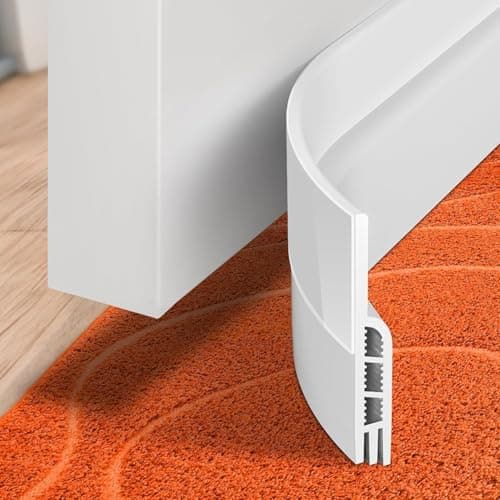
Adhesive silicone strip
Fits gap
0.5 to 1.7 in (MAXTID publishes this)
Up to 1 in (Holikme publishes this)
Fitting
Slides under the door, moves with it, no adhesive
Adhesive strip, fixed to the door
Carpet
Works. It rides over carpet
Catches and peels
Hard floor
Works
Works, and is tidier
Removable
Completely. The rental answer
Leaves adhesive residue
Exterior doors
Not for thresholds (MAXTID says so)
Rated for exterior use
Price
About 17 dollars
About 7 dollars
From each product's own published specification. The published gap range is the spec that matters and both of these publish one, which most door sweeps do not.
Step 3: the jamb
Once the bottom is closed, the perimeter is the next leak. Self-adhesive foam or rubber weatherstrip, applied to the door stop so the door closes against it, costs under 15 dollars and seals three of the four edges.
Two practical notes. Apply it to the stop face, not the door edge, so the door compresses it when closed rather than scraping along it. And a compressible seal makes the door harder to close, which is the point: a door that latches with no resistance is a door that is not sealing.
If the door rattles in its frame after weatherstripping, that is the seal doing its job and the latch not reaching. Most strike plates can be adjusted by a few millimeters with a screwdriver.
Step 4: mass, if you are going further
After sealing, the door's own mass is the limit. Most interior doors are hollow-core: two thin skins over a cardboard honeycomb, weighing around 25 to 30 lb.
A solid-core door weighs 60 to 100 lb and is a genuine improvement. It costs 150 to 400 dollars plus hanging, and the existing hinges will not carry it - budget new ones.
A heavy curtain over the doorway adds mass and absorption cheaply, looks unusual in a house and genuinely works. 60 to 200 dollars.
Door blankets and mass-loaded vinyl exist and we have not found one we would recommend. They are heavy, they look industrial, and most need permanent fixing to the door face.
Our honest view: do the sealing, and if that is not enough the next genuinely effective step is not the door at all. It is an enclosure, and that is a 3,200-dollar conversation covered on office pods.
#
Product
Best for
Score
Price
01
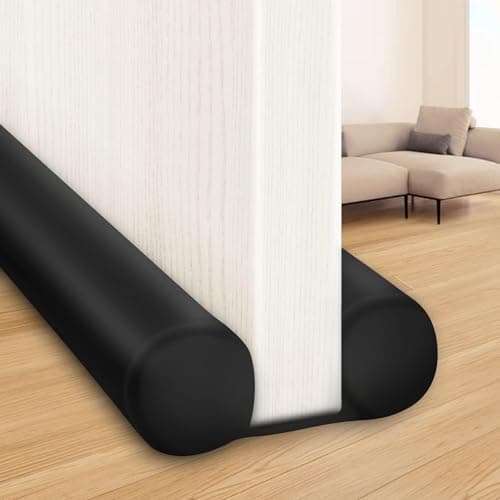
MAXTID Door Draft Stopper, 36 in, 2 in Diameter FoamA 2 in diameter foam sweep that covers a 0.5 to 1.7 in door gap and moves with the door. Seventeen dollars, and the highest-value item on the site.
Holikme Door Draft Stopper, 41 in Silicone SealA 41 by 2 in adhesive silicone strip that fills a gap up to 1 in, rated for interior and exterior doors, for seven dollars.
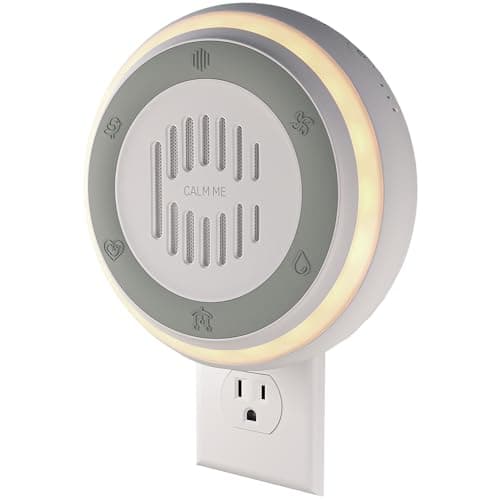
Calm Me Wall Plug-In Sound Masking MachineTwenty non-looping sounds including white, brown and pink noise, from a plug-in unit with a timer and memory. Forty dollars.
Scores are ours, from the published rubric on our methodology page. They are editorial judgments about published specifications, not test results — we have not handled these units.
01/MAXTID
Door Draft Stopper, 36 in, 2 in Diameter Foam
Best door gap seal
8.6/ 10
A 2 in diameter foam sweep that covers a 0.5 to 1.7 in door gap and moves with the door. Seventeen dollars, and the highest-value item on the site.
A 2 in diameter foam sweep that covers a 0.5 to 1.7 in door gap and moves with the door. Seventeen dollars, and the highest-value item on the site.
Published specification
Length
36 in; trimmable to 30, 32 or 34 in
MAXTID published specification
Foam diameter
2 in
MAXTID published specification
Gap coverage
0.5 to 1.7 in
MAXTID published specification
Weight
0.65 lb
Listing published specification
Fitting
Slides under the door and moves with it; no adhesive, no damage
MAXTID published specification
Not for
Exterior doors with a threshold, per the manufacturer
MAXTID published specification
What the specs are good for
Publishes the gap range it covers at 0.5 to 1.7 in, which is the only spec that matters and which most door sweeps omit entirely
A 2 in foam diameter, which MAXTID correctly points out is larger than most, and diameter is what closes a big gap
No adhesive: it slides on and comes off, which makes it the one soundproofing product a renter can fit without thought
Trimmable to four common door widths
Tells you plainly it is not for exterior doors with a threshold, rather than overclaiming
What they are not
A door gap is a leak, not the whole wall. Sealing it reduces what comes under the door and does nothing about what comes through it
Foam compresses over time and will need replacing
0.65 lb of foam on a door that opens 40 times a day will shift and need nudging back
Skip this if
Skip this if your door has no visible gap at the bottom. Look along the floor line with a light on the other side first; if there is no light, there is no leak to seal.
Who it is for. Everyone with a home office behind a normal interior door. At 17 dollars it is the first thing we would buy for noise, before any panel.
Twenty non-looping sounds including white, brown and pink noise, from a plug-in unit with a timer and memory. Forty dollars.
Twenty non-looping sounds including white, brown and pink noise, from a plug-in unit with a timer and memory. Forty dollars.
Published specification
Dimensions
4.2 x 1.5 x 4 in
Listing published specification
Weight
0.39 lb
Listing published specification
Sounds
20 non-looping, including two white noise types, brown noise, pink noise and 6 fan sounds
Calm Me published specification
Power
Plugs directly into the wall; optional cable extension included
Calm Me published specification
Controls
Volume, timer, memory function
Calm Me published specification
Extra
Dual-color night light
Calm Me published specification
Output level
Not published
Absence confirmed against the published specification
What the specs are good for
Names brown AND pink noise separately from white, which matters: brown noise is weighted low and masks traffic and voices better than white does
Non-looping, which is the difference between masking you forget about and a 30-second loop you start to hear
Plugs straight into the wall, so it takes no desk space at all
A memory function, so it resumes where it was rather than needing setting up daily
What they are not
No published output level, so you cannot tell whether it will cover the noise you have
Masking is not reduction. It replaces an intermittent annoyance with a constant sound you have chosen, which helps concentration and does nothing for a microphone
Plug-in form factor means it sits at outlet height, usually near the floor, which is the wrong place for masking a desk
Skip this if
Skip this if the problem is how you sound on calls. Masking adds sound to the room, so a microphone picks up more, not less. It is a concentration tool, and we are explicit about that because the category is routinely sold as if it were soundproofing.
Who it is for. Someone whose problem is intermittent distraction — a neighbour's dog, a road, a household — rather than call quality.
Will: noticeably reduce speech, television and general household noise arriving from the hallway. Noticeably reduce what the household hears of your calls. Also stop a draft and reduce the light under the door, both of which are incidental and pleasant.
Will not: make the room private. A sealed hollow-core door is still a thin barrier, and conversation at normal volume will still be audible as sound if not as words. It also does nothing about noise arriving through walls, windows or the floor.
Fit a door sweep for 7 to 17 dollars, then weatherstrip the jamb for about 15. That closes the gap under the door - typically about 20 square inches of straight-through opening - and seals the perimeter. It is the highest-value acoustic purchase available and takes under half an hour.
How big is the gap under an interior door?+
Usually 0.5 to 1 in, cut for carpet clearance and ventilation. On a 32 in door that is about 20 square inches of open air, which is under 1 per cent of the door's area and carries a wildly disproportionate share of the sound.
What kind of door sweep should I buy?+
A sliding foam sweep if the door opens over carpet, because it rides over the pile where an adhesive strip catches and peels. An adhesive silicone strip if the floor is hard, because it is tidier and cheaper. Measure the gap first: products publish a range and a 1 in sweep will not close a 1.5 in gap.
Is a solid-core door worth it for soundproofing?+
It is a genuine improvement over a hollow-core door at 60 to 100 lb against 25 to 30, and it costs 150 to 400 dollars plus hanging plus new hinges. Do the sealing first: an unsealed solid door performs worse than a sealed hollow one.
Will sealing a door make the room stuffy?+
In a normal room, no - doors are not airtight after weatherstripping and rooms exchange air through other paths. If the room has no window and no vent, leave the door open when you are not working, which is what most people do anyway.
Does a door curtain help with sound?+
Yes, more than people expect. A heavy curtain over a doorway adds mass and absorption at once and costs 60 to 200 dollars. It looks unusual in a house, which is the main reason people do not do it rather than any acoustic shortcoming.
Sources
Where these numbers came from
We have not handled any of these products. Every figure on this page is either the manufacturer's own published specification, named as such, or our arithmetic from those figures, shown so you can check it. Prices come from Amazon through our price layer and carry the date they were verified.
Amazon product listings, retrieved 2026-10-03
Published specifications, dimensions, materials and manufacturer claims were read from each product's own listing data. Prices and availability refresh daily and carry their verification date on the page.