Three of the most effective changes here cost nothing, and most advice skips straight to the thing you have to buy.
SMBy Scooter M.Published October 3, 2026Prices verified October 3, 2026
The short answer
Put down a rug, hang curtains, and stop the desk facing a bare parallel wall. Then, if it is still ringing, buy panels. A large rug on a hard floor is one of the biggest single absorbers available and most people already own one. Curtains over a window add absorption and mass at once. Breaking up two parallel hard walls removes the flutter echo that is the most annoying component. Those three cost 0 to 200 dollars and handle a surprising proportion of the problem.
What echo actually is in a small room
Strictly, an echo is a distinct repeat of a sound and needs a reflecting surface far enough away to delay it audibly. In a home office you are almost never hearing a true echo. You are hearing reverberation: a dense pile-up of reflections decaying over a fraction of a second, which smears speech and makes a room sound hollow.
You may also be hearing flutter echo, which is a specific and particularly annoying case: sound bouncing repeatedly between two parallel hard surfaces, producing a sharp metallic ring. Clap once between two bare parallel walls and you will hear it immediately.
The useful thing about that distinction is that flutter echo is cheap to fix - breaking the parallel path with almost anything works - while general reverberation needs absorbing area.
The free fixes, in order of effect
1. A rug, if the floor is hard
A floor is typically 15 to 20 per cent of a room's total surface area and is almost always hard in a home office. A large rug is 60 to 100 sq ft of absorber in a single object.
For comparison: 100 sq ft of rug is more absorbing area than eleven 24 by 48 in acoustic panels, which would cost 500 to 900 dollars. The rug is not as effective per square foot - carpet is thin and absorbs mostly high frequency - and it is a lot of area for whatever you already own.
2. Break the parallel walls
If your desk sits between two bare parallel walls, flutter echo is doing a disproportionate amount of the damage. You do not need absorption to fix it, just interruption.
A bookcase with books in it on one of the two walls removes the flutter entirely. Books are irregular, absorbent and scattering all at once. So does a large plant, a tall wardrobe or anything that breaks the flat surface. Moving furniture you own is free and takes ten minutes.
3. Curtains over the window
Glass is one of the most reflective surfaces in any room. Heavy curtains - and specifically heavy, not a thin blind - add absorption and some mass over that surface, and they are a normal thing to have in a room.
Gathered, floor-length and heavy is far better than flat, short and thin. The fold is doing acoustic work, so a curtain that is twice the window's width when gathered is substantially better than one that just covers it.
4. Turn the desk
Facing a wall rather than into the room means your voice meets an absorbing opportunity close by rather than crossing the room and coming back. If the wall you face has a bookcase or a curtain on it, better still.
Then: how much panel
If the room still rings after the free fixes, you have a genuine absorption deficit and panels are the right answer. The arithmetic is on how many acoustic panels do you need, and the short version is:
Panel quantity, for a 12 x 10 ft room
Hard surface area after subtracting a door, a window, a rug and some soft furnishing: about 420 sq ft
Target coverage for an office: 15 to 20 per cent
420 x 0.15 to 0.20 = 63 to 84 sq ft of panel
At 8 sq ft per 24 x 48 in panel = 8 to 11 panels
Our arithmetic. Note that the rug is already subtracted, which is why doing the free fixes first reduces how much panel you need rather than merely complementing it.
Placement matters as much as quantity and is free. The first reflection points - where sound from your mouth bounces once before reaching your microphone - do disproportionate work, and you find them in two minutes with a hand mirror: where to place acoustic panels.
What will not fix echo
Thin foam in small quantities. A 12-pack of hexagon tiles is about 10 sq ft, which in a normal room is under 3 per cent coverage.
A white noise machine. It adds sound rather than removing reflections, and it makes your microphone's job harder rather than easier.
Anything hard. Acrylic desk screens, glass shelves and mirrors are reflectors. A mirror on the wall behind you is acoustically the worst thing you can put there.
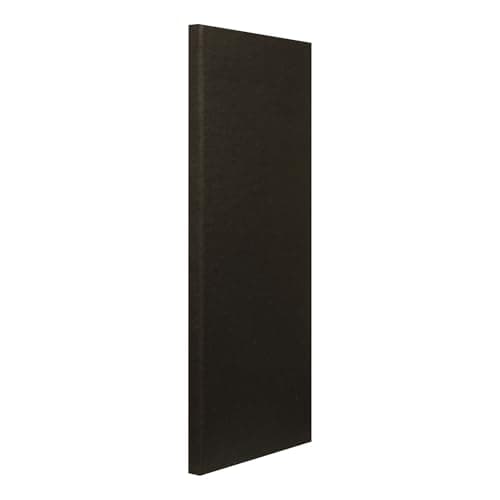
ATS Acoustics Beveled Edge Panel, 24 x 48 x 2 inThe same NRC 1.0 mineral-wool build as the Sona panel in jute burlap with a beveled edge, for about 16 dollars less.
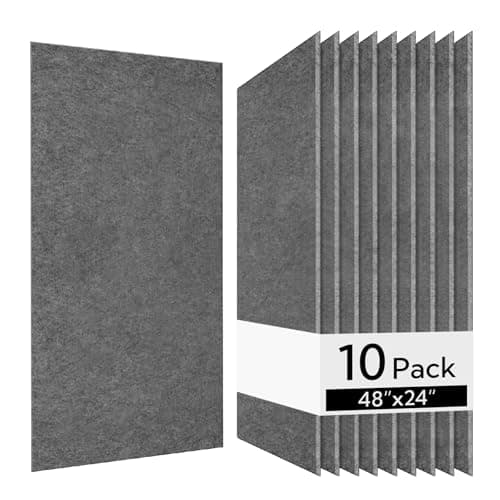
Olanglab PET Felt Wall Panels, 10-Pack 48 x 24 in77 sq ft of recycled PET felt for about 150 dollars, which is the cheapest real coverage on this page. Thin, so it works on voices and not on rumble.
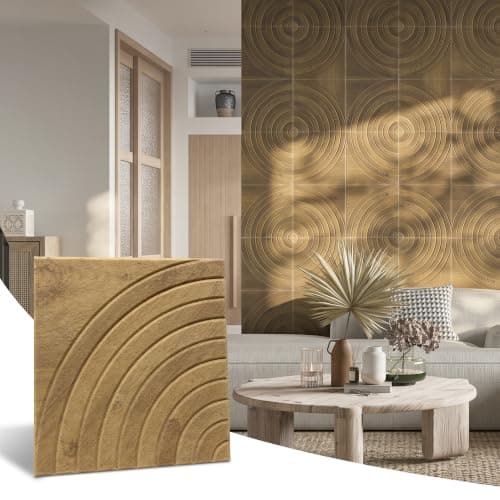
INNO STICKERS PET Felt Tiles, 16-Pack 11.8 x 11.8 inPublishes an NRC range of 0.6 to 0.85 rather than a single flattering number, which is the most honest absorption statement on this page.
Scores are ours, from the published rubric on our methodology page. They are editorial judgments about published specifications, not test results — we have not handled these units.
01/ATS Acoustics
Beveled Edge Panel, 24 x 48 x 2 in
Best measured panel under 80 dollars
8.4/ 10
The same NRC 1.0 mineral-wool build as the Sona panel in jute burlap with a beveled edge, for about 16 dollars less.
The same NRC 1.0 mineral-wool build as the Sona panel in jute burlap with a beveled edge, for about 16 dollars less.
Published specification
Panel size
24 x 48 x 2 in
ATS Acoustics published specification
Coverage per panel
8 sq ft
Our arithmetic from the published panel size
NRC
1.0 (publisher states out of 1)
ATS Acoustics published specification
Core
Mineral wool, solid wood internal frame, full wood back
ATS Acoustics published specification
Fabric
100% jute burlap
ATS Acoustics published specification
Weight
8.25 lb
Listing published specification
What the specs are good for
Same published NRC 1.0 and same mineral wool core as the Sona panel, for less money
Beveled edge reads as a deliberate architectural element rather than a studio accessory
Full wood back means it sits flat against drywall without bowing
What they are not
Burlap is a coarser, more rustic texture than the Sona fabric and shows dust
The listing does not restate the ASTM E84 fire rating that the Sona panel carries
Still a single panel per purchase
Skip this if
Skip this if the room is a living space where the panel has to look soft and finished. Burlap looks like what it is, and in a shared room that reads as equipment.
Who it is for. Anyone who wants the measured build and does not care that the fabric is agricultural.
77 sq ft of recycled PET felt for about 150 dollars, which is the cheapest real coverage on this page. Thin, so it works on voices and not on rumble.
77 sq ft of recycled PET felt for about 150 dollars, which is the cheapest real coverage on this page. Thin, so it works on voices and not on rumble.
Published specification
Panel size
47 x 23 x 0.31 in, 10 panels
Olanglab published specification
Coverage
77.35 sq ft total
Olanglab published specification
Cost per sq ft
About 1.94 dollars at the list price shown
Our arithmetic from the live price and the published coverage
Material
Recycled PET felt
Olanglab published specification
Absorption
Manufacturer states "absorbing up to 85% of sound"; no NRC and no test standard published
Olanglab published specification
Thickness
0.31 in
Olanglab published specification
What the specs are good for
77 sq ft in one box, enough to treat a whole small office rather than one wall
Under 2 dollars per square foot, roughly a sixth of the measured 2 in panels
Cuts with a knife, so awkward walls and sockets are not a problem
Slot pattern reads as deliberate wall decor in a shared room
What they are not
The "85% of sound" claim is a marketing sentence, not a measurement: no NRC, no frequency range, no standard
At 0.31 in thick it works on speech reflections and does essentially nothing below about 500 Hz
Ten thin panels is a long install compared with two thick ones
Skip this if
Skip this if your problem is a neighbor, traffic, or a washing machine. Thin felt does not touch low frequency and no quantity of it will. That is a blocking problem and panels are an absorbing product.
Who it is for. The person whose calls sound echoey in a hard room and who wants the whole room treated this month.
Publishes an NRC range of 0.6 to 0.85 rather than a single flattering number, which is the most honest absorption statement on this page.
Publishes an NRC range of 0.6 to 0.85 rather than a single flattering number, which is the most honest absorption statement on this page.
Published specification
Tile size
11.8 x 11.8 x 0.4 in, 16 tiles
INNO STICKERS published specification
Coverage
15.5 sq ft total
INNO STICKERS published specification
NRC
0.6 to 0.85, stated as a range (no test standard named)
INNO STICKERS published specification
Material
Recycled PET felt
INNO STICKERS published specification
Mounting
96 adhesive tabs supplied; permanent install needs extra adhesive
INNO STICKERS published specification
What the specs are good for
A published RANGE instead of a single best-case number, which is how absorption actually behaves across frequency
Small tiles let you put absorption exactly where the reflection is, instead of covering a whole wall
Adhesive tabs are removable, so this is the least committal option here
Moisture-resistant and vacuumable
What they are not
15.5 sq ft is a spot treatment, not a room treatment
Adhesive tabs are explicitly described as temporary; a permanent install needs adhesive you buy separately
16 small tiles means 16 alignment decisions and a grid that is obvious when it is slightly off
Skip this if
Skip this if you need more than about 16 sq ft. Buying three boxes to cover a wall costs more per square foot than the 10-pack of large panels above and takes four times as long to hang.
Who it is for. Someone with one bad reflection, a rented wall, and no appetite for a project.
Start with a rug on a hard floor, heavy curtains over the window, and something irregular like a bookcase on one of two parallel walls. Those three are free or cheap and handle a large proportion of the problem. If it still rings, 8 to 11 acoustic panels in a typical 12 by 10 ft room is the next step.
Does a rug reduce echo?+
Yes, significantly. A floor is 15 to 20 per cent of a room's surface area and is usually hard in an office. A large rug is 60 to 100 sq ft of absorber in one object, which is more area than eleven acoustic panels, though less effective per square foot because carpet is thin.
Why does my room have a metallic ring when I clap?+
Flutter echo: sound bouncing repeatedly between two parallel hard surfaces. It is the most annoying component and the cheapest to fix, because you only need to interrupt the parallel path. A bookcase with books on one of the two walls removes it entirely.
Do curtains help with echo?+
Yes, and glass is one of the most reflective surfaces in a room so they are working on a good target. Heavy, gathered and floor-length is substantially better than thin and flat: the folds are doing acoustic work, so a curtain twice the window's width when gathered outperforms one that just covers it.
Will a white noise machine stop echo?+
No. Masking adds sound to cover an intermittent annoyance; it removes no reflections and makes your microphone pick up more rather than less. It is a concentration tool and a reasonable one, sold with the wrong vocabulary.
Sources
Where these numbers came from
We have not handled any of these products. Every figure on this page is either the manufacturer's own published specification, named as such, or our arithmetic from those figures, shown so you can check it. Prices come from Amazon through our price layer and carry the date they were verified.
Amazon product listings, retrieved 2026-10-03
Published specifications, dimensions, materials and manufacturer claims were read from each product's own listing data. Prices and availability refresh daily and carry their verification date on the page.
The full published method, and an explicit statement of what a specs-only approach cannot tell you.
ASTM C423 — Standard Test Method for Sound Absorption and Sound Absorption Coefficients by the Reverberation Room Method
The governing test method behind any NRC figure. We name it where a manufacturer publishes an NRC so you know what the number is a result of. We have not performed this test and we do not restate anyone's NRC as our own measurement.