This is the most expensive misunderstanding in the category: buying an absorber to solve a blocking problem, then concluding the product is a fraud.
SMBy Scooter M.Published October 3, 2026Prices verified October 3, 2026
The short answer
Clap once in the middle of your room. If you hear a ring or a slap that hangs for a moment, you have an absorption problem and acoustic panels will fix it. If the room sounds fine and the problem is a television, a neighbor, traffic or a dog, you have a blocking problem and no quantity of panels will touch it. Those are different physical problems. Absorbing needs light porous material. Blocking needs mass and airtightness. A product that is good at one is usually bad at the other by construction.
Why the two get confused
Because the listings confuse them deliberately. Search for acoustic panels and you will find "soundproof wall panels", "sound proof foam", "noise canceling panels" and "soundproofing panels" attached to products that are, physically, 0.3 in of polyester felt. The words rank, so the words get used.
The result is predictable and we see it constantly: someone buys 52 foam tiles to stop hearing their neighbor, hangs all of them, hears the neighbor exactly as before, and leaves a review saying acoustic treatment is a scam. It is not a scam. It is the wrong product for that problem, sold with the vocabulary of the right one.
The physics, briefly and without hand-waving
Absorbing
Sound is air moving. When a sound wave hits a porous material, air is forced through narrow passages between fibers and loses energy to friction, which becomes a very small amount of heat. The sound that would have bounced back into the room does not. This is what every panel on this site does.
What it changes: reverberation, echo, the hollow boxy quality of a hard room, how your voice sounds to a microphone. What it costs: 150 to 600 dollars for a meaningful treatment of a normal room. What it does not change: anything arriving from outside the room.
Blocking
To stop sound passing through a barrier you need mass and you need the barrier to be continuous. Sound is remarkably good at finding gaps: an opening of a few per cent of a wall's area can dominate its entire performance, which is why a solid door with a half-inch gap underneath is acoustically closer to an open doorway than to a wall.
What it changes: what you hear from the rest of the house or the street. What it costs: 10 to 30 dollars for the single highest-value fix (sealing the door gap), then a steep jump to several hundred or several thousand for anything structural. What it does not change: how your own voice sounds in the room.
Which problem do you have? A two-minute diagnosis
01Stand in the middle of the room and clap once, hard. A sharp ring or flutter that hangs for a fraction of a second means reflective surfaces and an absorption problem. A dull thud means the room is already reasonably absorbent.
02Record 30 seconds of yourself talking on your phone, in the room, from where you sit. Play it back on headphones. If you sound distant, hollow or like you are in a bathroom, that is reflections reaching the microphone and absorption fixes it.
03Sit in silence for two minutes with the door shut and write down everything you hear. Traffic, a boiler, a neighbor's television, someone on the stairs. Everything on that list is a blocking problem and panels will not touch any of it.
04Look along the bottom of the closed door with the hall light on. If you can see light, you have an air gap, and air gaps carry sound. That is the first thing to fix regardless of anything else.
Most people doing this honestly find they have some of both. That is normal, and the order of operations matters: seal the gaps first because it is cheap, then absorb, then consider mass. Doing it in the other order wastes the most money.
What each fix actually costs
Fixes ranked by cost, with what each addresses
Fix
Rough cost
Problem it addresses
Honest expectation
Door sweep or draft stopper
7 to 20 dollars
Blocking
Noticeable. The best value in the whole category
Rearranging the room, soft furnishings, a rug
0 to 100 dollars
Absorbing
Real and free. A rug on a hard floor is a large absorber
Acoustic panels, 48 to 84 sq ft
150 to 600 dollars
Absorbing
Obvious change to how the room and your calls sound
Sound masking machine
25 to 40 dollars
Neither, properly
Helps concentration by covering intermittent noise. Makes microphones worse, not better
Acoustic partition or divider
320 to 650 dollars
Partly absorbing
Reduces spill and reflections in a shared room. Not a wall
Heavy curtains over a window
60 to 200 dollars
Both, slightly
Mass and absorption at once, and the easiest structural-ish fix
Office pod
3,200 to 5,400 dollars
Blocking
The only consumer product that genuinely blocks. See office pods
Second layer of drywall, resilient channel, a solid-core door
Several hundred to several thousand
Blocking
Construction. Effective and not reversible
#
Product
Best for
Score
Price
01
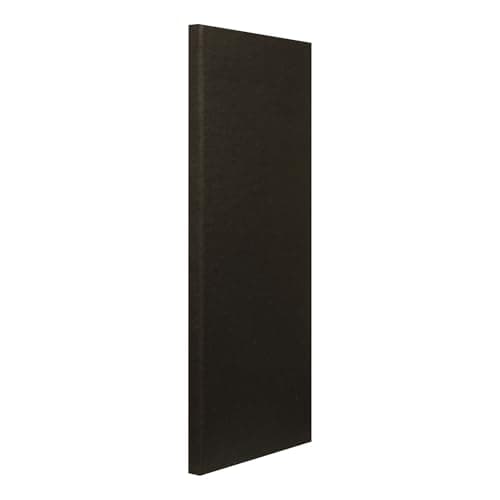
ATS Acoustics Beveled Edge Panel, 24 x 48 x 2 inThe same NRC 1.0 mineral-wool build as the Sona panel in jute burlap with a beveled edge, for about 16 dollars less.
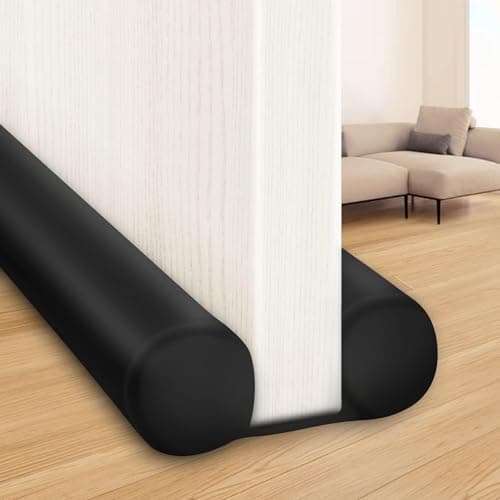
MAXTID Door Draft Stopper, 36 in, 2 in Diameter FoamA 2 in diameter foam sweep that covers a 0.5 to 1.7 in door gap and moves with the door. Seventeen dollars, and the highest-value item on the site.
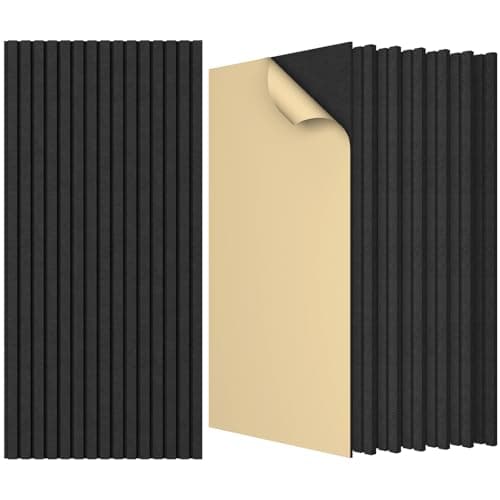
TONOR Self-Adhesive Acoustic Panels, 8-Pack 47.2 x 23.6 inPublishes both an NRC of 0.9 and a material density, which almost nothing else at this price does, and sticks on without a single screw.
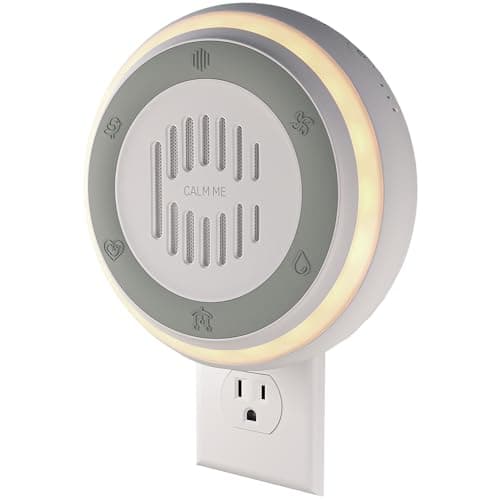
Calm Me Wall Plug-In Sound Masking MachineTwenty non-looping sounds including white, brown and pink noise, from a plug-in unit with a timer and memory. Forty dollars.
Scores are ours, from the published rubric on our methodology page. They are editorial judgments about published specifications, not test results — we have not handled these units.
01/ATS Acoustics
Beveled Edge Panel, 24 x 48 x 2 in
Best measured panel under 80 dollars
8.4/ 10
The same NRC 1.0 mineral-wool build as the Sona panel in jute burlap with a beveled edge, for about 16 dollars less.
The same NRC 1.0 mineral-wool build as the Sona panel in jute burlap with a beveled edge, for about 16 dollars less.
Published specification
Panel size
24 x 48 x 2 in
ATS Acoustics published specification
Coverage per panel
8 sq ft
Our arithmetic from the published panel size
NRC
1.0 (publisher states out of 1)
ATS Acoustics published specification
Core
Mineral wool, solid wood internal frame, full wood back
ATS Acoustics published specification
Fabric
100% jute burlap
ATS Acoustics published specification
Weight
8.25 lb
Listing published specification
What the specs are good for
Same published NRC 1.0 and same mineral wool core as the Sona panel, for less money
Beveled edge reads as a deliberate architectural element rather than a studio accessory
Full wood back means it sits flat against drywall without bowing
What they are not
Burlap is a coarser, more rustic texture than the Sona fabric and shows dust
The listing does not restate the ASTM E84 fire rating that the Sona panel carries
Still a single panel per purchase
Skip this if
Skip this if the room is a living space where the panel has to look soft and finished. Burlap looks like what it is, and in a shared room that reads as equipment.
Who it is for. Anyone who wants the measured build and does not care that the fabric is agricultural.
A 2 in diameter foam sweep that covers a 0.5 to 1.7 in door gap and moves with the door. Seventeen dollars, and the highest-value item on the site.
A 2 in diameter foam sweep that covers a 0.5 to 1.7 in door gap and moves with the door. Seventeen dollars, and the highest-value item on the site.
Published specification
Length
36 in; trimmable to 30, 32 or 34 in
MAXTID published specification
Foam diameter
2 in
MAXTID published specification
Gap coverage
0.5 to 1.7 in
MAXTID published specification
Weight
0.65 lb
Listing published specification
Fitting
Slides under the door and moves with it; no adhesive, no damage
MAXTID published specification
Not for
Exterior doors with a threshold, per the manufacturer
MAXTID published specification
What the specs are good for
Publishes the gap range it covers at 0.5 to 1.7 in, which is the only spec that matters and which most door sweeps omit entirely
A 2 in foam diameter, which MAXTID correctly points out is larger than most, and diameter is what closes a big gap
No adhesive: it slides on and comes off, which makes it the one soundproofing product a renter can fit without thought
Trimmable to four common door widths
Tells you plainly it is not for exterior doors with a threshold, rather than overclaiming
What they are not
A door gap is a leak, not the whole wall. Sealing it reduces what comes under the door and does nothing about what comes through it
Foam compresses over time and will need replacing
0.65 lb of foam on a door that opens 40 times a day will shift and need nudging back
Skip this if
Skip this if your door has no visible gap at the bottom. Look along the floor line with a light on the other side first; if there is no light, there is no leak to seal.
Who it is for. Everyone with a home office behind a normal interior door. At 17 dollars it is the first thing we would buy for noise, before any panel.
Self-Adhesive Acoustic Panels, 8-Pack 47.2 x 23.6 in
Best for walls you cannot drill
8.0/ 10
Publishes both an NRC of 0.9 and a material density, which almost nothing else at this price does, and sticks on without a single screw.
Publishes both an NRC of 0.9 and a material density, which almost nothing else at this price does, and sticks on without a single screw.
Published specification
Panel size
47.2 x 23.6 x 0.35 in, 8 panels
TONOR published specification
Coverage
About 61.9 sq ft total
Our arithmetic from the published panel size
NRC
0.9 (manufacturer's published figure; no test standard named)
TONOR published specification
Density
212.2 kg/m3
TONOR published specification
Material
100% polyester fiber
TONOR published specification
Mounting
Self-adhesive backing
TONOR published specification
What the specs are good for
An NRC figure AND a density figure, which together are the most spec data anyone publishes in the peel-and-stick tier
212.2 kg/m3 is a genuinely high density for polyester felt and it is why the NRC claim is plausible
No fixings at all, which makes this the rental answer
About 62 sq ft, enough for two walls of a small room
What they are not
Names no test standard for the NRC, so the figure is unaudited
0.35 in thick: same low-frequency limitation as every felt panel
Adhesive needs a smooth, clean, dry wall and can lift paint on removal
Skip this if
Skip this if your walls are textured, freshly painted, or anything other than smooth and sound. Adhesive panels on a rough or chalky surface fall off, usually about three weeks later.
Who it is for. A renter with smooth walls and a landlord, who still wants a density figure behind the purchase.
Twenty non-looping sounds including white, brown and pink noise, from a plug-in unit with a timer and memory. Forty dollars.
Twenty non-looping sounds including white, brown and pink noise, from a plug-in unit with a timer and memory. Forty dollars.
Published specification
Dimensions
4.2 x 1.5 x 4 in
Listing published specification
Weight
0.39 lb
Listing published specification
Sounds
20 non-looping, including two white noise types, brown noise, pink noise and 6 fan sounds
Calm Me published specification
Power
Plugs directly into the wall; optional cable extension included
Calm Me published specification
Controls
Volume, timer, memory function
Calm Me published specification
Extra
Dual-color night light
Calm Me published specification
Output level
Not published
Absence confirmed against the published specification
What the specs are good for
Names brown AND pink noise separately from white, which matters: brown noise is weighted low and masks traffic and voices better than white does
Non-looping, which is the difference between masking you forget about and a 30-second loop you start to hear
Plugs straight into the wall, so it takes no desk space at all
A memory function, so it resumes where it was rather than needing setting up daily
What they are not
No published output level, so you cannot tell whether it will cover the noise you have
Masking is not reduction. It replaces an intermittent annoyance with a constant sound you have chosen, which helps concentration and does nothing for a microphone
Plug-in form factor means it sits at outlet height, usually near the floor, which is the wrong place for masking a desk
Skip this if
Skip this if the problem is how you sound on calls. Masking adds sound to the room, so a microphone picks up more, not less. It is a concentration tool, and we are explicit about that because the category is routinely sold as if it were soundproofing.
Who it is for. Someone whose problem is intermittent distraction — a neighbour's dog, a road, a household — rather than call quality.
Absorption has a ceiling. Past a certain amount of treatment a room stops sounding better and starts sounding unnaturally dead, and you cannot absorb your way to silence. You also cannot absorb sound that has not entered the room yet, which is the entire category error this page exists to prevent.
Blocking has a price. Everything short of construction is a partial measure. Sealing gaps is genuinely high-value and genuinely limited; after that the curve gets steep fast. The only product that genuinely blocks without building anything is an office pod, which is why those start at 3,200 dollars and why we are careful about what their ratings mean on are soundproof pods actually soundproof.
Masking is neither. A white noise machine adds sound to cover sound, which genuinely helps concentration and genuinely makes your microphone's job harder. It is a concentration tool and we are explicit about that, because the category is routinely sold as though it were soundproofing.
No. Panels absorb sound inside a room; soundproofing stops sound passing between rooms. Absorbing needs lightweight porous material and blocking needs mass and airtightness, so the same product cannot do both well. Listings that call felt panels soundproof are using the wrong word.
What is the cheapest way to make a room quieter?+
Seal the gap under the door. A typical interior door has a half-inch to one-inch gap, which is a straight-through air path that carries sound unimpeded. A sweep costs under 20 dollars and does more than any other purchase at that price. How to soundproof a home office door covers the whole door.
Will a rug help with noise?+
Yes, genuinely. A rug on a hard floor is one of the largest single absorbers you can put in a room and it costs nothing acoustically because you were probably going to have one anyway. It addresses reflections, not sound coming in from elsewhere.
Do acoustic panels work on the ceiling?+
Yes, and often better per square foot than on a wall, because a suspended panel exposes both faces. Ceiling-mounted treatment also frees up wall space, which matters in a small room. The install is harder and generally impossible in a rental.
Is a white noise machine soundproofing?+
No. Masking adds sound to cover an intermittent annoyance, which helps concentration. It does not reduce any sound and it makes your microphone pick up more, not less. It is a useful tool sold with the wrong vocabulary.
How do I know if my room needs absorption?+
Clap once, hard, in the middle of the room. If you hear a ring or flutter hang for a fraction of a second, you have reflective surfaces and absorption will help. Then record yourself talking on your phone and play it back on headphones: if you sound hollow or distant, that is reflections reaching the microphone.
Sources
Where these numbers came from
We have not handled any of these products. Every figure on this page is either the manufacturer's own published specification, named as such, or our arithmetic from those figures, shown so you can check it. Prices come from Amazon through our price layer and carry the date they were verified.
Amazon product listings, retrieved 2026-10-03
Published specifications, dimensions, materials and manufacturer claims were read from each product's own listing data. Prices and availability refresh daily and carry their verification date on the page.
The full published method, and an explicit statement of what a specs-only approach cannot tell you.
ASTM C423 — Standard Test Method for Sound Absorption and Sound Absorption Coefficients by the Reverberation Room Method
The governing test method behind any NRC figure. We name it where a manufacturer publishes an NRC so you know what the number is a result of. We have not performed this test and we do not restate anyone's NRC as our own measurement.