Yes, for one specific problem, and not at all for another. Most of the disappointment in this category comes from that distinction.
SMBy Scooter M.Published October 3, 2026Prices verified October 3, 2026
The short answer
Yes, for echo, reverberation and how you sound on calls. No, for noise coming from outside the room. Acoustic panels absorb sound within a space by converting air movement into a tiny amount of heat as it passes through fibers. That reliably reduces reflections and it cannot stop sound passing through a wall or a door, because blocking needs mass and a panel deliberately has almost none.
How absorption actually works
Sound is air moving. When a sound wave hits a porous material - felt, mineral wool, fiberglass, polyester - the air is forced through narrow passages between the fibers and loses energy to friction. That energy becomes an extremely small amount of heat, and the sound that would otherwise have bounced back into the room does not.
This is not controversial physics and it is not marketing. It is the basis of ASTM C423, the laboratory test that produces NRC figures, in which a sample is placed in a reverberation chamber and the decay rate of sound is measured.
So the correct question is not whether panels work, but how much material you need, in which places, for the problem you have.
What you will genuinely notice
You sound better on calls. This is the biggest and most consistent effect. A microphone picks up your voice plus every reflection of your voice arriving a few milliseconds later, which is exactly what makes a hard room sound hollow and distant. Absorbing the first reflections changes what the far end hears more than almost anything else you can buy.
The room stops ringing. A hard-surfaced room has a noticeable decay after any sharp sound. Treated, that decay shortens and the room feels calmer in a way that is hard to describe and obvious once it happens.
Speech is more intelligible. Reverberation smears consonants into each other. Less reverberation means you ask people to repeat themselves less often.
You notice it less when it is gone. The usual report is that the room feels less tiring rather than audibly different, which is a real effect and a hard one to demonstrate.
What you will not notice at all
Your neighbor's television. It is arriving through a wall. Panels do nothing to it.
Traffic through a window. Same reason. A window is a mass-and-sealing problem.
A washing machine, a boiler, footsteps upstairs. All structure-borne or arriving through building elements.
Your own calls being audible elsewhere in the house. Panels reduce the reflections in your room; they do not reduce what passes through the door.
Why so many people say it did not work
Three reasons, in descending order of frequency.
1. They bought too little
A 12-pack of hexagon tiles is about 10 sq ft. In a normal 420 sq ft room of hard surface that is under 3 per cent coverage, when the band where change becomes obvious is 15 to 20 per cent. Hanging one pack and hearing nothing is the expected outcome, not a product failure. The full arithmetic is on how many acoustic panels do you need.
2. They had a blocking problem
This is the most expensive mistake. Someone buys 52 foam tiles to stop hearing a neighbor, hangs all of them, hears the neighbor exactly as before, and concludes the category is a scam. The listings encourage it: products made of 0.3 in of felt are routinely titled soundproof and noise canceling. Acoustic panels vs soundproofing takes that apart.
3. They bought thin panels for a low-frequency problem
A porous absorber works best at frequencies whose quarter-wavelength fits within its depth. A 0.3 in felt panel addresses the bright, hissy part of a room's sound and does very little about boominess. If a room sounds boxy and hollow rather than sharp and ringing, thin felt will take the edge off and leave the problem.
What the evidence actually is, and what ours is not
We should be clear about this, because the category is full of people claiming more than they have.
The mechanism is well established. Porous absorption is standard acoustics, the test method is a published standard, and manufacturers who test to it publish results.
The product-level evidence is thin. Of eleven acoustic panels we examined in detail, only three published an NRC and only one named the test standard behind it. For the rest you are inferring from material and thickness, which is reasonable and is not measurement.
We have not tested any of them. We own none, we have no meter and no treated room. What we have done is read every manufacturer's documentation across the category, compile what is in it, and do the coverage arithmetic. That is real work and a different claim from having tested anything, and the difference is the whole basis of how we pick.
What to do before spending anything
01Hang a duvet on the wall behind you and take a call. If the far end says you sound better, absorption works in your room and the only question is which product. This costs nothing and settles it.
02Put down a rug if the floor is hard. A rug is one of the largest single absorbers available and you were probably going to have one anyway.
03Seal the gap under the door, about 17 dollars. Not absorption at all, and the best value acoustic purchase on this site regardless.
04Then run the coverage calculation and buy a sensible quantity in one go rather than a sample pack.
#
Product
Best for
Score
Price
01
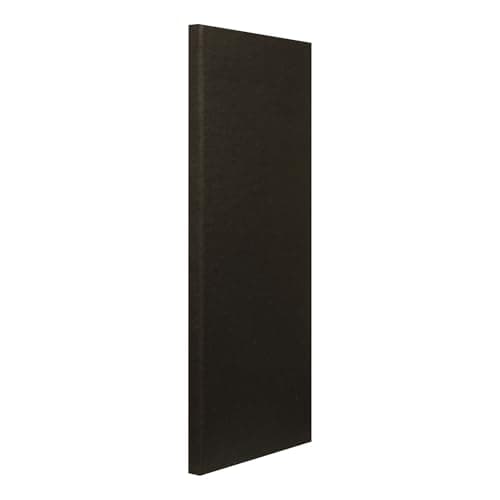
ATS Acoustics Beveled Edge Panel, 24 x 48 x 2 inThe same NRC 1.0 mineral-wool build as the Sona panel in jute burlap with a beveled edge, for about 16 dollars less.
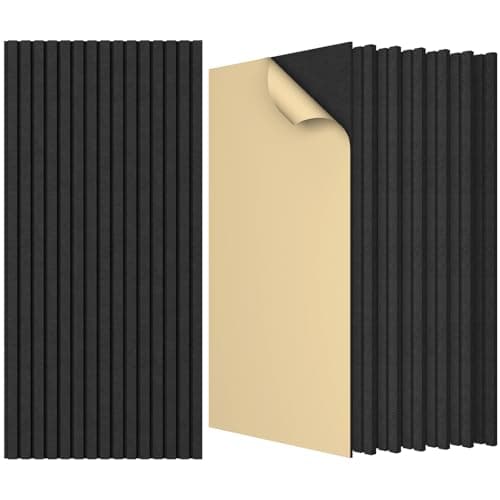
TONOR Self-Adhesive Acoustic Panels, 8-Pack 47.2 x 23.6 inPublishes both an NRC of 0.9 and a material density, which almost nothing else at this price does, and sticks on without a single screw.
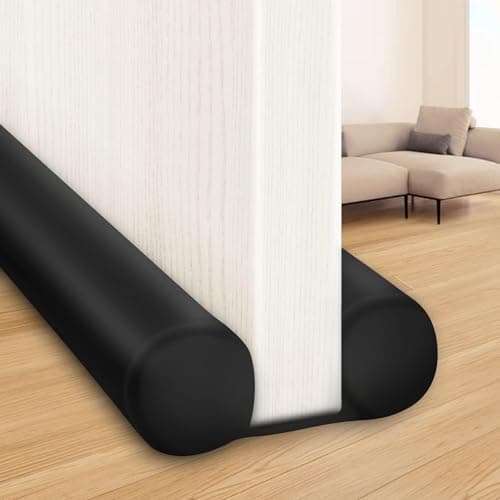
MAXTID Door Draft Stopper, 36 in, 2 in Diameter FoamA 2 in diameter foam sweep that covers a 0.5 to 1.7 in door gap and moves with the door. Seventeen dollars, and the highest-value item on the site.
Scores are ours, from the published rubric on our methodology page. They are editorial judgments about published specifications, not test results — we have not handled these units.
01/ATS Acoustics
Beveled Edge Panel, 24 x 48 x 2 in
Best measured panel under 80 dollars
8.4/ 10
The same NRC 1.0 mineral-wool build as the Sona panel in jute burlap with a beveled edge, for about 16 dollars less.
The same NRC 1.0 mineral-wool build as the Sona panel in jute burlap with a beveled edge, for about 16 dollars less.
Published specification
Panel size
24 x 48 x 2 in
ATS Acoustics published specification
Coverage per panel
8 sq ft
Our arithmetic from the published panel size
NRC
1.0 (publisher states out of 1)
ATS Acoustics published specification
Core
Mineral wool, solid wood internal frame, full wood back
ATS Acoustics published specification
Fabric
100% jute burlap
ATS Acoustics published specification
Weight
8.25 lb
Listing published specification
What the specs are good for
Same published NRC 1.0 and same mineral wool core as the Sona panel, for less money
Beveled edge reads as a deliberate architectural element rather than a studio accessory
Full wood back means it sits flat against drywall without bowing
What they are not
Burlap is a coarser, more rustic texture than the Sona fabric and shows dust
The listing does not restate the ASTM E84 fire rating that the Sona panel carries
Still a single panel per purchase
Skip this if
Skip this if the room is a living space where the panel has to look soft and finished. Burlap looks like what it is, and in a shared room that reads as equipment.
Who it is for. Anyone who wants the measured build and does not care that the fabric is agricultural.
Self-Adhesive Acoustic Panels, 8-Pack 47.2 x 23.6 in
Best for walls you cannot drill
8.0/ 10
Publishes both an NRC of 0.9 and a material density, which almost nothing else at this price does, and sticks on without a single screw.
Publishes both an NRC of 0.9 and a material density, which almost nothing else at this price does, and sticks on without a single screw.
Published specification
Panel size
47.2 x 23.6 x 0.35 in, 8 panels
TONOR published specification
Coverage
About 61.9 sq ft total
Our arithmetic from the published panel size
NRC
0.9 (manufacturer's published figure; no test standard named)
TONOR published specification
Density
212.2 kg/m3
TONOR published specification
Material
100% polyester fiber
TONOR published specification
Mounting
Self-adhesive backing
TONOR published specification
What the specs are good for
An NRC figure AND a density figure, which together are the most spec data anyone publishes in the peel-and-stick tier
212.2 kg/m3 is a genuinely high density for polyester felt and it is why the NRC claim is plausible
No fixings at all, which makes this the rental answer
About 62 sq ft, enough for two walls of a small room
What they are not
Names no test standard for the NRC, so the figure is unaudited
0.35 in thick: same low-frequency limitation as every felt panel
Adhesive needs a smooth, clean, dry wall and can lift paint on removal
Skip this if
Skip this if your walls are textured, freshly painted, or anything other than smooth and sound. Adhesive panels on a rough or chalky surface fall off, usually about three weeks later.
Who it is for. A renter with smooth walls and a landlord, who still wants a density figure behind the purchase.
A 2 in diameter foam sweep that covers a 0.5 to 1.7 in door gap and moves with the door. Seventeen dollars, and the highest-value item on the site.
A 2 in diameter foam sweep that covers a 0.5 to 1.7 in door gap and moves with the door. Seventeen dollars, and the highest-value item on the site.
Published specification
Length
36 in; trimmable to 30, 32 or 34 in
MAXTID published specification
Foam diameter
2 in
MAXTID published specification
Gap coverage
0.5 to 1.7 in
MAXTID published specification
Weight
0.65 lb
Listing published specification
Fitting
Slides under the door and moves with it; no adhesive, no damage
MAXTID published specification
Not for
Exterior doors with a threshold, per the manufacturer
MAXTID published specification
What the specs are good for
Publishes the gap range it covers at 0.5 to 1.7 in, which is the only spec that matters and which most door sweeps omit entirely
A 2 in foam diameter, which MAXTID correctly points out is larger than most, and diameter is what closes a big gap
No adhesive: it slides on and comes off, which makes it the one soundproofing product a renter can fit without thought
Trimmable to four common door widths
Tells you plainly it is not for exterior doors with a threshold, rather than overclaiming
What they are not
A door gap is a leak, not the whole wall. Sealing it reduces what comes under the door and does nothing about what comes through it
Foam compresses over time and will need replacing
0.65 lb of foam on a door that opens 40 times a day will shift and need nudging back
Skip this if
Skip this if your door has no visible gap at the bottom. Look along the floor line with a light on the other side first; if there is no light, there is no leak to seal.
Who it is for. Everyone with a home office behind a normal interior door. At 17 dollars it is the first thing we would buy for noise, before any panel.
Acoustic panels do what they claim, within a well-understood mechanism, for one specific class of problem. The category's bad reputation comes from being sold for a different problem in quantities too small to notice.
If your room echoes and your calls sound hollow, buy a proper quantity of a product that publishes its absorption figure, put it at the first reflection points, and it will work. If your complaint is a neighbor, save your money and read how to soundproof a home office instead.
FAQ
Questions people ask about this
Do acoustic panels really reduce noise?+
They reduce reflected noise inside the room, which is what makes a space echo and what makes you sound hollow on calls. They do not reduce noise arriving from outside the room, because blocking sound needs mass and airtightness that a lightweight porous panel deliberately lacks.
How long does it take to notice acoustic panels working?+
Immediately, if you have installed enough. The change in a room's decay is audible the moment the last panel goes up. If you noticed nothing, the usual cause is quantity: one twelve-pack is typically under 3 per cent coverage where 15 to 20 per cent is the band where change is obvious.
Do acoustic panels help with video calls?+
Yes, and this is where they help most. A microphone picks up your voice plus its reflections arriving milliseconds later, which is what makes a hard room sound distant and hollow. Absorbing the first reflections improves what the far end hears more than most equipment upgrades.
Are expensive acoustic panels better?+
Thicker and denser panels genuinely reach lower in frequency, and that costs money. But price does not track performance reliably in this category, because most products publish no absorption figure at all. Buy on published thickness, material and NRC rather than on price.
Will acoustic panels make my room feel dead?+
Only at coverage levels far beyond what a home office would install. Past about 40 per cent of hard surface area a room starts feeling unnaturally quiet; the useful band for an office is 15 to 20 per cent.
Sources
Where these numbers came from
We have not handled any of these products. Every figure on this page is either the manufacturer's own published specification, named as such, or our arithmetic from those figures, shown so you can check it. Prices come from Amazon through our price layer and carry the date they were verified.
Amazon product listings, retrieved 2026-10-03
Published specifications, dimensions, materials and manufacturer claims were read from each product's own listing data. Prices and availability refresh daily and carry their verification date on the page.
The full published method, and an explicit statement of what a specs-only approach cannot tell you.
ASTM C423 — Standard Test Method for Sound Absorption and Sound Absorption Coefficients by the Reverberation Room Method
The governing test method behind any NRC figure. We name it where a manufacturer publishes an NRC so you know what the number is a result of. We have not performed this test and we do not restate anyone's NRC as our own measurement.