Most of this category publishes a marketing sentence where the measurement should be. Three products here publish a real number, and that is most of the ranking.
SMBy Scooter M.Published October 3, 2026Prices verified October 3, 2026
The short answer
Buy the ATS Acoustics panels if the room has to work for calls and you can spend around 500 dollars; buy the Olanglab 10-pack if you want the whole room covered this month for under 200. Everything else on this page is a variation on that trade. ATS publishes an NRC of 1.0 measured to a named standard and costs about 12 dollars a square foot. Olanglab publishes no NRC at all and costs about 1.94. The honest version of this comparison is that you are choosing between a measured product and a lot of unmeasured area, and which one is right depends entirely on whether your room is hard-surfaced enough to need the measured one.
That is the recommendation. The rest of this page is the reasoning, because the reasoning is what tells you whether you are the exception.
What separates these products, and it is not the price
Eleven products are ranked below and they span 20 dollars to 160. You would expect price to track performance. It does not, and the reason is simple: nine of the eleven publish no sound absorption figure of any kind. Not an NRC, not a coefficient, not a frequency range. They publish a sentence instead.
Here is the distinction that decides this whole category. NRC is the Noise Reduction Coefficient: a single number from 0 to 1 produced by a specific laboratory test, ASTM C423, in which a sample is placed in a reverberation chamber and the decay of sound is measured at four frequency bands. It is a measurement. When ATS Acoustics publishes NRC 1.0, that figure came out of a chamber.
Compare that with "absorbs up to 85% of sound", which Olanglab publishes, or "absorbs at least 85% of noise", which appears on two of the partitions in our room dividers hub. Eighty-five per cent of what sound? At which frequency? Measured how? There is no answer because there was no measurement. It is a sentence that sounds like a number.
What acoustic panels actually do, and what they cannot
Panels absorb sound inside your room. They do not stop sound entering it. This is the single most expensive misunderstanding in the category, and it is why so many people hang panels, hear no difference in the neighbor's television, and conclude the product is a scam.
Absorbing and blocking are different physical problems with different solutions. Absorbing needs porous, fibrous material with air in it: felt, mineral wool, fiberglass, polyester. Blocking needs mass and airtightness: a heavier door, a sealed gap, a second layer of drywall. A 0.3 in felt panel weighs almost nothing, which is precisely why it absorbs well and blocks nothing. We go through the whole distinction on acoustic panels versus soundproofing, because getting it wrong is the most common reason people are disappointed.
So: if your complaint is that your own voice sounds boxy, your calls echo, or the room rings when you clap - panels are the right product and will work. If your complaint is traffic, a neighbor, a washing machine or a dog - panels are the wrong product and no quantity of them will fix it. For that, start with how to soundproof a home office, which is honest about which fixes are cheap and which are construction.
Thickness is the spec nobody wants to talk about
Absorption at low frequency is a function of thickness. A porous absorber works best at the frequencies whose quarter-wavelength fits within its depth, which is why a 2 in panel and a 0.3 in panel behave completely differently even if both are made of the same fiber.
Published thickness across this page
Product
Published thickness
Published absorption figure
ATS Acoustics Sona / Beveled
2 in
NRC 1.0, ASTM E84 fire rating named
Olanglab fiberglass 2-pack
2 in
Coefficient up to 0.95, no standard named
ElaraBerry ceiling hexagons
1.2 in
None; density 120 kg/m3 published
Otoolling baffle
15 mm (about 0.6 in)
None
TONOR 8-pack
0.35 in
NRC 0.9, no standard named
INNO STICKERS tiles
0.4 in
NRC 0.6 to 0.85, no standard named
Olanglab felt 10-pack
0.31 in
None; an 85% claim with no basis
Focusound foam
1 in
None at all
Compiled from each listing's own published specification, 2026-10-03. Two products on this page do not publish a thickness: JaneTech lists 0.04 in, which is physically implausible for an acoustic panel and is almost certainly a wrong data field, and TO-TH gives no panel dimensions at all.
Human speech sits roughly between 100 Hz and 4,000 Hz, with the energy that makes a voice sound boomy concentrated between about 125 and 500 Hz. A 0.3 in felt panel does good work above about 1,000 Hz and very little below 500. A 2 in mineral wool panel works meaningfully down into the low hundreds. That is the whole difference between the two price tiers, and it is why we did not simply rank by value per square foot.
If your room sounds bright, hissy and sibilant, thin felt will fix it and you should buy the cheap coverage. If it sounds boomy, boxy or hollow, thin felt will take the edge off and leave the problem, and you want thickness. Clap once in the room: a sharp slapping ring is high-frequency and cheap to fix; a low thud that hangs is not.
How much you actually need
Coverage is the other half of the answer, and it is the half that gets guessed. A 12 by 10 ft room with a hard floor and bare walls has roughly 420 sq ft of reflective surface once you account for walls, floor and ceiling and subtract a door and a window. Treating a meaningful fraction of that is what changes the sound; four panels on one wall is 32 sq ft and will not.
We do the whole calculation, with the room dimensions as the input and a panel count as the output, on how many acoustic panels do you need. It is the page we would read before this one. It is also, as far as we can find, the only place anyone publishes the arithmetic rather than a vague instruction to cover 20 to 30 per cent of something.
Placement matters nearly as much as quantity, and the good news is that it is free. The first reflection points - the spots on the walls where sound from your mouth bounces once before reaching your microphone - do disproportionate work. Where to place acoustic panels in an office has the mirror trick for finding them in about two minutes.
How we ranked these
Five metrics, applied identically to all eleven products, each scored 0 to 10:
Absorption - is a figure published at all, and how high. A product with no figure cannot score above 6 here however good it probably is.
Coverage - square feet you get, against what you pay, computed from the published panel sizes.
Mounting - how it attaches and what it demands of the wall. Adhesive-only on textured walls is a real limitation and we score it as one.
Finish - whether it looks like something you would keep on the wall of a room you work in and appear on camera from.
Documentation - how much the manufacturer publishes against how much it asserts. This is the metric nobody else scores and it carries real weight here, because in this category the gap between those two things is the decision.
The scores are editorial judgments about published specifications. They are not test results. We have not handled any of these panels, we own none of them, and we have no meter. What we have done is read every manufacturer's documentation across the category and compile what is in it, which is real work and a different claim entirely. The full method is on how we pick.
#
Product
Best for
Score
Price
01
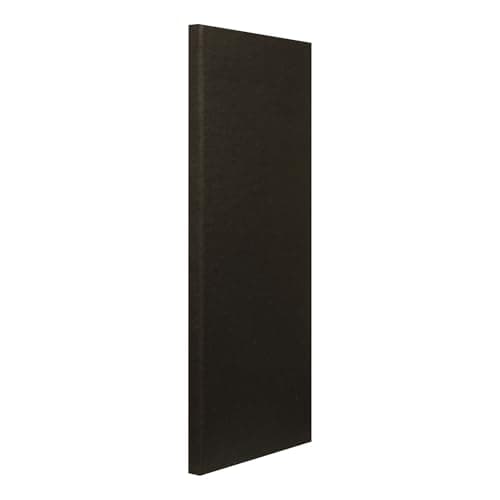
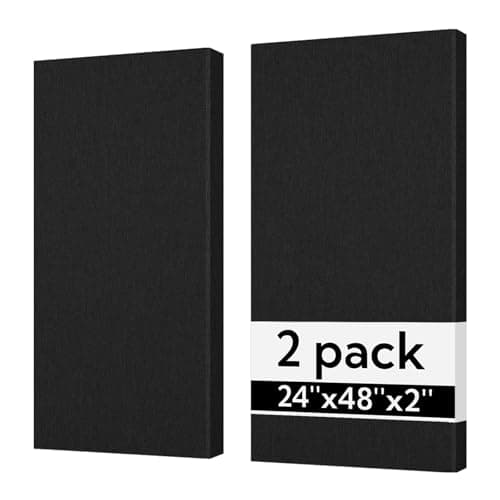
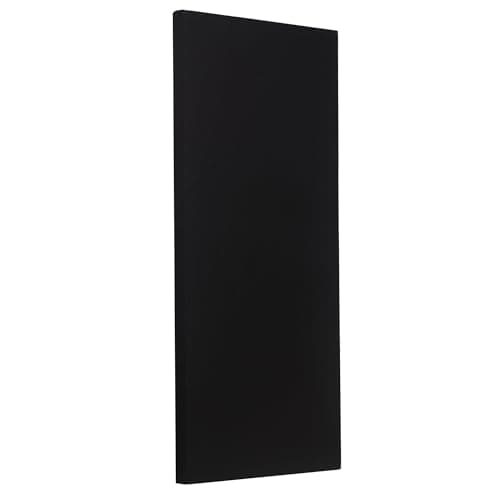
ATS Acoustics Sona Fabric Panel, 24 x 48 x 2 inThe only panel here with a published NRC of 1.0 and a named fire rating, in a 2 in mineral-wool build. It costs what a real panel costs.
ATS Acoustics Beveled Edge Panel, 24 x 48 x 2 inThe same NRC 1.0 mineral-wool build as the Sona panel in jute burlap with a beveled edge, for about 16 dollars less.
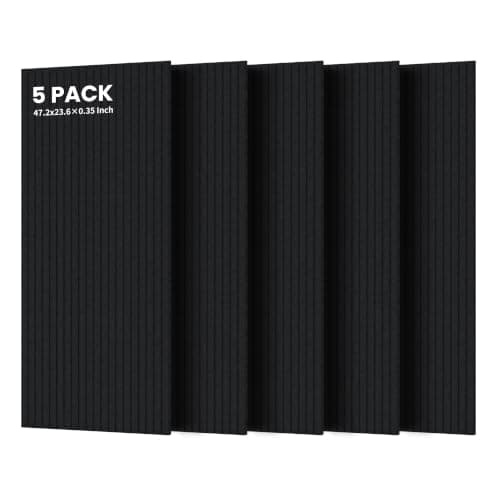
TONOR Self-Adhesive Acoustic Panels, 8-Pack 47.2 x 23.6 inPublishes both an NRC of 0.9 and a material density, which almost nothing else at this price does, and sticks on without a single screw.
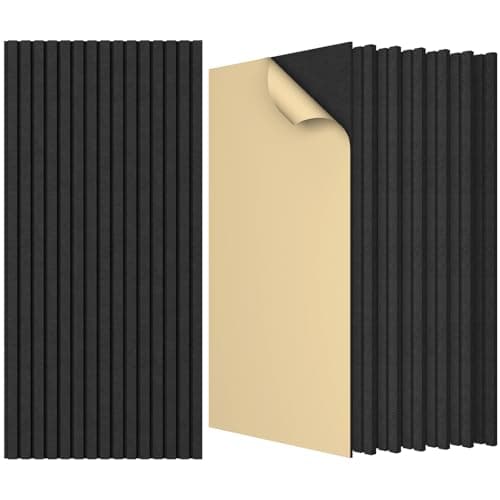
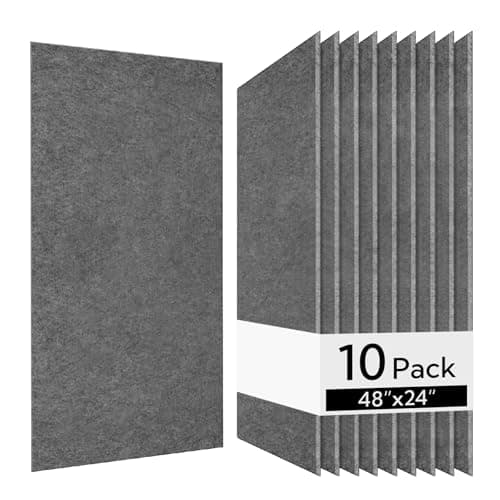
Olanglab PET Felt Wall Panels, 10-Pack 48 x 24 in77 sq ft of recycled PET felt for about 150 dollars, which is the cheapest real coverage on this page. Thin, so it works on voices and not on rumble.
Olanglab Fiberglass Acoustic Panel 2-Pack, 24 x 48 x 2 inTwo 2 in fiberglass-core panels with a published absorption coefficient up to 0.95, and impaling clips rather than a mounting template.
INNO STICKERS PET Felt Tiles, 16-Pack 11.8 x 11.8 inPublishes an NRC range of 0.6 to 0.85 rather than a single flattering number, which is the most honest absorption statement on this page.
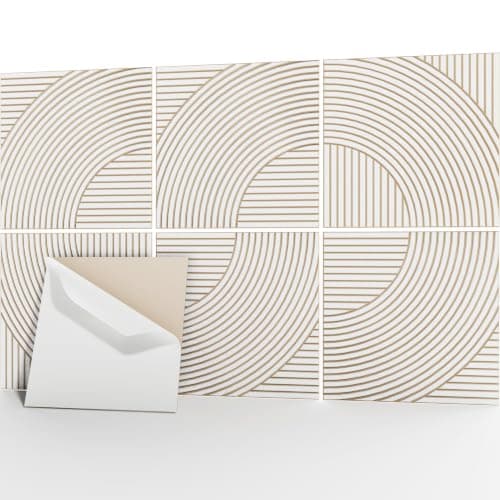
Art3d Acoustic Wood Slat Panel, 4-Pack 47 x 23.6 in30.8 sq ft of slatted wood over felt for 85 dollars, and the only option here that a video call will read as architecture rather than treatment.
TO-TH Large Acoustic Panels, 5-PackStates an absorption coefficient over 0.9 specifically above 3000 Hz, which is the most frequency-specific claim here and also the narrowest.
ElaraBerry Hexagon Ceiling Panels, 6-Pack Coated FiberglassCoated fiberglass at a published 120 kg/m3, hung from the ceiling so both faces work. It is the only product here that absorbs on two sides.
JaneTech Felt Acoustic Panels, 6-Pack 23.62 in square23 sq ft of self-adhesive felt squares in a clean oat white. Publishes its coverage honestly and its absorption not at all.
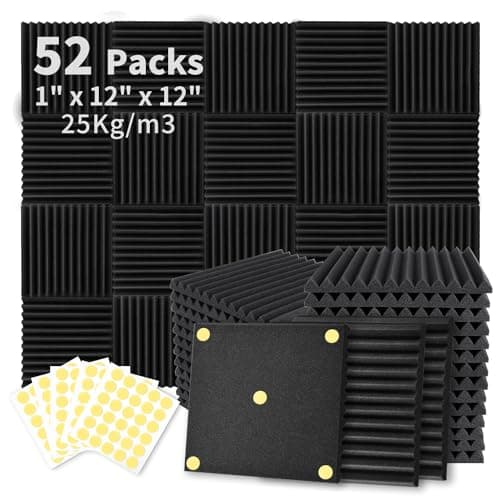
Focusound Acoustic Foam Wedge Panels, 52-Pack 12 x 12 x 1 inFifty-two foam wedges for 37 dollars. It is the most-bought product in this category and it publishes no absorption figure at all.
Scores are ours, from the published rubric on our methodology page. They are editorial judgments about published specifications, not test results — we have not handled these units.
01/ATS Acoustics
Sona Fabric Panel, 24 x 48 x 2 in
Best when the number matters
8.6/ 10
The only panel here with a published NRC of 1.0 and a named fire rating, in a 2 in mineral-wool build. It costs what a real panel costs.
The only panel here with a published NRC of 1.0 and a named fire rating, in a 2 in mineral-wool build. It costs what a real panel costs.
Published specification
Panel size
24 x 48 x 2 in
ATS Acoustics published specification
Coverage per panel
8 sq ft
Our arithmetic from the published panel size
NRC
1.0 (publisher states out of 1)
ATS Acoustics published specification
Fire rating
Class 1 / Class A per ASTM E84
ATS Acoustics published specification
Core
Mineral wool, solid wood internal frame
ATS Acoustics published specification
Weight
8.25 lb
Listing published specification
Mounting
Flush to wall; template and hardware included
ATS Acoustics published specification
What the specs are good for
Publishes an NRC figure and the fire-rating standard it was tested to, which most of this category does not
2 in thickness with a mineral wool core, which is what makes a difference below about 500 Hz where a voice actually sits
Solid wood frame and full wood back, so it mounts flat and stays flat
Mounting template and hardware in the box
What they are not
Roughly 12 dollars per square foot, five to ten times the felt tiles further down this list
One panel per box: an eight-panel wall is eight purchases and a real budget
Needs wall fixings, so it is not a rental-friendly install
Skip this if
Skip this if you are renting and cannot put holes in the wall, or if your budget for the whole room is under about 300 dollars. At that point you are better off with fewer square feet of something cheaper than one excellent panel on an otherwise bare wall.
Who it is for. Someone who takes calls for a living, has a hard-surfaced room, and would rather buy the measured thing once.
The same NRC 1.0 mineral-wool build as the Sona panel in jute burlap with a beveled edge, for about 16 dollars less.
The same NRC 1.0 mineral-wool build as the Sona panel in jute burlap with a beveled edge, for about 16 dollars less.
Published specification
Panel size
24 x 48 x 2 in
ATS Acoustics published specification
Coverage per panel
8 sq ft
Our arithmetic from the published panel size
NRC
1.0 (publisher states out of 1)
ATS Acoustics published specification
Core
Mineral wool, solid wood internal frame, full wood back
ATS Acoustics published specification
Fabric
100% jute burlap
ATS Acoustics published specification
Weight
8.25 lb
Listing published specification
What the specs are good for
Same published NRC 1.0 and same mineral wool core as the Sona panel, for less money
Beveled edge reads as a deliberate architectural element rather than a studio accessory
Full wood back means it sits flat against drywall without bowing
What they are not
Burlap is a coarser, more rustic texture than the Sona fabric and shows dust
The listing does not restate the ASTM E84 fire rating that the Sona panel carries
Still a single panel per purchase
Skip this if
Skip this if the room is a living space where the panel has to look soft and finished. Burlap looks like what it is, and in a shared room that reads as equipment.
Who it is for. Anyone who wants the measured build and does not care that the fabric is agricultural.
Self-Adhesive Acoustic Panels, 8-Pack 47.2 x 23.6 in
Best for walls you cannot drill
8.0/ 10
Publishes both an NRC of 0.9 and a material density, which almost nothing else at this price does, and sticks on without a single screw.
Publishes both an NRC of 0.9 and a material density, which almost nothing else at this price does, and sticks on without a single screw.
Published specification
Panel size
47.2 x 23.6 x 0.35 in, 8 panels
TONOR published specification
Coverage
About 61.9 sq ft total
Our arithmetic from the published panel size
NRC
0.9 (manufacturer's published figure; no test standard named)
TONOR published specification
Density
212.2 kg/m3
TONOR published specification
Material
100% polyester fiber
TONOR published specification
Mounting
Self-adhesive backing
TONOR published specification
What the specs are good for
An NRC figure AND a density figure, which together are the most spec data anyone publishes in the peel-and-stick tier
212.2 kg/m3 is a genuinely high density for polyester felt and it is why the NRC claim is plausible
No fixings at all, which makes this the rental answer
About 62 sq ft, enough for two walls of a small room
What they are not
Names no test standard for the NRC, so the figure is unaudited
0.35 in thick: same low-frequency limitation as every felt panel
Adhesive needs a smooth, clean, dry wall and can lift paint on removal
Skip this if
Skip this if your walls are textured, freshly painted, or anything other than smooth and sound. Adhesive panels on a rough or chalky surface fall off, usually about three weeks later.
Who it is for. A renter with smooth walls and a landlord, who still wants a density figure behind the purchase.
77 sq ft of recycled PET felt for about 150 dollars, which is the cheapest real coverage on this page. Thin, so it works on voices and not on rumble.
77 sq ft of recycled PET felt for about 150 dollars, which is the cheapest real coverage on this page. Thin, so it works on voices and not on rumble.
Published specification
Panel size
47 x 23 x 0.31 in, 10 panels
Olanglab published specification
Coverage
77.35 sq ft total
Olanglab published specification
Cost per sq ft
About 1.94 dollars at the list price shown
Our arithmetic from the live price and the published coverage
Material
Recycled PET felt
Olanglab published specification
Absorption
Manufacturer states "absorbing up to 85% of sound"; no NRC and no test standard published
Olanglab published specification
Thickness
0.31 in
Olanglab published specification
What the specs are good for
77 sq ft in one box, enough to treat a whole small office rather than one wall
Under 2 dollars per square foot, roughly a sixth of the measured 2 in panels
Cuts with a knife, so awkward walls and sockets are not a problem
Slot pattern reads as deliberate wall decor in a shared room
What they are not
The "85% of sound" claim is a marketing sentence, not a measurement: no NRC, no frequency range, no standard
At 0.31 in thick it works on speech reflections and does essentially nothing below about 500 Hz
Ten thin panels is a long install compared with two thick ones
Skip this if
Skip this if your problem is a neighbor, traffic, or a washing machine. Thin felt does not touch low frequency and no quantity of it will. That is a blocking problem and panels are an absorbing product.
Who it is for. The person whose calls sound echoey in a hard room and who wants the whole room treated this month.
Two 2 in fiberglass-core panels with a published absorption coefficient up to 0.95, and impaling clips rather than a mounting template.
Two 2 in fiberglass-core panels with a published absorption coefficient up to 0.95, and impaling clips rather than a mounting template.
Published specification
Panel size
24 x 48 x 2 in, 2 panels
Listing published specification
Coverage
16 sq ft for the pair
Our arithmetic from the published panel size
Absorption coefficient
Up to 0.95 (manufacturer's claim; no test standard named)
Olanglab published specification
Core
Porous fiberglass with high-density fabric cover
Olanglab published specification
Mounting
Impaling clips supplied
Olanglab published specification
What the specs are good for
Two large panels in one purchase, which is the smallest order that actually changes a room
2 in thick with a fiberglass core, the same construction logic as the ATS panels
Impaling clips make it a faster install than a template-and-screws panel
What they are not
Publishes an absorption coefficient but names no test standard for it, so the figure is a claim rather than a result
Impaling clips need adhesive or a fixing behind them; they are not a hang-and-go solution on bare drywall
Fiberglass cores shed if the fabric is cut or torn
Skip this if
Skip this if you want a figure you can audit. The number is plausible for a 2 in fiberglass panel but Olanglab does not say who measured it or to which standard, and that is the whole reason we scored its documentation low.
Who it is for. Someone treating one wall behind a desk who wants thickness and area without paying for the certified version.
Publishes an NRC range of 0.6 to 0.85 rather than a single flattering number, which is the most honest absorption statement on this page.
Publishes an NRC range of 0.6 to 0.85 rather than a single flattering number, which is the most honest absorption statement on this page.
Published specification
Tile size
11.8 x 11.8 x 0.4 in, 16 tiles
INNO STICKERS published specification
Coverage
15.5 sq ft total
INNO STICKERS published specification
NRC
0.6 to 0.85, stated as a range (no test standard named)
INNO STICKERS published specification
Material
Recycled PET felt
INNO STICKERS published specification
Mounting
96 adhesive tabs supplied; permanent install needs extra adhesive
INNO STICKERS published specification
What the specs are good for
A published RANGE instead of a single best-case number, which is how absorption actually behaves across frequency
Small tiles let you put absorption exactly where the reflection is, instead of covering a whole wall
Adhesive tabs are removable, so this is the least committal option here
Moisture-resistant and vacuumable
What they are not
15.5 sq ft is a spot treatment, not a room treatment
Adhesive tabs are explicitly described as temporary; a permanent install needs adhesive you buy separately
16 small tiles means 16 alignment decisions and a grid that is obvious when it is slightly off
Skip this if
Skip this if you need more than about 16 sq ft. Buying three boxes to cover a wall costs more per square foot than the 10-pack of large panels above and takes four times as long to hang.
Who it is for. Someone with one bad reflection, a rented wall, and no appetite for a project.
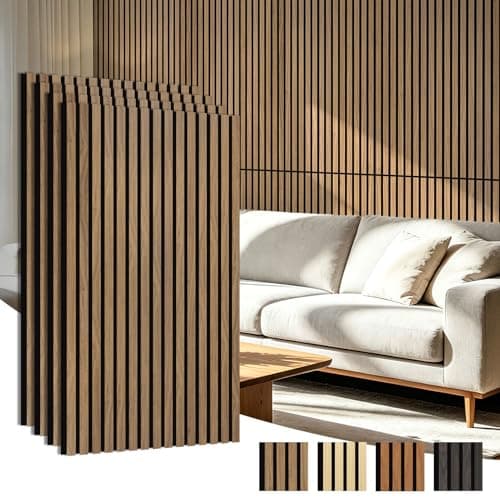
30.8 sq ft of slatted wood over felt for 85 dollars, and the only option here that a video call will read as architecture rather than treatment.
30.8 sq ft of slatted wood over felt for 85 dollars, and the only option here that a video call will read as architecture rather than treatment.
Published specification
Panel size
47.24 x 23.62 x 0.39 in, 4 panels
Listing published specification
Coverage
30.8 sq ft total
Art3d published specification
Weight
5.7 lb per panel
Listing published specification
Absorption
Not published. Art3d states no NRC and names no test
Absence confirmed against the published specification
Mounting
Adhesive or basic hardware
Art3d published specification
What the specs are good for
The best finish on this page by a distance: on camera it reads as a feature wall
30.8 sq ft for 85 dollars is reasonable value even ignoring acoustics
Wipes clean, and solid slats resist the warping that cheap veneer slat panels do
What they are not
No published NRC, no absorption coefficient, no test standard. There is felt behind the slats and we do not know what it does
Slats cover part of the felt, which necessarily reduces the absorbing area versus a flat panel of the same size
Heavier than felt tiles, so adhesive alone is a risk on a warm wall
Skip this if
Skip this if the room is genuinely echoey and you are buying one product to fix it. Buy these because you want the wall to look like this, and treat any acoustic benefit as a bonus you cannot size in advance.
Who it is for. Someone whose office is also a visible room, who is on camera, and who would rather the fix not look like a fix.
Absence confirmed against the published specification
What the specs are good for
The only listing here that attaches its absorption claim to a frequency, which is more useful than a bare NRC
Low mass per area at about 2 kg/m2, so adhesive mounting is genuinely viable
Vertical stripe finish is restrained enough for a shared room
What they are not
Above 3000 Hz is a narrow band. Speech intelligibility lives mostly between 500 and 4000 Hz, so this covers the top of the range only
Publishing nothing below 3000 Hz, when the problem in most offices is 250 to 1000 Hz, is a conspicuous silence
Five panels, and the listing does not state the panel size, so you cannot compute coverage before buying
Skip this if
Skip this if the complaint is that the room sounds boxy or boomy. That is low-mid energy and a panel that only publishes figures above 3000 Hz is answering a different question.
Who it is for. Someone whose room has a bright, hissy, sibilant quality rather than a boomy one.
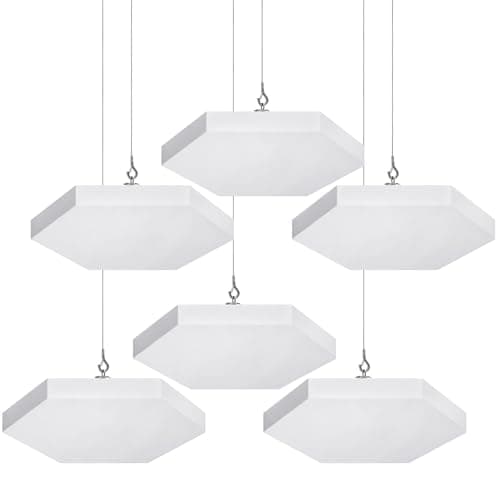
Coated fiberglass at a published 120 kg/m3, hung from the ceiling so both faces work. It is the only product here that absorbs on two sides.
Coated fiberglass at a published 120 kg/m3, hung from the ceiling so both faces work. It is the only product here that absorbs on two sides.
Published specification
Panel size
14.2 x 12.3 x 1.2 in, 6 panels
ElaraBerry published specification
Density
120 kg/m3 coated fiberglass
ElaraBerry published specification
Absorption
Described as effective for mid to high frequencies; no NRC published
Absence confirmed against the published specification
Weight
6.39 lb for the pack
Listing published specification
Supplied with
12 stainless steel cables, fixings, gloves
ElaraBerry published specification
Mounting
Suspended from the ceiling, both faces exposed
ElaraBerry published specification
What the specs are good for
Suspended mounting exposes both faces, which is a genuine physical advantage no wall panel has
Publishes a real density figure at 120 kg/m3, and density is what thin panels lack
1.2 in thick, roughly three times the felt tiles here
Frees up wall space entirely, which matters in a small room with windows and a door
What they are not
No NRC published, so the dual-sided advantage cannot be quantified
Fiberglass, coated or not: the listing itself tells you to wear a mask, goggles and gloves to install it
Needs ceiling fixings, which is a harder job than a wall and impossible in most rentals
The listing warns about odor and advises ventilating before use
Skip this if
Skip this if you rent, if your ceiling is concrete, or if anyone in the house is sensitive to fiberglass. Ceiling work is the least forgiving install in this whole category.
Who it is for. An owner-occupier in a small hard-surfaced room who has run out of usable wall.
23 sq ft of self-adhesive felt squares in a clean oat white. Publishes its coverage honestly and its absorption not at all.
23 sq ft of self-adhesive felt squares in a clean oat white. Publishes its coverage honestly and its absorption not at all.
Published specification
Panel size
23.62 x 23.62 in, 6 panels
Listing published specification
Coverage
About 23 sq ft total
JaneTech published specification
Absorption
Not published. The listing describes absorbing mid and high frequencies but gives no figure
Absence confirmed against the published specification
Mounting
Self-adhesive; drywall, painted wall, glass or wood
JaneTech published specification
What the specs are good for
Square format arranges into a grid or a diagonal without looking like a compromise
States coverage in square feet rather than making you compute it
Explicitly rated for glass, which matters if the problem wall is a window reveal or a partition
What they are not
No NRC, no coefficient, no frequency range. The listing names which frequencies it targets and then publishes no number for any of them
23 sq ft for 130 dollars is about 5.65 dollars per square foot, roughly triple the large-panel felt above
Listed thickness is 0.04 in, which is implausible for an acoustic panel and suggests the dimension field is wrong
Skip this if
Skip this if you are comparing on value. You are paying about three times the per-square-foot price of the Olanglab 10-pack for a cleaner shape and no more acoustic information.
Who it is for. Someone who has already decided on the square-tile look and wants it in a neutral color.
Acoustic Foam Wedge Panels, 52-Pack 12 x 12 x 1 in
What we would not buy
4.6/ 10
Fifty-two foam wedges for 37 dollars. It is the most-bought product in this category and it publishes no absorption figure at all.
Fifty-two foam wedges for 37 dollars. It is the most-bought product in this category and it publishes no absorption figure at all.
Published specification
Panel size
12 x 12 x 1 in, 52 panels
Focusound published specification
Coverage
52 sq ft total
Our arithmetic from the published panel size
Material
Open-cell acoustic foam, wedge profile
Focusound published specification
Absorption
Not published. No NRC, no coefficient, no frequency data, no density
Absence confirmed against the published specification
Supplied with
300 double-sided adhesive tabs
Focusound published specification
What the specs are good for
52 sq ft for 37 dollars, which is 71 cents per square foot and genuinely the cheapest coverage anywhere
Adhesive tabs included, so the install needs nothing else
Fire-resistant per the listing's own description
What they are not
Publishes no absorption data of any kind. Not an NRC, not a coefficient, not a density, not a frequency range
1 in open-cell foam is thin even by foam standards; thin foam absorbs high frequency and leaves everything else alone
It is widely sold as soundproofing, which it is not and cannot be
Looks like a 2009 YouTube bedroom on every video call for the life of the install
Skip this if
Skip this unless your problem is specifically a thin, bright, sibilant reflection AND the room is not visible on camera. We have it on this page because it is what most people buy, and we think the 1 in wedge foam tier is the wrong purchase for a home office nine times out of ten. See our panels-versus-foam comparison for the full reasoning.
Who it is for. Honestly: a closet, a garage, or a utility room where appearance does not matter and the budget is under 40 dollars.
For a room that has to work for calls, in a house you own: six ATS Acoustics beveled panels at about 480 dollars, placed at the first reflection points and behind the desk. That is 48 sq ft of NRC 1.0 absorption, which in a normal 12 by 10 room is a genuine, obvious change rather than a subtle one.
For a rented room, or a budget under 200 dollars: the Olanglab 10-pack. Seventy-seven square feet for 150 dollars gets you enough area that the thinness matters less, and it cuts with a knife to fit around sockets and switches. You are buying unmeasured product and you should know it, but the quantity partly compensates for what the thickness does not do.
For a wall that cannot be drilled at all: the TONOR 8-pack. It is the only self-adhesive option here that publishes both an NRC and a density, and 212 kg/m3 is high enough to make the 0.9 claim plausible rather than decorative.
For a room that is also a living space: the Art3d wood slat panels. You are paying for the finish and you should not expect quantified acoustic benefit, because Art3d publishes none. But a wall that looks deliberate is worth something on camera, and it is honest to buy it for that.
Where to go next
If you have not worked out how many panels your room needs, do that before buying anything: how many acoustic panels do you need. If you are not yet convinced panels do anything, start with do acoustic panels actually work, which is honest about what the evidence does and does not support. And if your real problem turns out to be a neighbor rather than an echo, how to soundproof a home office is the page you want instead.
FAQ
Questions people ask about this
How many acoustic panels do I need for a home office?+
It depends on the room's hard surface area, not its floor area. For a typical 12 by 10 ft room with a hard floor and bare walls, somewhere between 48 and 84 sq ft of panel is the band where the change becomes obvious, which is six to eleven 24 by 48 in panels. We show the full calculation, with your room dimensions as the input, on how many acoustic panels do you need.
Will acoustic panels stop noise from my neighbors?+
No. Panels absorb sound inside your room; they do not block sound entering it. Blocking needs mass and airtightness, which a lightweight porous panel has neither of by design. If the problem is a neighbor, traffic or a washing machine, start with acoustic panels versus soundproofing and then how to soundproof a home office.
What is a good NRC for an acoustic panel?+
NRC runs from 0 to 1, and 1.0 means the panel absorbed essentially all the sound energy that reached it in the test. Anything at 0.8 or above is a strong figure. The more useful question is whether an NRC is published at all: of the eleven products on this page, only three publish one, and only ATS Acoustics names the test standard behind it.
Is acoustic foam the same as an acoustic panel?+
Physically they are both porous absorbers, so the mechanism is the same. In practice the 1 in wedge foam sold in 50-packs publishes no absorption data, is thin enough to work only at high frequency, and looks like studio equipment. Fabric or felt panels at the same price generally publish more and look better. The full comparison is on acoustic panels versus foam.
Can I put acoustic panels on a rented wall?+
Yes, with adhesive panels on a smooth, clean, sound wall. The TONOR 8-pack and the INNO STICKERS tiles are both designed for it. Avoid adhesive on textured, freshly painted or chalky surfaces: the panels will come off, usually about three weeks later, and they can take paint with them.
Do acoustic panels help with my microphone on calls?+
Yes, and this is where they help most. A microphone picks up your voice plus every reflection of your voice arriving a few milliseconds later, which is what makes a hard room sound hollow and distant. Absorbing those first reflections improves what the far end hears more than almost anything else you can buy.
Does panel color or pattern change the acoustics?+
No. Absorption is a function of material, thickness and density. Hexagons, slats and squares are aesthetic choices, with one real exception: slatted wood panels cover part of their own felt backing with solid wood, which necessarily reduces the exposed absorbing area compared with a flat panel of the same size.
Sources
Where these numbers came from
We have not handled any of these products. Every figure on this page is either the manufacturer's own published specification, named as such, or our arithmetic from those figures, shown so you can check it. Prices come from Amazon through our price layer and carry the date they were verified.
Amazon product listings, retrieved 2026-10-03
Published specifications, dimensions, materials and manufacturer claims were read from each product's own listing data. Prices and availability refresh daily and carry their verification date on the page.
The full published method, and an explicit statement of what a specs-only approach cannot tell you.
ASTM C423 — Standard Test Method for Sound Absorption and Sound Absorption Coefficients by the Reverberation Room Method
The governing test method behind any NRC figure. We name it where a manufacturer publishes an NRC so you know what the number is a result of. We have not performed this test and we do not restate anyone's NRC as our own measurement.
ASTM E84 — Standard Test Method for Surface Burning Characteristics of Building Materials
The fire-rating standard ATS Acoustics cites for its Class 1 / Class A panels. Named because they name it.