Foam is the cheapest coverage in the category and the most-bought product in it. That combination deserves a closer look than it usually gets.
SMBy Scooter M.Published October 3, 2026Prices verified October 3, 2026
The short answer
Buy panels, not foam, for a home office. Foam is cheaper per square foot than anything else in the category, and for a closet, a garage or a utility room where appearance does not matter that is a real argument. But in a room you work in and appear on camera from, 1 in wedge foam that publishes no absorption data at all loses to felt panels that cost two to three times as much per square foot, publish more, and do not make every video call look like a 2009 bedroom studio.
That is the recommendation for most people. The rest of this page is the decision table and the three situations where foam is genuinely the better buy.
The decision table
Acoustic foam against fabric and felt panels
1 in wedge foam
Felt / fabric panels
Published absorption
None, in every foam product we examined. No NRC, no coefficient, no frequency data, no density
Sometimes. ATS publishes NRC 1.0 with the standard; TONOR publishes NRC 0.9; several publish nothing
Cost per sq ft
About 0.71 dollars (Focusound 52-pack)
1.94 to 12.00 dollars depending on tier
Typical thickness
1 in, sometimes 2 in
0.31 to 2 in
Where it works
High frequency. A thin open-cell absorber does its work above roughly 1 kHz
Depends entirely on thickness. 2 in reaches meaningfully lower
Appearance
Reads as studio equipment. Highly visible on camera
Reads as wall treatment or decor. Several options read as architecture
Durability
Open-cell foam yellows with UV and crumbles at the edges over years
Felt and fabric hold color; mineral wool panels are effectively permanent
Mounting
Adhesive tabs, usually supplied
Adhesive, impaling clips, or screws and a template depending on tier
Fire behavior
Varies. Focusound describes fire resistance but names no standard
ATS cites ASTM E84 Class A. Most others name no standard either
Compiled from each product's own published specification, 2026-10-03. Figures move with the live price; the buy buttons on this page carry the current one.
Why foam has the reputation it has
Wedge foam became the default picture of acoustic treatment because it was what recording studios used in photographs, and because it is extremely cheap to manufacture and ship. Fifty-two tiles for 37 dollars is genuinely remarkable value for 52 sq ft of any material.
The trouble is what it is sold as. Search listings for foam and you will find the words soundproof, soundproofing and noise canceling attached to a 1 in open-cell tile that weighs a few ounces. A product with essentially no mass cannot block sound. It is physically incapable of it. The Focusound listing on this page uses the phrase 'Sound Proof Foam Panles' in its own title, which tells you how the category markets itself.
People buy it to stop hearing a neighbor, hang 52 tiles, hear the neighbor exactly as before, and conclude acoustic treatment does not work. It does work. They bought the wrong thing for the wrong problem, and the listing encouraged them. Acoustic panels versus soundproofing is the page that disentangles that properly.
The three situations where foam is the right buy
We are not against foam. We are against foam in a visible home office. It wins in three specific places:
A room nobody sees. A closet used as a recording booth, a garage, a basement utility room. Appearance is worth nothing there and 71 cents a square foot is worth a lot.
A genuinely bright, sibilant room, where the complaint is a sharp slapping ring rather than a boomy hollowness. That is high-frequency energy and thin foam addresses it adequately.
Testing the idea cheaply. If you are not convinced any of this works, 37 dollars of foam tells you whether absorption changes your room before you spend 500. We would rather you did that than did nothing.
What the panel tier buys you
Moving from foam to felt roughly triples your cost per square foot. Here is what the money goes on.
Published data. At the top of the panel tier you get an NRC with a named test standard. In the middle you get an NRC or a density with no standard. At the bottom of the panel tier you get nothing, same as foam - which is why the Olanglab 10-pack is on this page as a direct comparison. At 1.94 dollars a square foot with no published figure, it is foam's closest competitor on value, and it beats foam on appearance and durability without beating it on evidence.
Thickness, if you pay for it. The ATS panels at 2 in reach meaningfully lower in frequency than any 1 in foam. That is the single biggest performance difference available in this category and it costs about 12 dollars a square foot.
A room you want to be in. This sounds soft and is not. If you spend 2,000 hours a year in a room, how it looks is a real cost, and a wall of black wedge foam appearing behind you on every call is a thing colleagues notice.
#
Product
Best for
Score
Price
01
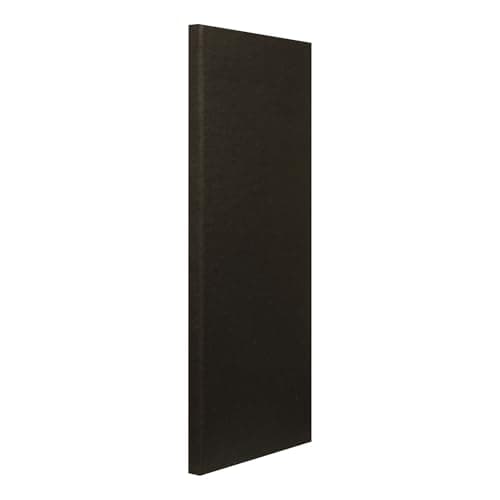
ATS Acoustics Beveled Edge Panel, 24 x 48 x 2 inThe same NRC 1.0 mineral-wool build as the Sona panel in jute burlap with a beveled edge, for about 16 dollars less.
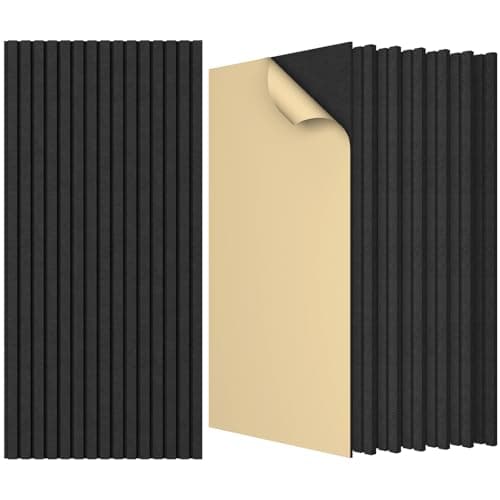
TONOR Self-Adhesive Acoustic Panels, 8-Pack 47.2 x 23.6 inPublishes both an NRC of 0.9 and a material density, which almost nothing else at this price does, and sticks on without a single screw.
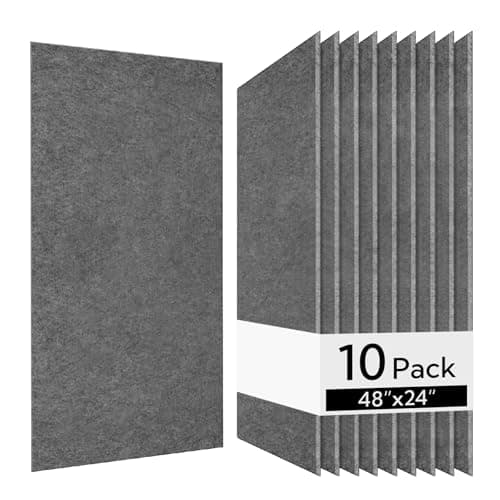
Olanglab PET Felt Wall Panels, 10-Pack 48 x 24 in77 sq ft of recycled PET felt for about 150 dollars, which is the cheapest real coverage on this page. Thin, so it works on voices and not on rumble.
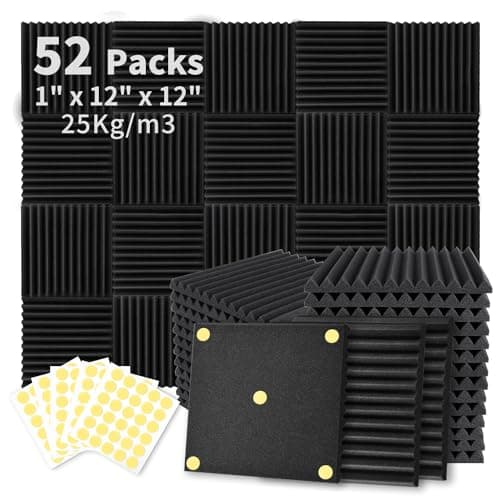
Focusound Acoustic Foam Wedge Panels, 52-Pack 12 x 12 x 1 inFifty-two foam wedges for 37 dollars. It is the most-bought product in this category and it publishes no absorption figure at all.
Scores are ours, from the published rubric on our methodology page. They are editorial judgments about published specifications, not test results — we have not handled these units.
01/ATS Acoustics
Beveled Edge Panel, 24 x 48 x 2 in
Best measured panel under 80 dollars
8.4/ 10
The same NRC 1.0 mineral-wool build as the Sona panel in jute burlap with a beveled edge, for about 16 dollars less.
The same NRC 1.0 mineral-wool build as the Sona panel in jute burlap with a beveled edge, for about 16 dollars less.
Published specification
Panel size
24 x 48 x 2 in
ATS Acoustics published specification
Coverage per panel
8 sq ft
Our arithmetic from the published panel size
NRC
1.0 (publisher states out of 1)
ATS Acoustics published specification
Core
Mineral wool, solid wood internal frame, full wood back
ATS Acoustics published specification
Fabric
100% jute burlap
ATS Acoustics published specification
Weight
8.25 lb
Listing published specification
What the specs are good for
Same published NRC 1.0 and same mineral wool core as the Sona panel, for less money
Beveled edge reads as a deliberate architectural element rather than a studio accessory
Full wood back means it sits flat against drywall without bowing
What they are not
Burlap is a coarser, more rustic texture than the Sona fabric and shows dust
The listing does not restate the ASTM E84 fire rating that the Sona panel carries
Still a single panel per purchase
Skip this if
Skip this if the room is a living space where the panel has to look soft and finished. Burlap looks like what it is, and in a shared room that reads as equipment.
Who it is for. Anyone who wants the measured build and does not care that the fabric is agricultural.
Self-Adhesive Acoustic Panels, 8-Pack 47.2 x 23.6 in
Best for walls you cannot drill
8.0/ 10
Publishes both an NRC of 0.9 and a material density, which almost nothing else at this price does, and sticks on without a single screw.
Publishes both an NRC of 0.9 and a material density, which almost nothing else at this price does, and sticks on without a single screw.
Published specification
Panel size
47.2 x 23.6 x 0.35 in, 8 panels
TONOR published specification
Coverage
About 61.9 sq ft total
Our arithmetic from the published panel size
NRC
0.9 (manufacturer's published figure; no test standard named)
TONOR published specification
Density
212.2 kg/m3
TONOR published specification
Material
100% polyester fiber
TONOR published specification
Mounting
Self-adhesive backing
TONOR published specification
What the specs are good for
An NRC figure AND a density figure, which together are the most spec data anyone publishes in the peel-and-stick tier
212.2 kg/m3 is a genuinely high density for polyester felt and it is why the NRC claim is plausible
No fixings at all, which makes this the rental answer
About 62 sq ft, enough for two walls of a small room
What they are not
Names no test standard for the NRC, so the figure is unaudited
0.35 in thick: same low-frequency limitation as every felt panel
Adhesive needs a smooth, clean, dry wall and can lift paint on removal
Skip this if
Skip this if your walls are textured, freshly painted, or anything other than smooth and sound. Adhesive panels on a rough or chalky surface fall off, usually about three weeks later.
Who it is for. A renter with smooth walls and a landlord, who still wants a density figure behind the purchase.
77 sq ft of recycled PET felt for about 150 dollars, which is the cheapest real coverage on this page. Thin, so it works on voices and not on rumble.
77 sq ft of recycled PET felt for about 150 dollars, which is the cheapest real coverage on this page. Thin, so it works on voices and not on rumble.
Published specification
Panel size
47 x 23 x 0.31 in, 10 panels
Olanglab published specification
Coverage
77.35 sq ft total
Olanglab published specification
Cost per sq ft
About 1.94 dollars at the list price shown
Our arithmetic from the live price and the published coverage
Material
Recycled PET felt
Olanglab published specification
Absorption
Manufacturer states "absorbing up to 85% of sound"; no NRC and no test standard published
Olanglab published specification
Thickness
0.31 in
Olanglab published specification
What the specs are good for
77 sq ft in one box, enough to treat a whole small office rather than one wall
Under 2 dollars per square foot, roughly a sixth of the measured 2 in panels
Cuts with a knife, so awkward walls and sockets are not a problem
Slot pattern reads as deliberate wall decor in a shared room
What they are not
The "85% of sound" claim is a marketing sentence, not a measurement: no NRC, no frequency range, no standard
At 0.31 in thick it works on speech reflections and does essentially nothing below about 500 Hz
Ten thin panels is a long install compared with two thick ones
Skip this if
Skip this if your problem is a neighbor, traffic, or a washing machine. Thin felt does not touch low frequency and no quantity of it will. That is a blocking problem and panels are an absorbing product.
Who it is for. The person whose calls sound echoey in a hard room and who wants the whole room treated this month.
Acoustic Foam Wedge Panels, 52-Pack 12 x 12 x 1 in
What we would not buy
4.6/ 10
Fifty-two foam wedges for 37 dollars. It is the most-bought product in this category and it publishes no absorption figure at all.
Fifty-two foam wedges for 37 dollars. It is the most-bought product in this category and it publishes no absorption figure at all.
Published specification
Panel size
12 x 12 x 1 in, 52 panels
Focusound published specification
Coverage
52 sq ft total
Our arithmetic from the published panel size
Material
Open-cell acoustic foam, wedge profile
Focusound published specification
Absorption
Not published. No NRC, no coefficient, no frequency data, no density
Absence confirmed against the published specification
Supplied with
300 double-sided adhesive tabs
Focusound published specification
What the specs are good for
52 sq ft for 37 dollars, which is 71 cents per square foot and genuinely the cheapest coverage anywhere
Adhesive tabs included, so the install needs nothing else
Fire-resistant per the listing's own description
What they are not
Publishes no absorption data of any kind. Not an NRC, not a coefficient, not a density, not a frequency range
1 in open-cell foam is thin even by foam standards; thin foam absorbs high frequency and leaves everything else alone
It is widely sold as soundproofing, which it is not and cannot be
Looks like a 2009 YouTube bedroom on every video call for the life of the install
Skip this if
Skip this unless your problem is specifically a thin, bright, sibilant reflection AND the room is not visible on camera. We have it on this page because it is what most people buy, and we think the 1 in wedge foam tier is the wrong purchase for a home office nine times out of ten. See our panels-versus-foam comparison for the full reasoning.
Who it is for. Honestly: a closet, a garage, or a utility room where appearance does not matter and the budget is under 40 dollars.
Not inherently. Both are porous absorbers and the mechanism is identical. In practice the 1 in wedge foam sold in bulk packs publishes no absorption data, is thin enough to work only at high frequency, and looks like studio equipment. Fabric and felt panels at the same thickness often publish more and always look better in a working room.
Does acoustic foam block sound from outside?+
No. Blocking sound requires mass and airtightness, and open-cell foam has essentially neither. Listings that describe foam as soundproof are using the word incorrectly. If sound is coming in from elsewhere, the fix is sealing and mass, which we cover on how to soundproof a home office.
How thick should acoustic foam be?+
Thicker is better and 2 in meaningfully outperforms 1 in, because thickness determines how low in frequency a porous absorber works. If you are buying foam at all, buying 2 in rather than 1 in is the upgrade worth paying for, and it usually costs about 50 per cent more.
Will acoustic foam damage my walls?+
The foam will not, but the adhesive tabs can. Most bulk foam ships with double-sided tape that is stronger than it needs to be on painted drywall. Test one tile in a corner and leave it a week before committing the wall.
Is it worth mixing foam and panels?+
Yes, and it is a reasonable budget strategy: thicker panels at the first reflection points where they do the most work, cheap foam filling the remaining area. Just be aware the room will look mixed, and that most of the benefit comes from the first few square feet in the right place rather than the last twenty anywhere.
Sources
Where these numbers came from
We have not handled any of these products. Every figure on this page is either the manufacturer's own published specification, named as such, or our arithmetic from those figures, shown so you can check it. Prices come from Amazon through our price layer and carry the date they were verified.
Amazon product listings, retrieved 2026-10-03
Published specifications, dimensions, materials and manufacturer claims were read from each product's own listing data. Prices and availability refresh daily and carry their verification date on the page.
The full published method, and an explicit statement of what a specs-only approach cannot tell you.
ASTM C423 — Standard Test Method for Sound Absorption and Sound Absorption Coefficients by the Reverberation Room Method
The governing test method behind any NRC figure. We name it where a manufacturer publishes an NRC so you know what the number is a result of. We have not performed this test and we do not restate anyone's NRC as our own measurement.