A ceiling panel hangs free, so both faces work. That single fact changes the arithmetic, and almost nobody does the arithmetic.
SMBy Scooter M.Published October 5, 2026Prices verified October 5, 2026
The short answer
If you already have a suspended grid, buy the Armstrong Backstage Noir tiles - they carry about 1.29 lb of material per square foot, roughly three and a half times the polyester tiles sold alongside them, and they are the only drop-in tile here that names a test standard for anything. If you have a plain drywall or plaster ceiling, buy the ATS Acoustics 24 x 48 in baffle - 2 in of mineral wool, the only published absorption figure in this entire set, and about 9.75 dollars per square foot of exposed surface. If the budget is the constraint, buy the ElaraBerry rectangular 8-pack at roughly 2.28 dollars per square foot of exposed surface, and accept that 0.35 in of polyester does nothing below about 500 Hz.
A ceiling is not a wall, and the arithmetic is different
A panel screwed to a wall has one face in the room. A panel hung from a ceiling has two. The back of a suspended baffle is not pressed against plasterboard; it is in open air, and sound reaches it. That is the single biggest reason ceiling treatment is efficient, and it is the reason a 4 sq ft baffle is not comparable to a 4 sq ft wall panel.
Exposed absorbing surface, by format
Wall panel: one face in the room. A 24 x 48 in panel = 8 sq ft of panel = 8 sq ft exposed
Hanging baffle or cloud: both faces in the room. A 24 x 48 in baffle = 8 sq ft of panel = 16 sq ft exposed
Drop-in grid tile: one face in the room, one in the plenum above. A 24 x 48 in tile = 8 sq ft exposed
Our arithmetic. The plenum side of a grid tile is not wasted - it is doing something for sound traveling between rooms through the ceiling void - but it is not absorbing the sound in the room you are sitting in, and this page is about the room you are sitting in.
So the honest unit for comparing these products is not price per panel and not price per square foot of product. It is price per square foot of surface that is actually exposed to the room, and on that basis the ranking changes completely.
There is a second thing the ceiling has going for it that no wall does: nothing is ever in front of it. No bookcase, no monitor, no door swing, no window. Whatever you put up there stays working, which is not true of the wall behind your desk after you have lived with the room for a year.
Three formats, and only one of them will apply to you
Almost every disappointing ceiling purchase we can reconstruct from the listings comes from buying the wrong format rather than the wrong product. The three are not interchangeable and the choice is made for you by what is already on your ceiling.
Hanging baffles
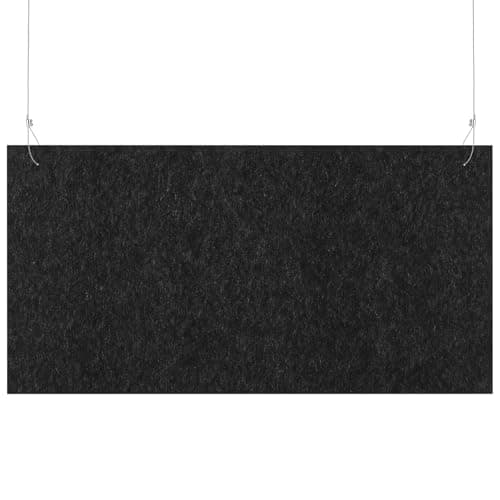
A rigid rectangle hung vertically on cables, like a fin. Both faces work, they are the only format here that comes in real thickness, and they suit a high, sloped or exposed-joist ceiling. The ATS baffles on this page are 2 in of mineral wool in an aluminum frame; the Otoolling is 15 mm of polyester, which is under 0.6 in.
The spec that decides between baffles is drop, not area. A 24 in baffle hanging in a room with an 8 ft ceiling leaves 6 ft of head height and will be in your way. That is why ATS sells the identical product in a 12 in version, and why the 12 in version costs about 15.37 dollars per square foot of exposed surface against about 9.75 for the wide one - the aluminum frame is a far larger share of a narrow panel.
Ceiling clouds
A horizontal panel or panel array suspended a few inches below the ceiling. Both faces work here too, and the air gap behind the panel improves low-frequency absorption for free - a porous absorber spaced away from a hard surface behaves like a thicker one.
Clouds are the format most sold as decor, which is why they are the thinnest. The ElaraBerry rectangular set is 0.35 in; the hexagon set is 1.2 in of coated fiberglass at a published 120 kg/m3, which is the only density figure published anywhere in this product set. A cloud is the right format over a desk, and the wrong format for a whole room - you are treating the patch of ceiling directly above the person talking, which is a real and useful thing to do and not a room treatment.
Drop-in grid tiles
These replace the tiles in an existing 15/16 in suspended grid. No fixings, no adhesive, no holes: you lift the old tile out and drop the new one in. They are also completely irrelevant if you do not have a grid, and putting one in is a different and much larger project than this page covers.
If you do have a grid - a basement, a converted commercial unit, a garage office - this is the cheapest acoustic work available to you by a wide margin, and the existing tiles are almost certainly the thinnest thing the builder could buy.
The table that sorts the whole category
Two columns, both derived from each listing's own published figures. The first is what a square foot of room-facing absorber costs you. The second is how much material is actually present per square foot of that surface, which is the only quality proxy available when almost nothing here publishes an absorption figure.
Exposed absorbing surface, cost and material weight
Product
Format
Exposed surface
$ per sq ft
lb per sq ft
ATS Acoustics 24 x 48 x 2 in
Baffle
16 sq ft
about 9.75
0.50
ATS Acoustics 12 x 48 x 2 in
Baffle
8 sq ft
about 15.37
0.75
Otoolling 48 x 24 in
Baffle
16 sq ft
about 5.31
0.28
ElaraBerry hexagon 6-pack
Cloud
about 10.9 sq ft
about 7.70
0.59
ElaraBerry rectangle 8-pack
Cloud
about 41.3 sq ft
about 2.28
0.14
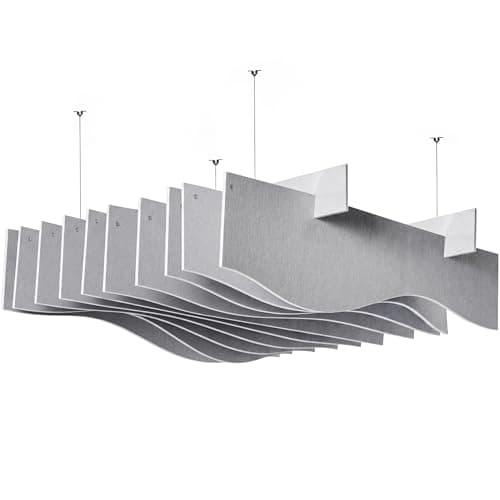
VIVO PP-CW05G
Cloud
Not derivable
Not derivable
Not derivable
Armstrong Backstage Noir 2 x 4, 6-pack
Grid tile
48 sq ft
about 4.30
1.29
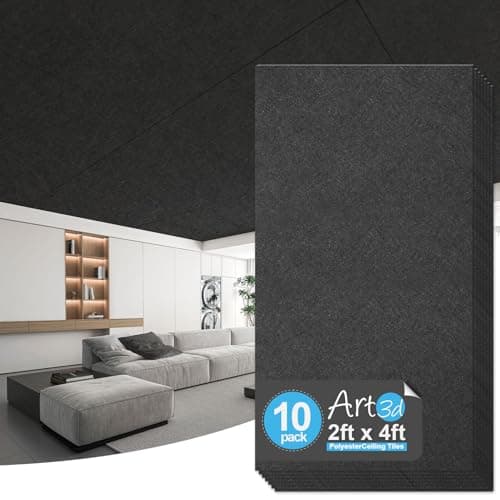
Art3d 2 x 4, 10-pack
Grid tile
80 sq ft
about 1.62
0.36
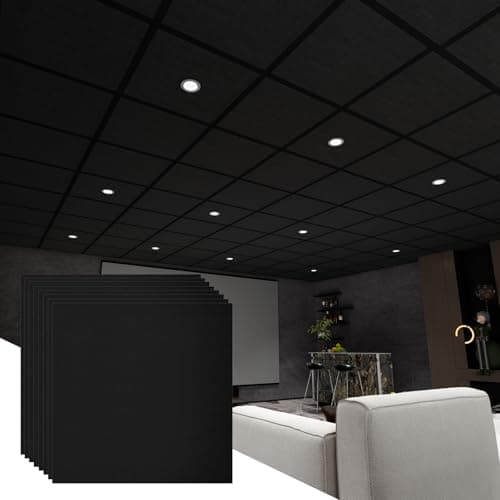
BaseNoir 2 x 2, 24-pack
Grid tile
96 sq ft
about 1.77
Not published
Exposed surface and both derived columns are our arithmetic from each listing's published dimensions, pack count and weight, doubling face area for the hanging formats only. Dollar figures use the price verified 2026-10-05 and will drift; the live price sits on every buy row above. The ElaraBerry hexagon area takes each panel as roughly three-quarters of its published 14.2 x 12.3 in bounding rectangle, which is an approximation and is labeled as one.
Three things fall out of that table. The cheapest exposed square foot is the Art3d grid tile at about 1.62 dollars, and it is also the second-thinnest product here at 0.2 in.The most material per square foot is the Armstrong tile at about 1.29 lb, at 2.7 times the price of the Art3d. And the only product that gives you both real thickness and a published absorption figure is the ATS baffle, which costs about six times the Art3d per square foot of surface.
That is the trade, stated plainly: you can buy area cheaply, or you can buy material cheaply, and the one product that does both at once is the Armstrong tile - available only to people who already have a grid.
About that NRC of 1.52
ATS publishes a Noise Reduction Coefficient of 1.52 for its baffles, and adds, in its own words, that this is out of 1. It is the only absorption figure published by any product on this page and it deserves an explanation rather than a headline.
NRC comes from ASTM C423, in which a sample is placed in a reverberation chamber and the increase in sound decay is measured. The result is reported as absorption per unit of the sample's area - and for a flat panel lying on the chamber floor, the area is unambiguous. For a baffle hung in open air, both faces absorb, and if the result is normalized to one-sided area the coefficient comes out above 1.
So a figure of 1.52 does not mean the baffle absorbs more energy than reaches it, which would be impossible. It means roughly what the rest of this page says in plainer terms: a free-hanging panel does about one and a half times the work of the same panel flat on a wall. It is a real figure, it is consistent with the physics, and it is the honest reading of it.
Two caveats, and they matter. The listing does not name the test standard for this particular figure, so we are naming ASTM C423 because it is the method behind every NRC, not because ATS cited it here. And a coefficient normalized one way cannot be compared against a wall panel's NRC normalized the other way - including against the NRC 1.0 that ATS publishes for its own flat Sona panel.
How much ceiling do you actually need to treat?
Our standing arithmetic for a 12 x 10 ft room with an 8 ft ceiling puts about 420 sq ft of reflective surface in it once a door, a window and some soft furnishing are subtracted, and puts the useful treatment target at 15 to 20 percent of that, which is 63 to 84 sq ft. The full working is on how many acoustic panels do you need.
The ceiling in that room is 120 sq ft, so it is roughly 29 percent of the reflective area on its own - the single largest uninterrupted hard surface in most home offices, and the one surface that is always parallel to a hard floor. A parallel pair of hard surfaces is where flutter echo lives, which is why a treated ceiling often does more per square foot than a treated wall.
Hitting the 63 sq ft lower bound, by product
ATS 24 x 48 in baffles at 16 sq ft exposed each: 63 / 16 = 3.9, so 4 baffles
Otoolling 48 x 24 in baffles at 16 sq ft exposed each: 4 baffles
ElaraBerry rectangle packs at about 41.3 sq ft exposed each: 63 / 41.3 = 1.5, so 2 packs
Art3d 2 x 4 grid tiles at 8 sq ft each: 63 / 8 = 7.9, so 8 tiles, one pack covers it
Armstrong 2 x 4 grid tiles at 8 sq ft each: 8 tiles, so 2 packs
Our arithmetic. For grid tiles the realistic question is different - you are replacing a whole ceiling, not hitting a target - and a 120 sq ft ceiling needs 15 tiles of 2 x 4 ft or 30 of 2 x 2 ft, before offcuts for the perimeter.
One baffle is not a treatment. This is the failure mode in this category and it is the same one as in wall panels: a single hanging panel over a desk is a gesture, you will not hear it, and you will conclude the product does not work. Four is the number at which a 12 x 10 ft room changes, and four of anything here is a real purchase.
Spacing matters as much as quantity. Four baffles spread evenly across a ceiling beat four clustered in one place, because you are trying to interrupt reflections across the whole ceiling plane rather than absorb one spot very thoroughly.
Mounting, which is the part people underestimate
Everything on a ceiling is overhead, and overhead failures are the kind that land on a desk. Weight matters more than it does on a wall, and the fixing matters more than the panel.
Find the joist. The ATS 24 x 48 baffle is 8 lb and the VIVO cloud is 13 to 15 lb. Neither belongs on a plasterboard plug. A joist screw, or a proper toggle rated well above the load, or nothing.
Concrete ceilings need a hammer drill and expansion bolts, which is the single most common reason a ceiling plan gets abandoned halfway. Check what your ceiling is made of before you order, not after.
Count the holes before you buy. The ElaraBerry rectangular set ships 16 expansion bolts because it needs 16 holes. That is the longest install on this page by some distance, and in a rental it is sixteen things to make good.
Grid tiles need no fixings at all, which is the entire argument for them. If you have a grid, this consideration does not apply to you.
Do not hang anything from a ceiling diffuser, a sprinkler pipe or a light fitting. This should not need saying and it does.
Level matters visually. Eight hanging slats that are not level with each other read as a mistake from across the room, whatever they do acoustically.
If you rent, the honest position is that most of this page is not for you. A drop-in grid tile is reversible and leaves nothing behind; everything else involves holes in a ceiling, which is the least forgiving surface in the property to make good. Where to place acoustic panels covers the wall-side options that do not.
What the ceiling will not do
None of this stops the person upstairs. Absorbing and blocking are different physical problems: absorption needs porous lightweight material with air in it, and blocking needs mass and airtightness. A 0.35 in polyester cloud weighs almost nothing, which is precisely why it absorbs and precisely why it blocks nothing.
A ceiling product sold as soundproofing for noisy neighbors is being sold dishonestly, and several in this category are. If footsteps from above are your problem, no panel on this page addresses it - that is acoustic panels vs soundproofing, and the fix is structural.
What a treated ceiling does do is reduce how long sound hangs in your own room: less ring on a clap, less flutter between the floor and the ceiling, a cleaner microphone signal and less fatigue after six hours of calls. That is a real and worthwhile outcome and it is a different outcome from the one the listings imply.
How we ranked these
The hub's five metrics, applied identically here as everywhere else: absorption, coverage, mounting, finish and documentation. Documentation does real work on this page - of the nine products here, one publishes an absorption figure, one publishes a material density, one names a fire standard, and one contradicts itself on both its size and its weight. The full rubric is on how we pick.
#
Product
Best for
Score
Price
01
ATS Acoustics Hanging Acoustic Baffle, 24 x 48 x 2 in2 in of mineral wool in an aluminum frame, hung so both faces work, and the only ceiling product here that publishes an absorption number at all.
ATS Acoustics Hanging Acoustic Baffle, 12 x 48 x 2 inThe same mineral wool, frame and published NRC as the 24 in baffle in half the drop. You pay a premium per square foot for the head height.
Armstrong Backstage Noir 1319 Drop Ceiling Tiles, 2 x 4 ft, 6-PackThe heaviest material per square foot on this page by a wide margin, in a tile that needs no fixings at all - provided you already have a suspended grid.
ElaraBerry Hexagon Ceiling Panels, 6-Pack Coated FiberglassCoated fiberglass at a published 120 kg/m3, hung from the ceiling so both faces work. It is the only product here that absorbs on two sides.
ElaraBerry Hanging Ceiling Panels, Rectangle, 8-PackEight hanging slats that work out at roughly 41 sq ft of exposed surface for under a hundred dollars. They are also 0.35 in thick, and that is the whole story.
Art3d Acoustic Polyester Drop Ceiling Tiles, 2 x 4 ft, 10-Pack80 sq ft of grid tile at about 1.62 dollars a square foot, cuttable with a utility knife. Thin and light, and the listing admits neither.
BaseNoir Black Acoustic Ceiling Tiles, 2 x 2 ft, 24-Pack96 sq ft of non-reflective black tile in one box, sold for glare control as much as for sound, and publishing less than anything else here.
VIVO Waffle Wave Ceiling Panel, PP-CW05GThe deepest cloud here and the heaviest, from a brand with a real support operation. Its own listing contradicts itself on both size and weight.
Ranked on our five hub metrics. The cost and weight figures in the prose below are our arithmetic from each listing's published dimensions and the price verified on 2026-10-05; the price on every buy row is live.
01/ATS Acoustics
Hanging Acoustic Baffle, 24 x 48 x 2 in
Best documented baffle
7.4/ 10
2 in of mineral wool in an aluminum frame, hung so both faces work, and the only ceiling product here that publishes an absorption number at all.
2 in of mineral wool in an aluminum frame, hung so both faces work, and the only ceiling product here that publishes an absorption number at all.
Published specification
Baffle size
24 x 48 x 2 in
ATS Acoustics published specification
Absorbing surface
16 sq ft (8 sq ft per face, both faces exposed)
Our arithmetic from the published baffle size
NRC
1.52 (publisher states out of 1); no test standard named on the listing
ATS Acoustics published specification
Core
Mineral wool, solid aluminum frame, 100% natural jute burlap cover
ATS Acoustics published specification
Weight
8 lb, which is 0.5 lb per sq ft of exposed surface
Listing published weight; the per-square-foot figure is our arithmetic
Origin
Manufactured in the USA
ATS Acoustics published specification
What the specs are good for
2 in of mineral wool is the only depth here that reaches below about 500 Hz, which is where a boomy room actually lives
A published NRC in a category where seven of the nine products on this page publish nothing
Aluminum frame rather than a bare fabric sock, which is what stops a baffle sagging into a banana over a year
Hangs free, so 8 sq ft of panel does the work of 16 sq ft of wall
About 9.75 dollars per square foot of exposed surface against about 15.37 for the 12 in version of the same baffle
What they are not
The NRC of 1.52 is published without naming a test standard, and a coefficient above 1 is an artifact of how a two-sided absorber gets normalized to one-sided area, not a panel that absorbs more energy than reaches it
A 24 in drop is a lot of baffle to have hanging in a room with an 8 ft ceiling
8 lb overhead needs a joist or a proper cavity anchor; a drywall plug is not enough
Ivory jute burlap reads commercial, which is fine in a studio and conspicuous in a spare bedroom
One baffle will not change a room. Four is a treatment, and that is four times this price
Skip this if
Skip this if your ceiling is under 8 ft or you sit under where it would hang. A 24 in baffle over a desk is a thing you will walk into, and the narrower 12 in version of the identical product exists for exactly this reason.
Who it is for. Someone with a high or sloped ceiling, a room that rings low rather than bright, and the budget to hang three or four of these rather than one.
The same mineral wool, frame and published NRC as the 24 in baffle in half the drop. You pay a premium per square foot for the head height.
The same mineral wool, frame and published NRC as the 24 in baffle in half the drop. You pay a premium per square foot for the head height.
Published specification
Baffle size
12 x 48 x 2 in
ATS Acoustics published specification
Absorbing surface
8 sq ft (4 sq ft per face, both faces exposed)
Our arithmetic from the published baffle size
NRC
1.52 (publisher states out of 1); no test standard named on the listing
ATS Acoustics published specification
Core
Mineral wool, solid aluminum frame, 100% natural jute burlap cover
ATS Acoustics published specification
Weight
6 lb, which is 0.75 lb per sq ft of exposed surface
Listing published weight; the per-square-foot figure is our arithmetic
Finish
Black
ATS Acoustics published specification
What the specs are good for
A 12 in drop clears head height in a standard 8 ft room, which the 24 in version does not
Same 2 in mineral wool core and same published NRC as the larger baffle
6 lb is light enough for a single good cavity anchor per cable
Black disappears against a dark ceiling in a way ivory burlap never will
Three narrow baffles spread across a ceiling beat one wide baffle in a single spot, because spacing matters more than mass in one place
What they are not
About 15.37 dollars per square foot of exposed surface against about 9.75 for the 24 in baffle, because the aluminum frame is a much larger share of a narrow panel
The same unreferenced NRC figure as its wider sibling
8 sq ft of exposed surface per baffle means you need several, and several of these is not a cheap ceiling
Burlap over mineral wool is not a wipeable surface
Skip this if
Skip this if you have the ceiling height for the 24 in version, which is the same product at roughly two-thirds the cost per square foot.
Who it is for. A standard-height room where the ceiling is the only untreated surface left and a deep baffle would be in the way.
Backstage Noir 1319 Drop Ceiling Tiles, 2 x 4 ft, 6-Pack
Best drop-in tile
7.0/ 10
The heaviest material per square foot on this page by a wide margin, in a tile that needs no fixings at all - provided you already have a suspended grid.
The heaviest material per square foot on this page by a wide margin, in a tile that needs no fixings at all - provided you already have a suspended grid.
Published specification
Tile size
24 x 48 in, square edge, 6 tiles
Armstrong published specification
Coverage
48 sq ft, one face exposed
Our arithmetic from the published tile size and pack count
Weight
62 lb for the pack, which is about 1.29 lb per sq ft
Listing published shipping weight; the per-square-foot figure is our arithmetic and includes packaging
Fire
ASTM E84 Class A fire-resistive
Armstrong published specification
Absorption
Not published on this listing. No NRC and no CAC figure
Absence confirmed against the published specification
Grid
Standard 15/16 in suspended ceiling grid, non-directional texture
Armstrong published specification
What the specs are good for
About 1.29 lb per sq ft, roughly three and a half times the Art3d polyester tile, and mass is what the cheap tiles do not have
Names ASTM E84 Class A, the only drop-in tile here that names a test standard for anything
Drops into an existing 15/16 in grid with no glue, screws or anchors, so the install is a ladder and ten minutes
Non-directional texture and a square edge mean offcuts are not obviously offcuts
A named building-products manufacturer rather than a listing-only brand, which in this category is itself a documentation signal
What they are not
No NRC and no CAC on the listing, so the one tile with real mass still will not tell you what it absorbs
About 4.30 dollars per sq ft against about 1.62 for the Art3d tile, which is 2.7 times the price
Completely useless without a suspended grid already in the room, and installing a grid is a different and much larger project
62 lb of tile arriving as one parcel is awkward to handle alone, and mineral fiber tiles chip at the corners if you are rough with them
Backstage Noir is black, which eats a great deal of light in a room that is not a theater
Skip this if
Skip this if you do not already have a drop ceiling. Nothing about this tile applies to a plaster or drywall ceiling, and no amount of adhesive makes it apply.
Who it is for. A basement or converted commercial space that came with a grid, where the existing tiles are thin builder-grade stock and swapping them is the cheapest acoustic work available.
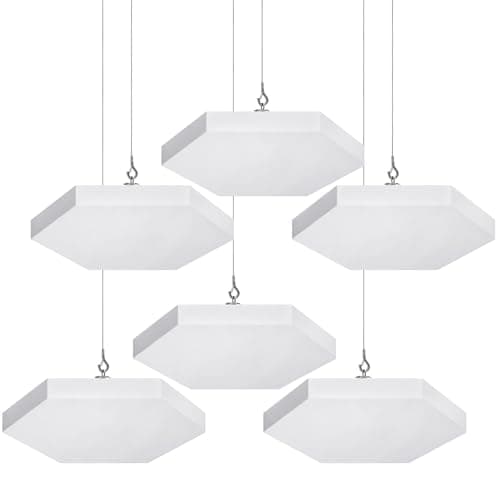
Coated fiberglass at a published 120 kg/m3, hung from the ceiling so both faces work. It is the only product here that absorbs on two sides.
Coated fiberglass at a published 120 kg/m3, hung from the ceiling so both faces work. It is the only product here that absorbs on two sides.
Published specification
Panel size
14.2 x 12.3 x 1.2 in, 6 panels
ElaraBerry published specification
Density
120 kg/m3 coated fiberglass
ElaraBerry published specification
Absorption
Described as effective for mid to high frequencies; no NRC published
Absence confirmed against the published specification
Weight
6.39 lb for the pack
Listing published specification
Supplied with
12 stainless steel cables, fixings, gloves
ElaraBerry published specification
Mounting
Suspended from the ceiling, both faces exposed
ElaraBerry published specification
What the specs are good for
Suspended mounting exposes both faces, which is a genuine physical advantage no wall panel has
Publishes a real density figure at 120 kg/m3, and density is what thin panels lack
1.2 in thick, roughly three times the felt tiles here
Frees up wall space entirely, which matters in a small room with windows and a door
What they are not
No NRC published, so the dual-sided advantage cannot be quantified
Fiberglass, coated or not: the listing itself tells you to wear a mask, goggles and gloves to install it
Needs ceiling fixings, which is a harder job than a wall and impossible in most rentals
The listing warns about odor and advises ventilating before use
Skip this if
Skip this if you rent, if your ceiling is concrete, or if anyone in the house is sensitive to fiberglass. Ceiling work is the least forgiving install in this whole category.
Who it is for. An owner-occupier in a small hard-surfaced room who has run out of usable wall.
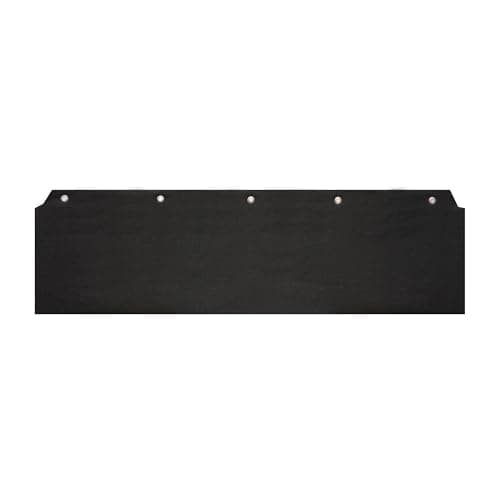
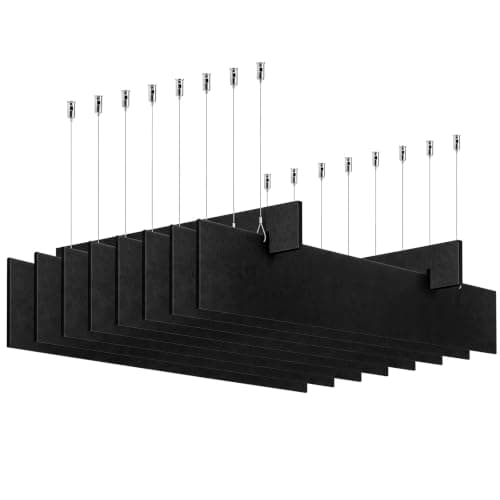
Eight hanging slats that work out at roughly 41 sq ft of exposed surface for under a hundred dollars. They are also 0.35 in thick, and that is the whole story.
Eight hanging slats that work out at roughly 41 sq ft of exposed surface for under a hundred dollars. They are also 0.35 in thick, and that is the whole story.
Published specification
Panel size
About 47.24 x 7.87 x 0.35 in each, 8 panels, 2 percent cutting tolerance stated
ElaraBerry published specification
Absorbing surface
About 41.3 sq ft (20.7 sq ft per face, both faces exposed)
Our arithmetic from the published panel size and count
Material
High-density polyester fiberboard
ElaraBerry published specification
Weight
5.71 lb, which is about 0.14 lb per sq ft of exposed surface
Listing published weight; the per-square-foot figure is our arithmetic
Absence confirmed against the published specification
What the specs are good for
About 2.28 dollars per square foot of exposed surface, the cheapest two-sided treatment on this page
Panel spacing is yours to set, so the same 8 panels can cover a narrow strip over a desk or a wide band across a room
5.71 lb spread across eight separate panels means no single fixing carries real load
Polyester rather than fiberglass, so no mask, no gloves and nothing to shed into the room
The 2 percent cutting tolerance is published, which is a small honesty most listings in this category skip
What they are not
0.35 in thick. At that depth a porous absorber does useful work above roughly 1 kHz and close to nothing below 500 Hz, which is the half of the problem that makes a room sound boomy
About 0.14 lb per sq ft, the least material per square foot of anything here
16 expansion bolts means 16 holes in your ceiling, and the install is genuinely the longest on this page
No absorption figure of any kind, so the low cost per square foot is cost per square foot of something unmeasured
Eight separate panels have to be hung level with each other or the whole thing looks like a mistake
Skip this if
Skip this if your room sounds boomy or boxy rather than bright and hissy. Thin panels do not reach low, and no quantity of 0.35 in panel substitutes for 2 in of mineral wool.
Who it is for. A bright, hard-surfaced room with a lot of ceiling and a small budget, where the complaint is sibilance and ring on calls rather than low-end boom.
Acoustic Polyester Drop Ceiling Tiles, 2 x 4 ft, 10-Pack
Cheapest grid coverage
6.4/ 10
80 sq ft of grid tile at about 1.62 dollars a square foot, cuttable with a utility knife. Thin and light, and the listing admits neither.
80 sq ft of grid tile at about 1.62 dollars a square foot, cuttable with a utility knife. Thin and light, and the listing admits neither.
Published specification
Tile size
24 x 48 x 0.2 in, 10 tiles
Art3d published specification
Coverage
80 sq ft, one face exposed
Our arithmetic from the published tile size and pack count
Weight
28.7 lb for the pack, which is about 0.36 lb per sq ft
Listing published weight; the per-square-foot figure is our arithmetic
Material
High-density polyester, described as moisture resistant and sag resistant
Art3d published specification
Absorption
Not published. Described as outstanding sound absorption with no figure attached
Absence confirmed against the published specification
Grid
Standard 15/16 in T-grid, square edge, trims with a utility knife
Art3d published specification
What the specs are good for
About 1.62 dollars per sq ft, the cheapest coverage of any format on this page
Polyester cuts cleanly with a knife, so fitting around a light, a vent or a sprinkler head is a two-minute job rather than a dusty one
0.36 lb per sq ft is light enough that a tired old grid will take them without complaint
Will not shed, rust or crumble at the edges the way a damp mineral fiber tile does
10 tiles is enough for a small room in one purchase, with offcuts for the awkward perimeter
What they are not
0.2 in thick, which is a fraction of what a conventional mineral fiber ceiling tile gives you
About 0.36 lb per sq ft against 1.29 for the Armstrong tile, so you are buying roughly a third of the material per square foot
No NRC, no coefficient, nothing. Outstanding sound absorption is a sentence, not a result
A light, thin tile in a grid is more likely to lift in the draft from a ceiling diffuser
Black absorbs light as well as sound, and 80 sq ft of it will change how a room feels
Skip this if
Skip this if your grid is the only acoustic work you plan to do. A 0.2 in tile across a whole ceiling is less absorber than four proper baffles, and it cannot reach low frequency at all.
Who it is for. Someone with an existing grid who wants the whole ceiling covered this month and treats it as a floor on the problem rather than a fix.
96 sq ft of non-reflective black tile in one box, sold for glare control as much as for sound, and publishing less than anything else here.
96 sq ft of non-reflective black tile in one box, sold for glare control as much as for sound, and publishing less than anything else here.
Published specification
Tile size
24 x 24 in, 24 tiles
BaseNoir published specification
Coverage
96 sq ft, one face exposed
BaseNoir published specification, confirmed by our arithmetic from the tile size and count
Material
Polyester fiber, described as moisture resistant
BaseNoir published specification
Weight
Not published
Absence confirmed against the published specification
Fire
Described as Class A flame rating; no test standard named
BaseNoir published specification
Absorption
Not published. No NRC and no coefficient
Absence confirmed against the published specification
What the specs are good for
96 sq ft in one purchase at about 1.77 dollars per sq ft, enough for a whole small-room grid with spares
A genuinely non-reflective black face, which kills the ceiling bounce that puts a bright band across the top of a webcam frame
2 x 2 ft tiles fit the more common residential grid size and are far easier to handle on a ladder than 2 x 4
Drops in with no tools, no glue and nothing permanent
What they are not
No published weight at all, so the one arithmetic check available on every other tile here cannot be run on this one
Class A flame rating with no standard named is a claim, not a rating, and in a ceiling product that matters more than usual
No absorption figure of any kind
A listing-only brand with no published technical literature behind the product
96 sq ft of black ceiling will take a noticeable amount of light out of a room that is not already dark
Skip this if
Skip this if you need the ceiling to stay light, and skip it if the fire rating has to be documented rather than asserted - a rented or shared building will usually want the former.
Who it is for. A streaming room, edit suite or home theater with an existing grid, where a dark non-reflective ceiling is wanted for the camera as much as for the sound.
The deepest cloud here and the heaviest, from a brand with a real support operation. Its own listing contradicts itself on both size and weight.
The deepest cloud here and the heaviest, from a brand with a real support operation. Its own listing contradicts itself on both size and weight.
Published specification
Assembled size
The listing states 46.5 x 46.5 x 13.75 in in its description and 47 x 14 in in its title; the two do not agree
Conflict confirmed between the published title and the published description
Structure
10 individual cells and 2 top rails, 0.4 in material thickness
VIVO published specification
Weight
The listing states 15 lb in its specification table and 13 lb in its description
Conflict confirmed between the published specification and the published description
Suspension
Stainless steel cables up to 79.25 in, mounting holes at 2 in spacing
VIVO published specification
Ceiling types
Wood joist and concrete or brick
VIVO published specification
Absorption
Not published. No NRC and no coefficient
Absence confirmed against the published specification
What the specs are good for
At 13 to 15 lb it carries more material than any other cloud on this page, roughly twice the ElaraBerry hexagon pack
A 13.75 in cell depth means the absorbing surface is several times the footprint, which no flat cloud of the same footprint can match
0.4 in of material through the cell walls rather than 0.35 in or thinner
VIVO is an established mounting-hardware brand with a real warranty and support channel, which most listing-only cloud sellers are not
79.25 in of cable gives genuine freedom to set the drop height
What they are not
The listing gives two different assembled sizes and two different weights, and we cannot tell you which is right
Because the absorbing area of a waffle cannot be derived from a footprint, the cost-per-square-foot arithmetic that ranks everything else on this page cannot be run on this product at all
No NRC and no density figure, so the extra material is unquantified
13 to 15 lb hanging on cables needs a joist, not an anchor, and a 13.75 in deep cloud is a substantial object in a domestic room
The most expensive cloud here, and the one you can verify the least about
Skip this if
Skip this if you want to compare what you are buying against the alternatives on this page. Its published figures contradict each other, which puts it outside the arithmetic the rest of this page runs on.
Who it is for. Someone treating a double-height or open-plan space where a visually substantial cloud is wanted and a single flat panel would look lost.
A ceiling is rarely the first thing to treat and almost never the only thing. If your walls are still bare, start with the best acoustic panels for a home office, which ranks eleven wall panels on what their makers commit to in writing, and come back here when the easy wall area is used up.
For where panels go before you buy any of them, where to place acoustic panels has the mirror method for finding first reflection points. For the quantity arithmetic with your own room dimensions as the input, how many acoustic panels do you need. And if the problem turns out to be noise arriving from outside the room rather than ringing inside it, how to soundproof a home office is the right starting point instead.
FAQ
Questions people ask about this
Do ceiling acoustic panels work better than wall panels?+
Per square foot of panel, yes, because a hanging baffle or cloud exposes both faces to the room while a wall panel exposes one. A 24 x 48 in baffle gives 16 sq ft of exposed absorbing surface against 8 sq ft for the same panel on a wall. The ceiling is also never blocked by furniture. The catch is that ceiling mounting is harder, heavier and far less forgiving than a wall fixing.
How many ceiling baffles do I need for a home office?+
For a typical 12 x 10 ft room, four baffles of 24 x 48 in gets you to about 64 sq ft of exposed absorbing surface, which is the lower bound of the 15 to 20 percent treatment target for that room. One baffle will not be audible. Spread them across the ceiling rather than clustering them, because interrupting reflections across the whole plane matters more than treating one spot thoroughly.
Will ceiling panels stop noise from the apartment above?+
No. Absorbing needs porous lightweight material and blocking needs mass and airtightness, and they are different physical problems. A polyester cloud weighing a few pounds absorbs well and blocks nothing. Listings that sell ceiling panels as soundproofing for noisy neighbors are selling them dishonestly. Footstep noise from above is a structural problem.
Can I use acoustic panels in a drop ceiling grid?+
Yes, and if you already have a 15/16 in grid it is the cheapest acoustic work available to you - you lift out the builder-grade tile and drop a better one in, with no fixings and nothing permanent. The Armstrong tiles here carry about 1.29 lb of material per square foot against about 0.36 for the polyester alternatives, which is most of what separates them.
Why does one of these panels claim an NRC above 1?+
ATS publishes 1.52 for its baffles and states it is out of 1. A free-hanging baffle absorbs on both faces, and when the chamber result is normalized to one-sided area the coefficient comes out above 1. It does not mean the baffle absorbs more energy than reaches it - it means a hanging panel does roughly one and a half times the work of the same panel flat on a wall. It also means the figure cannot be compared directly against a wall panel's NRC.
What thickness of ceiling panel do I need?+
Thickness decides which frequencies you reach. A 0.35 in polyester cloud does useful work above about 1 kHz and close to nothing below 500 Hz. A 2 in mineral wool baffle reaches meaningfully lower. If your room sounds bright and hissy, cheap thin coverage is a reasonable buy; if it sounds boomy or boxy, no quantity of thin panel substitutes for thickness.
Can I install ceiling acoustic panels in a rental?+
Drop-in grid tiles, yes - they are fully reversible and leave nothing behind. Baffles and clouds, usually not: they need joist fixings or expansion bolts, and a ceiling is the least forgiving surface in a property to make good. One cloud set on this page ships sixteen expansion bolts because it needs sixteen holes.
Sources
Where these numbers came from
We have not handled any of these products. Every figure on this page is either the manufacturer's own published specification, named as such, or our arithmetic from those figures, shown so you can check it. Prices come from Amazon through our price layer and carry the date they were verified.
Amazon product listings, retrieved 2026-10-03
Published specifications, dimensions, materials and manufacturer claims were read from each product's own listing data. Prices and availability refresh daily and carry their verification date on the page.
The full published method, and an explicit statement of what a specs-only approach cannot tell you.
ASTM C423 — Standard Test Method for Sound Absorption and Sound Absorption Coefficients by the Reverberation Room Method
The governing test method behind any NRC figure. We name it where a manufacturer publishes an NRC so you know what the number is a result of. We have not performed this test and we do not restate anyone's NRC as our own measurement.
ASTM E84 — Standard Test Method for Surface Burning Characteristics of Building Materials
The fire-rating standard ATS Acoustics cites for its Class 1 / Class A panels, and the one Armstrong cites for its Class A drop-in ceiling tiles. Named because they name it.
Our arithmetic: exposed absorbing surface of a ceiling panel
A suspended baffle or cloud hangs in open air, so both faces are exposed to the room and its absorbing surface is twice its face area. A drop-in grid tile has one face in the room and one in the plenum, so its absorbing surface is its face area. Every cost-per-square-foot figure on the ceiling page divides the verified price by that exposed surface, and every pounds-per-square-foot figure divides published pack weight by it. Both are derived from published dimensions and shown so you can check them; neither is a performance measurement.