A small panel in the right place beats a large panel in the wrong one. A desk screen is a small panel in a very good place.
SMBy Scooter M.Published October 3, 2026Prices verified October 3, 2026
The short answer
A desk screen with a felt or polyester core makes a measurable difference to what your microphone picks up, and no difference to what anyone else in the room hears. It works because of position, not area: 10 sq ft of absorber a foot from your mouth intercepts first reflections before they reach the microphone, which is the part of the sound field that makes a voice sound hollow. It does not block, it does not reduce the room's overall level, and nothing at this size could.
Why position beats area
The general rule in room acoustics is that more material is better. The exception is early reflections, where where the material sits matters more than how much of it there is.
When you speak, sound leaves your mouth in all directions. Some goes straight to the microphone. Some hits the desk surface, the screen, the wall in front of you and comes back a few milliseconds later. Your ear and the microphone combine the direct sound and those early arrivals, and it is the combination that makes a hard room sound hollow and distant.
A desk screen sits directly in the path of several of those first bounces, a foot or two from the source. Ten square feet there does work that forty square feet on a far wall cannot, because the far wall reflections arrive later and quieter anyway. It is the same logic as the first-reflection-point rule in where to place acoustic panels, applied to the desk.
What you will and will not notice
Desk screens, honestly
Effect
Does a desk screen deliver it?
You sound less hollow on calls
Yes. This is the main real benefit
The person next to you cannot see your screen
Yes, completely
Your camera stops showing the room behind you
Yes, with a wide enough panel
The room gets quieter overall
No. Ten square feet cannot move a room's level
Your colleague stops hearing your calls
No
You stop hearing their calls
Marginally, at best
Noise from outside the room is reduced
No, not at all
What the evidence is
Thin, and we will say so. Not one desk privacy panel in our set publishes an absorption figure. VIVO describes sound-reducing material without a number; Keemute and Eorbow name polyester fiber; OBEX names PET. Eorbow is the only one that publishes a thickness, at 0.35 in.
So the honest position is: there is a known absorbing material, in a position where the mechanism says a small amount does disproportionate work, with no quantified performance from anyone. We have not measured any of them. That inference is reasonable and it is not evidence, and the distinction is the whole of how we pick.
How to get the most out of one
01Put it between your mouth and the hardest nearby surface. Usually that is the wall or window in front of the desk.
02Height matters. The panel should rise above your seated mouth height. A 16 in panel on a desk puts its top edge at about 46 in, which is roughly mouth height for most people seated - fine. A 12 in panel is below it and intercepts much less.
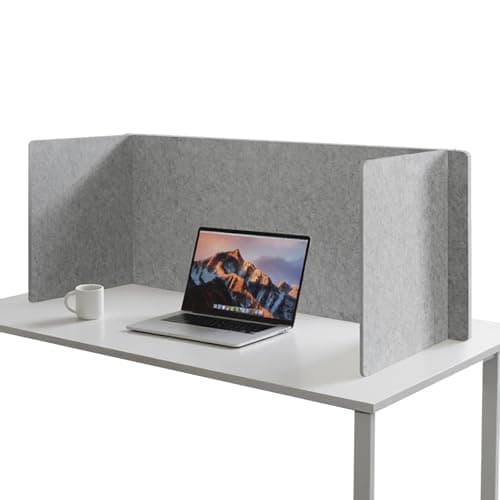
03Wrap the corner if you can. A front panel plus one side panel catches two bounce paths. The three-piece sets exist for this.
04Keep the desk surface itself in mind. The desktop is a large hard reflector a foot below your mouth and you cannot treat it. A desk mat helps slightly and nobody sells one as acoustic treatment.
05Pair it with the wall behind you. The screen handles forward reflections; the wall behind your head handles the backward ones. Those two together are most of the available benefit.
Clamp-on or freestanding?
Acoustically it makes no difference. Practically it is the whole decision, and it comes down to one measurement: the thickness of your desktop's front edge.
VIVO publishes 0.4 to 1.4 in across its line. Yaomiao publishes 3/4 to 2 in. Several sellers publish nothing. A desk with a bullnose or beveled edge may not seat a flat clamp even within the published range, so measure the flat part rather than the thickest point.
Freestanding panels dodge the whole question at the cost of 2 to 3 in of desk depth, which on a 24 in desk is the difference between a keyboard fitting comfortably and not. The full comparison is on best desk privacy panels.
#
Product
Best for
Score
Price
01
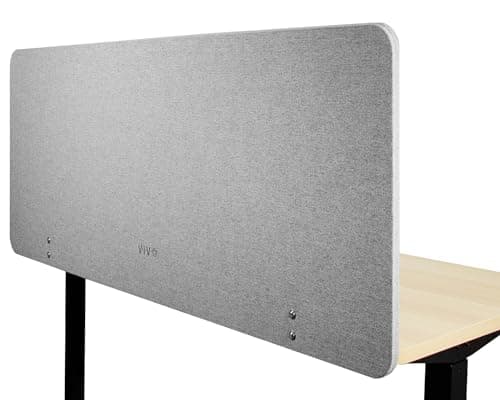
VIVO Clamp-On Desk Privacy Panel, 60 x 24 in (PP-1-V060G)Clamps to a 0.4 to 1.4 in desktop, mounts above or below the surface, and ships with cable spacers. The only desk panel here with a real model line.
Keemute 3-Panel Freestanding Acoustic Desk DividerHigh-density polyester fiber in three panels that stand on the desk with no clamp, no screws and nothing to fit.
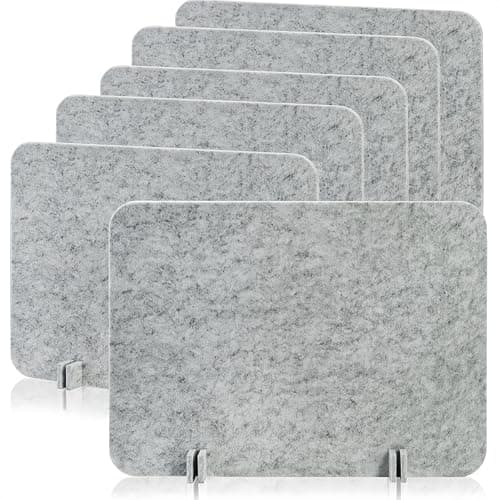
Eorbow Acoustic Desk Privacy Panels, 6-Pack 24 x 16 inSix polyester panels with support feet for 30 dollars, 0.35 in thick. The cheapest way to get an absorbing material onto a desk.
Scores are ours, from the published rubric on our methodology page. They are editorial judgments about published specifications, not test results — we have not handled these units.
01/VIVO
Clamp-On Desk Privacy Panel, 60 x 24 in (PP-1-V060G)
Best desk privacy panel
7.4/ 10
Clamps to a 0.4 to 1.4 in desktop, mounts above or below the surface, and ships with cable spacers. The only desk panel here with a real model line.
Clamps to a 0.4 to 1.4 in desktop, mounts above or below the surface, and ships with cable spacers. The only desk panel here with a real model line.
Published specification
Panel size
59.1 in wide x 23.8 in high
Listing published specification
Model
PP-1-V060G
VIVO published specification
Desk thickness
Fits 0.4 to 1.4 in
VIVO published specification
Mounting
Clamp-on or screw-in; above or below the desk
VIVO published specification
Surface
Tackable
VIVO published specification
Supplied with
Spacers for cable routing
VIVO published specification
Absorption
VIVO describes "sound-reducing material" but publishes no NRC or coefficient
Absence confirmed against the published specification
What the specs are good for
Publishes the desk-thickness range it fits, which is the one spec that decides whether a clamp-on panel is usable at all
Mounts below the desk as a modesty panel as well as above it as a screen
Cable spacers in the box, so the clamp does not fight your cable tray
Tackable surface at eye level is genuinely useful desk real estate
What they are not
150 dollars for 10 sq ft of panel: the most expensive desk screen per square foot here
No published absorption figure despite a sound-reducing claim
Clamp-on only works on a desk with a free front edge; a desk against a wall on three sides limits placement
Skip this if
Skip this if your desktop is thicker than 1.4 in or has a bullnose or beveled front edge. VIVO publishes the range precisely so you can check, and a clamp that does not seat properly is a panel on the floor.
Who it is for. A desk in a shared room, where the screen has to look like office equipment rather than a craft project.
Absence confirmed against the published specification
What the specs are good for
Polyester fiber core, so it is in the absorbing tier rather than the visual-screen tier
No clamp means no desk-thickness compatibility question and no marks on the desktop
Three panels wrap a corner, which a single flat screen cannot
56 dollars, about a third of the VIVO clamp-on
What they are not
No published absorption figure
Freestanding on a desk means it gets knocked, and it has no mass to resist that
Takes up desk depth at the back, which a clamp-on panel does not
Skip this if
Skip this if your desk is shallow. Three panels standing on the surface eat 2 to 3 in of usable depth, and on a 24 in desk that is the difference between a keyboard fitting and not.
Who it is for. A renter, a shared desk, or anyone who does not want to clamp anything to the furniture.
Six polyester panels with support feet for 30 dollars, 0.35 in thick. The cheapest way to get an absorbing material onto a desk.
Six polyester panels with support feet for 30 dollars, 0.35 in thick. The cheapest way to get an absorbing material onto a desk.
Published specification
Panel size
24 x 16 in, 6 panels
Eorbow published specification
Thickness
0.35 in
Eorbow published specification
Material
High-grade polyester
Eorbow published specification
Mounting
Support feet, freestanding on the desk
Eorbow published specification
Absorption
Not published as a figure
Absence confirmed against the published specification
What the specs are good for
Six panels for 30 dollars, which is five dollars a panel for a real polyester absorber
Publishes a thickness, which the more expensive desk screens here mostly do not
Disassembles into a flat stack for storage
Enough panels to screen two desks or wrap one on three sides
What they are not
No published absorption figure
0.35 in is thin; it works on immediate reflections and speech spill, not on room noise
Six separate panels on feet is six things to knock over
Skip this if
Skip this if you want one tidy screen. Six small freestanding panels is a fiddly desk, and if you only need the front of one desk the Keemute 3-panel is a cleaner object.
Who it is for. Two people sharing a room, or a desk that needs screening on more than one side cheaply.
A desk screen is the smallest acoustic intervention available. When it is not enough, the next steps in order of cost:
Treat the wall behind you, 250 to 600 dollars, which addresses the backward reflections a desk screen cannot. Best acoustic panels.
A floor-standing acoustic partition, 320 to 450 dollars, if the problem is another person in the room. Best acoustic room dividers.
Seal the door, 17 dollars, if the problem is coming from outside the room. It is cheaper than all of the above and does more for that specific problem.
FAQ
Questions people ask about this
Do desk privacy panels help with noise?+
They improve what your microphone picks up by intercepting first reflections close to your mouth, which is the part of the sound field that makes a voice sound hollow. They do not reduce the room's overall noise level and they do not stop anyone hearing you.
Are acrylic desk panels acoustic?+
No, the opposite. Hard acrylic reflects sound rather than absorbing it, so a transparent panel a foot from your mouth is acoustically a mirror. They are good visual and modesty barriers and the manufacturers generally do not claim otherwise.
How tall should a desk privacy panel be?+
Tall enough to rise above your seated mouth height, which means at least 16 in above the desk surface. A 12 in panel sits below your mouth and intercepts far less, however good its material.
Clamp-on or freestanding desk screens?+
Acoustically identical. Clamp-on costs no desk depth but requires your desktop to be within the clamp's published range, typically 0.4 to 1.4 in or 3/4 to 2 in. Freestanding works on any desk and takes 2 to 3 in of depth at the back.
Will a desk panel stop my colleague hearing my calls?+
No, and nothing at this size could. A desk screen is roughly 10 sq ft of thin material with open air above, below and around it. It changes how you sound rather than how loud you are.
Sources
Where these numbers came from
We have not handled any of these products. Every figure on this page is either the manufacturer's own published specification, named as such, or our arithmetic from those figures, shown so you can check it. Prices come from Amazon through our price layer and carry the date they were verified.
Amazon product listings, retrieved 2026-10-03
Published specifications, dimensions, materials and manufacturer claims were read from each product's own listing data. Prices and availability refresh daily and carry their verification date on the page.