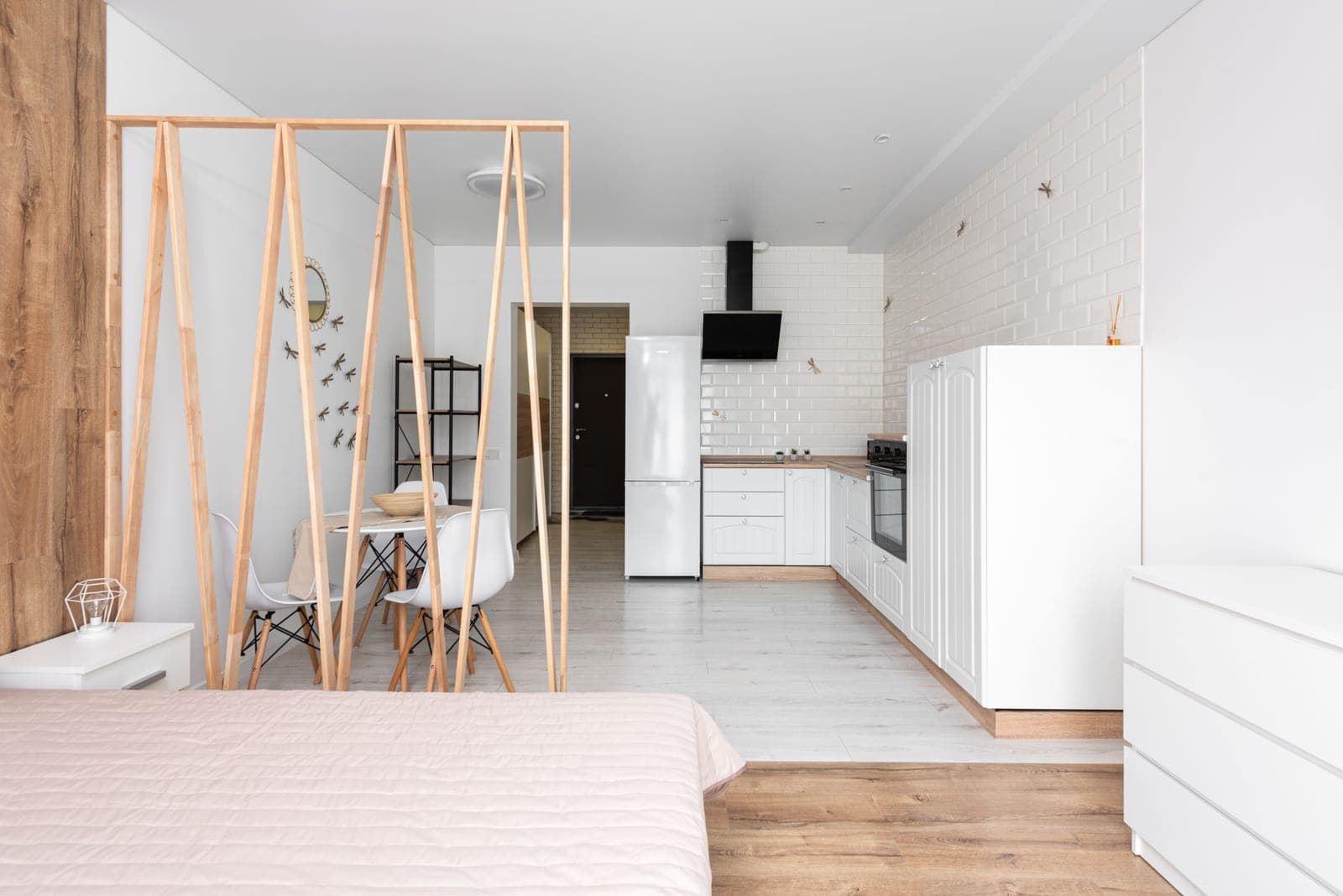
Most of the useful decisions here are free. Work out the layout first, then buy the one object that supports it.
SMBy Scooter M.Published October 3, 2026Prices verified October 3, 2026
The short answer
Decide three things before buying anything: where the desk faces, where the light comes from, and what the divider is actually hiding. In most shared rooms the right answer is a 60-dollar folding screen placed to control the camera's view, not a 400-dollar partition placed to divide the room. The expensive answer is correct only when two people are working in the room at once, and then the product you want is a cored acoustic partition rather than a screen.
Step 1: what is the divider for?
Four different answers, four different products. Being honest about which one applies saves most of the money in this category.
Purpose against product
What you are actually solving
What you need
Roughly
The bed or the kitchen appears on video calls
A screen behind you, wide enough for the camera's view
30 to 61 dollars
You cannot stop thinking about work in the evening
A screen that hides the DESK from the living space, not the reverse
30 to 61 dollars
Two people working in one room
A cored acoustic partition between the desks
320 to 450 dollars
You need calls nobody can overhear
Not a divider at all. An enclosure
3,200 dollars and up
The second row is the one people get backwards. If the problem is that work follows you into the evening, the screen should face the living space and hide the desk, which is a different placement from a video-call backdrop.
Step 2: the three layout decisions that are free
Where the desk faces
Facing a wall gives you the cleanest camera background and the least distraction. Facing into the room gives you a better-feeling space and a worse call. Facing a window gives you the best light on your face and the worst exposure for the camera unless you have a blind.
In a shared room the usual best answer is facing a wall with the window to one side. That gives you side light, a plain background and your back to the rest of the room, which is also where the divider wants to go.
Where the light comes from
A divider will block light, and in a small shared room that is a real cost. A 71 in opaque screen between a window and a desk makes the desk dim all day.
Put the divider on the side AWAY from the window wherever possible. If it has to go between the desk and the window, that is a genuine argument for a shorter screen or none at all.
What the divider is hiding, in which direction
A screen has two sides and they are not the same. Decide whether you are hiding the room from the camera, or hiding the desk from the room, and place it accordingly. A screen that does both usually does neither well.
Step 3: measure the floor it will actually take
This is the measurement people skip, and it is why dividers get bought and returned.
Floor depth a folding screen genuinely needs
A 4-panel screen 136 in wide, stood in a straight line = unstable, will fall
Folded into a W for stability = about 20 in of floor depth along its length
Plus the published panel width it occupies: 136 in becomes roughly 100 in of wall run
A 3-panel VIVO partition on flexible feet = about 24 in of base depth
So: a divider takes a strip roughly 2 ft deep across the room, not a line
Our arithmetic from the published dimensions. VEVOR prints the fold-into-a-W instruction in its own listing, which is the correct advice and the only maker that gives it.
In a 12 by 10 ft room, a divider across the 10 ft dimension costs about 20 sq ft of floor, which is 17 per cent of the room. That is worth knowing before you order.
Step 4: height, and what it is covering
What each height actually hides
Height
Hides
Stability
48 in
A seated person from behind, a desk surface
Good. Low and stable
66 in
A seated person completely; a standing person from the shoulders down
Good at weight
71 to 72 in
Most of a standing adult
Depends entirely on weight and base
75 in
A standing adult completely
Poor at anything under about 20 lb
From the published dimensions in our product set. A 75 in screen weighing 9 lb across 37 sq ft of fabric is a sail; the same height at 50 lb is a piece of furniture.
For a camera backdrop, 66 in is plenty - the camera sees from roughly chest height upward and 66 in covers it with room to spare. Taller screens are for genuine room division, and they need weight to match.
Step 5: then buy the thing
With the layout settled, the product choice becomes simple.
A camera backdrop or a visual zone: a folding fabric screen. 30 to 61 dollars, and the acoustic question does not arise. Best room dividers for a home office.
Two people, two desks, both on calls: a cored acoustic partition. 320 to 450 dollars. Best acoustic room dividers.
A permanent work corner in a room that is also office furniture: a modular zip-linked partition. Best office partitions.
One desk, one person, just needs the view controlled: a desk screen, 30 to 160 dollars and no floor space at all. Best desk privacy panels.
#
Product
Best for
Score
Price
01
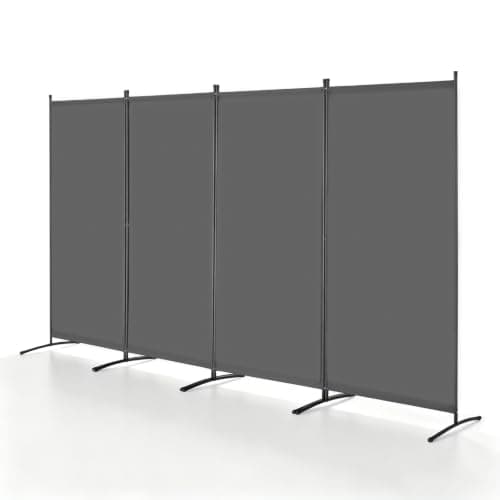
VEVOR 4-Panel Room Divider, 136 in Wide136 inches across four panels for 61 dollars, on an iron frame at 21.4 lb. The most sightline per dollar on the site.
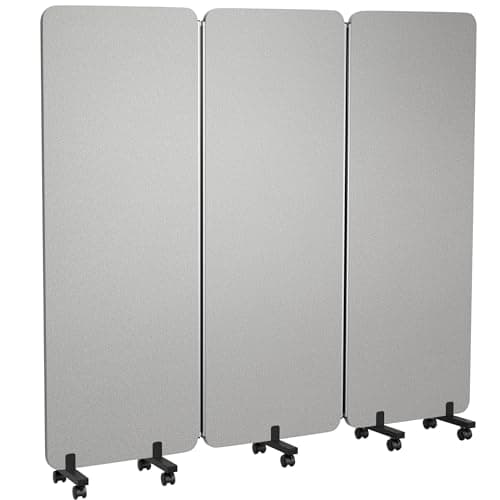
KERRAM 3-Panel Foldable Office Partition with WheelsNames its core material as 100% high-density polyester fiber, states a 1.13 in panel thickness, folds flat, and runs on 10 self-locking casters.
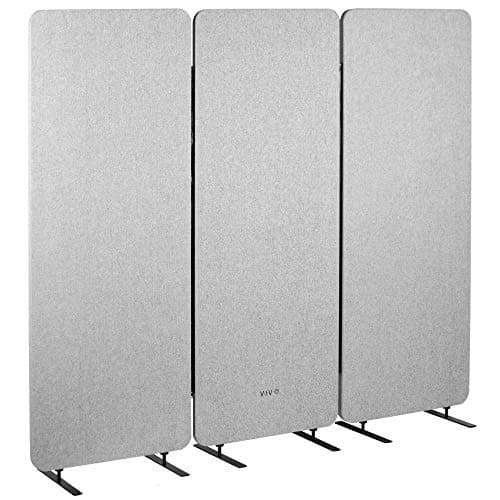
VIVO Freestanding Privacy Panel, 72 x 66 in (PP-3-T072G)Three zip-linked 23.8 in panels on flexible feet, 51.4 lb, tackable surface. The only partition here with a model number and a consistent spec sheet.
Scores are ours, from the published rubric on our methodology page. They are editorial judgments about published specifications, not test results — we have not handled these units.
01/VEVOR
4-Panel Room Divider, 136 in Wide
Best for the widest span
6.4/ 10
136 inches across four panels for 61 dollars, on an iron frame at 21.4 lb. The most sightline per dollar on the site.
136 inches across four panels for 61 dollars, on an iron frame at 21.4 lb. The most sightline per dollar on the site.
Published specification
Overall size
136.4 in wide x 20.4 in deep x 72.4 in high
VEVOR published specification
Panel size
34 in wide x 72.4 in high, 4 panels
VEVOR published specification
Weight
21.38 lb
Listing published specification
Frame
Iron
VEVOR published specification
Fabric
Oxford, waterproof
VEVOR published specification
Assembly
About 15 minutes; two people recommended
VEVOR published specification
Acoustic material
None, and none claimed
Absence confirmed against the published specification
What the specs are good for
136 in is enough to wall off a whole corner of a bedroom, for 61 dollars
21.4 lb on an iron frame is noticeably more substantial than the lighter screens here
Oxford fabric is heavier and less translucent than the thin polyester screens at this price
VEVOR's own instruction to fold it into a W for stability is the right advice and they print it
What they are not
No acoustic material and no claim of any
Fifteen minutes and two people to assemble, which is slower than any other screen here
Needs 20.4 in of floor depth, and more if you fold it tighter for stability
Skip this if
Skip this if you have under about 8 ft of wall to work with. At 136 in the panels have to be heavily zigzagged to fit a small room, which costs you most of the span you paid for.
Who it is for. Someone dividing a large open room rather than screening a desk.
Names its core material as 100% high-density polyester fiber, states a 1.13 in panel thickness, folds flat, and runs on 10 self-locking casters.
Names its core material as 100% high-density polyester fiber, states a 1.13 in panel thickness, folds flat, and runs on 10 self-locking casters.
Published specification
Overall size
71 in wide x 66 in high
KERRAM published specification
Panel thickness
1.13 in
KERRAM published specification
Core
100% high-density polyester fiber, fabric outer
KERRAM published specification
Frame
Aluminum
KERRAM published specification
Casters
10 self-locking swivel casters
KERRAM published specification
Assembly
3 to 5 minutes; casters only, no panel assembly
KERRAM published specification
Absorption
Not published as a figure. The core material and thickness are published, the NRC is not
Absence confirmed against the published specification
What the specs are good for
States a panel thickness AND a core material, which together are the two facts that decide whether a partition does anything acoustically
1.13 in of high-density polyester is a genuine absorber, unlike fabric on a steel frame
Folds completely flat for storage, which no other acoustic partition here does
Aluminum frame keeps the weight down without the flex of a thin steel tube
Ten self-locking casters and a 3 to 5 minute setup
What they are not
No NRC or absorption coefficient published, so the thickness and material are the only evidence
380 dollars for 32 sq ft of partition
Only 20 units showed in stock at the time of writing, so availability is thin
Skip this if
Skip this if you need the partition to block sound rather than absorb it. 1.13 in of polyester fiber reduces reflections and speech spill; it is not a wall and it will not stop a conversation being audible on the other side.
Who it is for. Someone in a shared room who needs the calls to stop bouncing and the partition to disappear into a cupboard at weekends.
Freestanding Privacy Panel, 72 x 66 in (PP-3-T072G)
Best office partition
7.6/ 10
Three zip-linked 23.8 in panels on flexible feet, 51.4 lb, tackable surface. The only partition here with a model number and a consistent spec sheet.
Three zip-linked 23.8 in panels on flexible feet, 51.4 lb, tackable surface. The only partition here with a model number and a consistent spec sheet.
Published specification
Overall size
72.4 in wide x 65.8 in high
VIVO published specification
Panel size
23.8 in wide x 65.8 in high, 3 panels
VIVO published specification
Weight
51.4 lb
Listing published specification
Model
PP-3-T072G
VIVO published specification
Surface
Tackable
VIVO published specification
Configuration
Zipper connections; straight wall or curve; usable singly
VIVO published specification
Absorption
Not published for this model. VIVO states sound-reducing material on its clamp-on panels but publishes no figure for any of them
Absence confirmed against the published specification
What the specs are good for
A real model number and dimensions that match across the listing, which is rarer in this category than it should be
51.4 lb across three panels on flexible feet, so it stands where you put it and does not walk
Zip connections mean you can use one panel at a desk and three to wall off a corner, from the same purchase
Tackable surface turns the partition into usable wall, which a small room does not otherwise have
What they are not
No published absorption figure, at 400 dollars. That is the main thing to understand before buying it
Flexible feet take up about 2 ft of floor depth at the base
No wheels on this model; the mobile version is a separate 450-dollar product
Skip this if
Skip this if you are buying it to make calls quieter. It is a sightline and a pinboard, and a good one. For noise, our acoustic-partition picks below publish a core material and this does not.
Who it is for. Someone carving a work corner out of a shared room who wants a partition that looks deliberate and survives being moved.
01Buying for noise and getting a screen. Fabric on a frame does nothing acoustically. Do room dividers block sound covers why.
02Underestimating the floor. A divider takes a 2 ft deep strip, not a line.
03Buying too light. Under about 20 lb across 35 sq ft of fabric and it moves whenever a door opens.
04Standing a multi-panel screen in a straight line. Fold it into a zigzag. It is the difference between a structure and a hinge waiting to collapse.
05Blocking the light. The cheapest mistake to avoid and the easiest to make.
FAQ
Questions people ask about this
How do you divide a room for a home office?+
Start with layout rather than product: decide where the desk faces, where the light comes from, and which direction the divider is hiding. Most shared rooms need a 60-dollar folding screen placed to control the camera's view, not a 400-dollar partition dividing the room.
How much floor space does a room divider need?+
About 2 ft of depth along its length, because a multi-panel screen has to be folded into a zigzag to stand up. In a 12 by 10 ft room a divider across the short dimension costs roughly 20 sq ft, which is 17 per cent of the floor.
How tall should a room divider be for a home office?+
66 in covers a seated person completely and is plenty for a video-call backdrop, since the camera sees from about chest height up. 71 to 75 in covers a standing adult and needs real weight to stay upright.
What can I use instead of a room divider?+
A bookcase, a tall plant, a clothes rail or the back of a sofa. Move furniture you already own into the position you are considering and live with it for a week. It costs nothing and tells you more about the layout than any reading will.
Should the divider hide the desk or the room?+
Decide deliberately, because a screen has two sides. If the problem is what appears on video calls, it faces the room behind you. If the problem is that work follows you into the evening, it faces the living space and hides the desk. Trying to do both usually does neither well.
Sources
Where these numbers came from
We have not handled any of these products. Every figure on this page is either the manufacturer's own published specification, named as such, or our arithmetic from those figures, shown so you can check it. Prices come from Amazon through our price layer and carry the date they were verified.
Amazon product listings, retrieved 2026-10-03
Published specifications, dimensions, materials and manufacturer claims were read from each product's own listing data. Prices and availability refresh daily and carry their verification date on the page.